California Casual Living Room Layers Guide
Founder & Lead Interior Stylist at DIY Interior Decorating · NCIDQ Certified, ASID Professional Member · 14+ years in residential interior styling, DIY furniture upcycling, and spatial color harmony
California casual living room layers are what turn a plain room into a room that feels lived-in, sun-washed, and effortlessly collected. It's not a shopping list. It's a stacking method: rug, seating, textiles, height, light, and the small objects that tell your story.
If your living room feels flat right now, odds are you're missing at least two of those layers.
Here's the good news. You don't need custom furniture or a designer budget to get there. In our research of manufacturer specs and fabric-care documentation, the highest-impact moves cost the least: a correctly sized base rug and a washable slipcover.
Let's start with what the look actually is, then build it layer by layer.
california casual living room layers
California casual living room layers are five stacked elements: a base rug, relaxed seating, mixed textiles, varied heights, and collected objects. The palette stays warm and neutral. Textures do the talking, not color.
The goal is a room that looks gathered over time, never matched-in-one-trip.
What California Casual Actually Looks Like in a Living Room
It's a relaxed, sun-washed look built on warm neutrals and natural texture. You'll see linen slipcovers, jute underfoot, raw wood, unlacquered brass, and a few collected pieces that don't match on purpose. Nothing shines too hard.
Nothing looks brand new.
The room should feel like it exhales. That's the whole point.
If you've ever walked into a beach bungalow and thought "why does this feel so good?", you were reading the layers. The palette was quiet. The textures were loud.
The lighting was soft and layered, not one overhead light doing all the work.
Two things separate California casual from "generic beige room." Contrast and restraint. Contrast is rough next to smooth, matte next to glossy, new next to vintage. Restraint is knowing when to stop adding.
Manufacturer specs on slipcovered sofas usually list seat depths of 24 to 30 inches. Those deep seats matter here. Shallow, formal seating kills the vibe instantly.
The Five Layers That Make the Whole Room Work
Think of these as floors in a building. Skip one and the room feels unfinished.
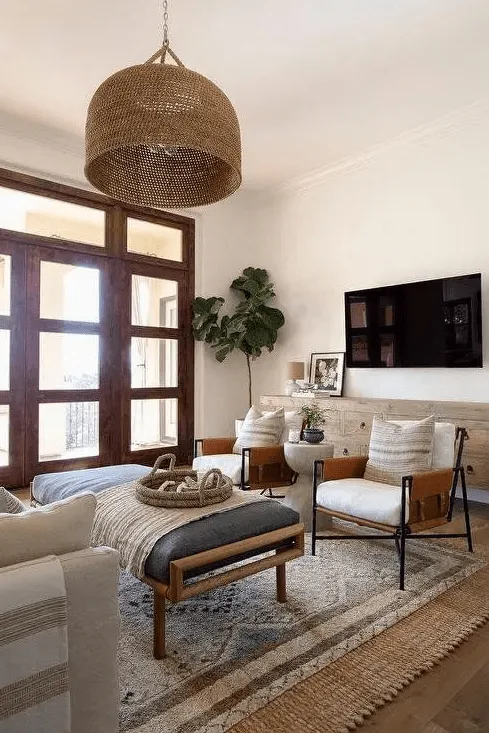
Image source: Bing (Web (fair-use with source credit))
- Rug: the foundation that anchors everything above it.
- Seating: the anchor that defines the conversation zone.
- Textiles: pillows, throws, and upholstery that add tactile richness.
- Height and light: lamps, plants, and stacks that break up flat sightlines.
- Collected objects: ceramics, books, baskets, art, and things with a story.
The order matters. You build from the floor up, not from the Pinterest board down.
The Rug (Your Foundation Layer)
The rug is the single most important layer, and it's the one people get wrong most often. A rug that's too small makes the whole room look cheap, no matter what you spent on the sofa.
Here's the sizing rule that actually works. Either all four legs of your furniture sit on the rug, or the front legs of everything do. Nothing floating half-off.
Rug-on-rug layering is a signature California casual move. You put a large neutral jute base down first, then float a smaller patterned or vintage rug on top. Leave a 2 to 6 inch reveal of the base on each side so both textures read.
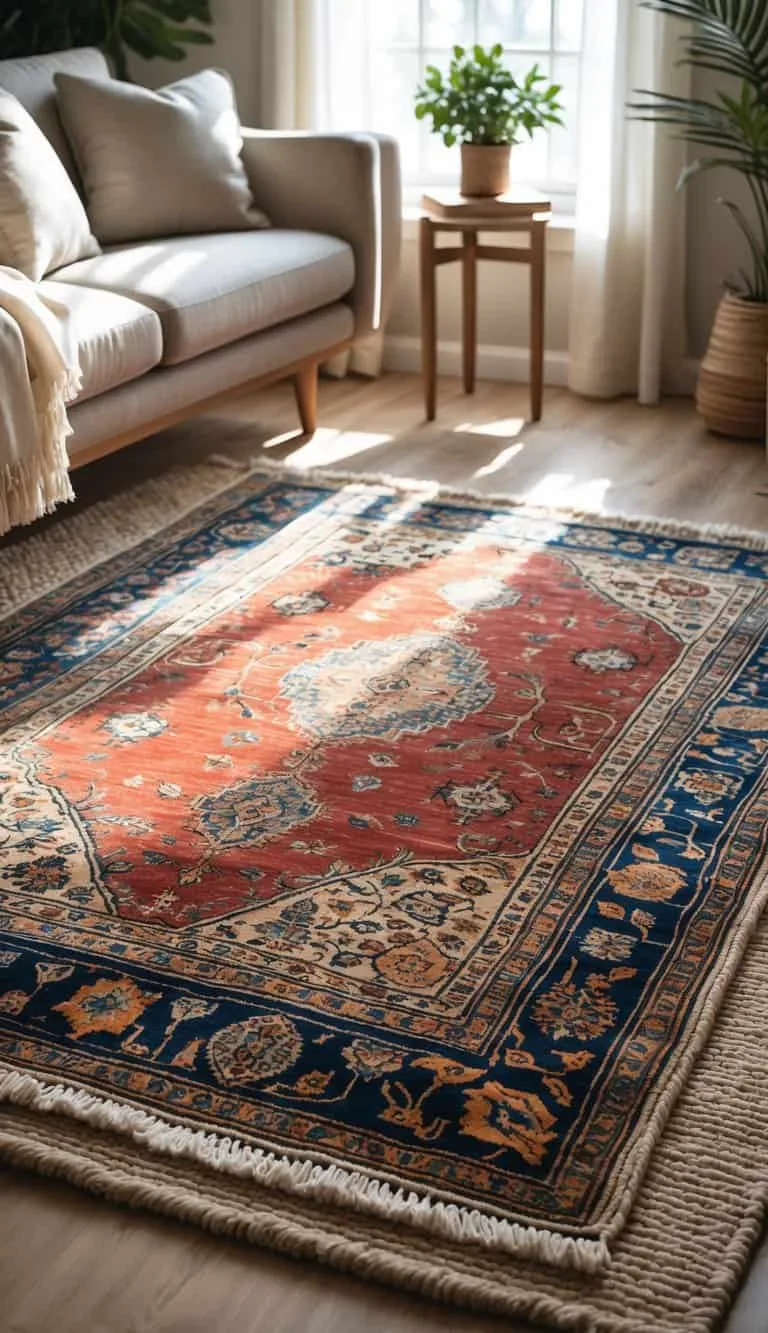
Image source: Bing (Web (fair-use with source credit))
Standard base rug sizes: 8×10 for small living rooms, 9×12 for medium, 10×14 for large or open-plan spaces.
Seating (Your Anchor Layer)
A deep slipcovered sofa in linen or performance weave is the classic anchor. It's relaxed, washable, and forgiving of kids, pets, and spilled coffee.
Add an accent chair or two that don't match the sofa. A wicker sling chair, a leather club chair, or a bouclé number works. The mismatch is the point.
If your room is open-plan, use a sectional to define the living zone without walls. Pair it with a rug that's large enough to separate the living area from the kitchen or dining flow.
Textiles (Your Texture Layer)
This is where most people stop too early. One patterned pillow on a plain sofa isn't layering. It's a start.
Build texture across surfaces. Mix a smooth linen with a nubby bouclé, a chunky knit, and something with a little sheen. Aim for at least three distinct textures per seating area.
Throw pillows work best in odd numbers and mixed sizes. A 22×22 with a 20×20 and a 12×20 lumbar is a reliable combo.
Height and Light (Your Dimension Layer)
Flat rooms feel dead. You need vertical variety.
A floor lamp, a tall olive tree, a stack of books on a low table, and a pendant overhead create five different heights. That's the goal.
Lighting should be layered too. Ambient, task, and accent. Three sources minimum, all at different heights.
Overhead-only lighting flattens everything.
Collected Objects (Your Finish Layer)
This is your personality layer. Baskets, ceramics, dried botanicals, open shelving, framed art, and a few things with genuine age.
The trick is editing. Add one more thing than feels comfortable, then remove one. That's the restraint principle, and it's what keeps the room from tipping into clutter.
How to Read a California Casual Room in Under 30 Seconds
You can spot a properly layered California casual room in seconds. Here's what to look for, in order.
- The rug is large and the front feet of every seat touch it.
- There's at least one natural fiber (jute, linen, rattan, wood) in view.
- The palette is warm, not cool. No cold grays.
- Lighting comes from at least three sources at different heights.
- There's one vintage or collected piece that doesn't match anything.
- The room has visible texture contrast, rough next to smooth.
If a room is missing three or more of these, it's under-layered. If it's missing all six, it's probably a showroom, not a home.
The Layering Process, Step by Step
This is the workflow we'd use to build a California casual living room from scratch. It runs top to bottom, floor to finish.
- Measure your seating footprint. Add 8 to 12 inches on each side. That number is your minimum rug size.
- Place the base rug. Jute, flatweave, or performance fiber. Neutral, warm-toned.
- Float the layering rug on top. 2 to 6 inch reveal on all sides.
- Anchor the seating. Front feet on the rug at minimum.
- Add a coffee table. Reclaimed wood, travertine, or rattan.
- Build textile layers. Three plus textures, odd-numbered pillows.
- Vary height. Lamp, plant, stack, pendant. All at different levels.
- Layer the light. Ambient plus task plus accent.
- Add the collected layer. Ceramics, books, baskets, art.
- Edit. Remove one thing.
Start With the Room, Not the Pinterest Board
Your room's natural light direction and ceiling height dictate what works. A south-facing room with strong afternoon sun will fade jute and linen fast. A north-facing room can handle darker tones it would otherwise swallow.
Measure first. Buy second.
Build From the Floor Up
Don't buy the sofa until the rug size is locked. Don't buy pillows until the sofa is in place. Each layer sits on the one below it.
Skipping ahead means returning things.
Add, Then Subtract
The final step is always removal. Take one object off. If the room still feels complete, leave it off.
That's how you avoid the overstuffed look that kills California casual.
Where People Get California Casual Wrong
The biggest mistake is a rug that's too small. It's the fastest way to make even a well-furnished room look awkward. If your seating floats off the edge, fix the rug before you touch anything else.
The second mistake is an all-beige palette with zero texture contrast. Warm neutrals only work when something rough sits next to something smooth. Otherwise the room reads flat, washed out, and a little sad.
Here's a quick troubleshooting guide for the most common failures.
- Rug too small: size up or add a larger jute base underneath.
- Everything matches: swap one piece for vintage, wicker, or leather.
- Cool gray creeping in: replace cool tones with warm whites, sand, or clay.
- Flat lighting: add a floor lamp and a table lamp at different heights.
- Cluttered surfaces: remove one object from every tabletop.
- No natural fiber in sight: add jute, rattan, linen, or raw wood.
- Too many trends: pick one era and let it lead, then edit hard.
One more trap: buying the whole look in a single trip. California casual reads collected, not coordinated. A room that was assembled in one afternoon always looks like it.
Rug Sizes, Pillow Combos, and the Numbers That Actually Matter
Numbers take the guesswork out of layering. Get these right and the room does most of the work for you.
Start with rug size. Measure your seating footprint, then add 8 to 12 inches on each side. That number is your minimum.
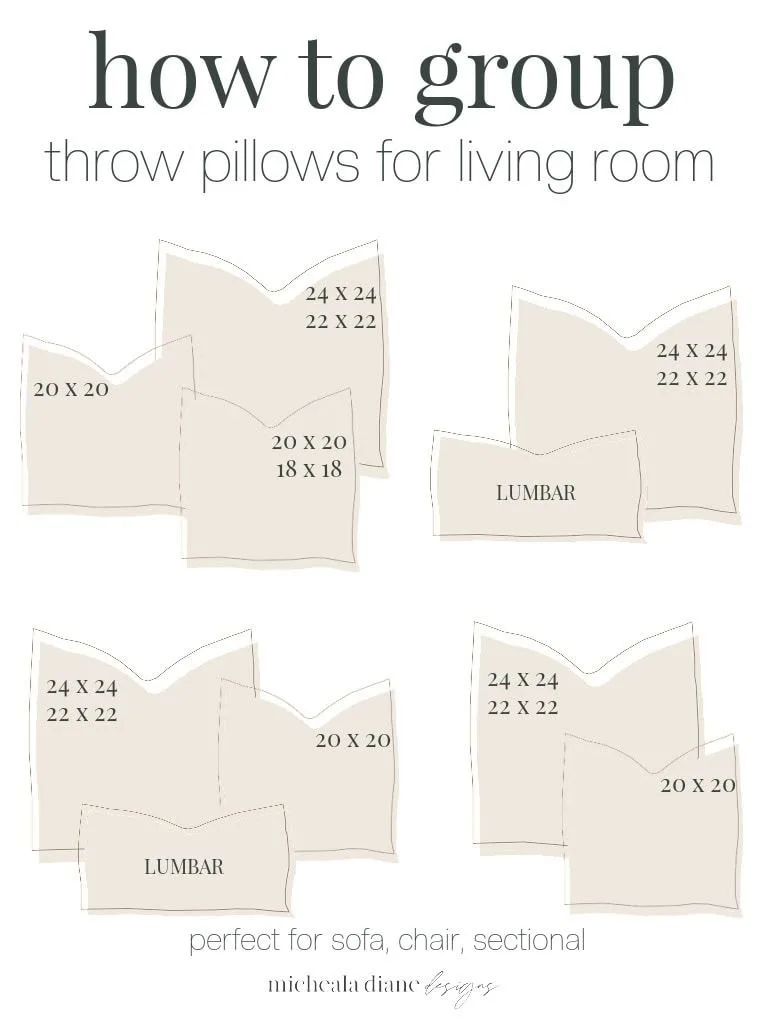
Image source: Bing (Web (fair-use with source credit))
| Element | Recommended Size or Number | Notes |
|---|---|---|
| Base rug | 8×10, 9×12, or 10×14 | Scale to seating footprint |
| Layering rug reveal | 2 to 6 inches per side | Shows both textures |
| Sofa seat depth | 24 to 30 inches | Deep enough to sink into |
| Pillow pairing | 22×22, 20×20, 12×20 lumbar | Odd numbers, mixed sizes |
| Throw blanket | 50×60 or 60×80 inches | Oversized drapes better |
| Lighting sources | 3 minimum | Ambient, task, accent |
| Jute rug thickness | 1/4 to 1/2 inch | Keeps doors clearing |
| Custom slipcover lead time | 4 to 10 weeks | Plan ahead |
A quick note on height variety. Aim for five distinct levels in the room: floor-level baskets, seat height, table height, lamp height, and ceiling pendants. Flat rooms feel unfinished.
Warm Climates, Sun Fade, and Real-Life Durability
California light is brutal on textiles. South and west-facing rooms fade jute, linen, and wool fast, sometimes within a single summer. This isn't a reason to avoid natural fibers.
It's a reason to plan for them.
Per manufacturer care documentation, solution-dyed performance fabrics hold color far better than piece-dyed naturals under UV exposure. If your windows face west, consider performance fiber for the primary rug and reserve jute for shaded zones.
Rug pads are non-negotiable on hardwood. They prevent slipping, reduce jute shedding, and extend the life of thin flatweaves.
For salt-air coastal homes, rinse washable textiles more often. Salt residue dulls linen and degrades elastic in slipcover seams over time.
This is where real-life layering beats Pinterest layering. A room with kids and pets needs washable slipcovers, machine-washable pillow covers, and a base rug you can vacuum without fear. The prettiest textiles are the ones you can actually clean.
California Casual vs. Scandinavian, Coastal Grandma, and Boho
These four looks get lumped together, but they're not the same room.
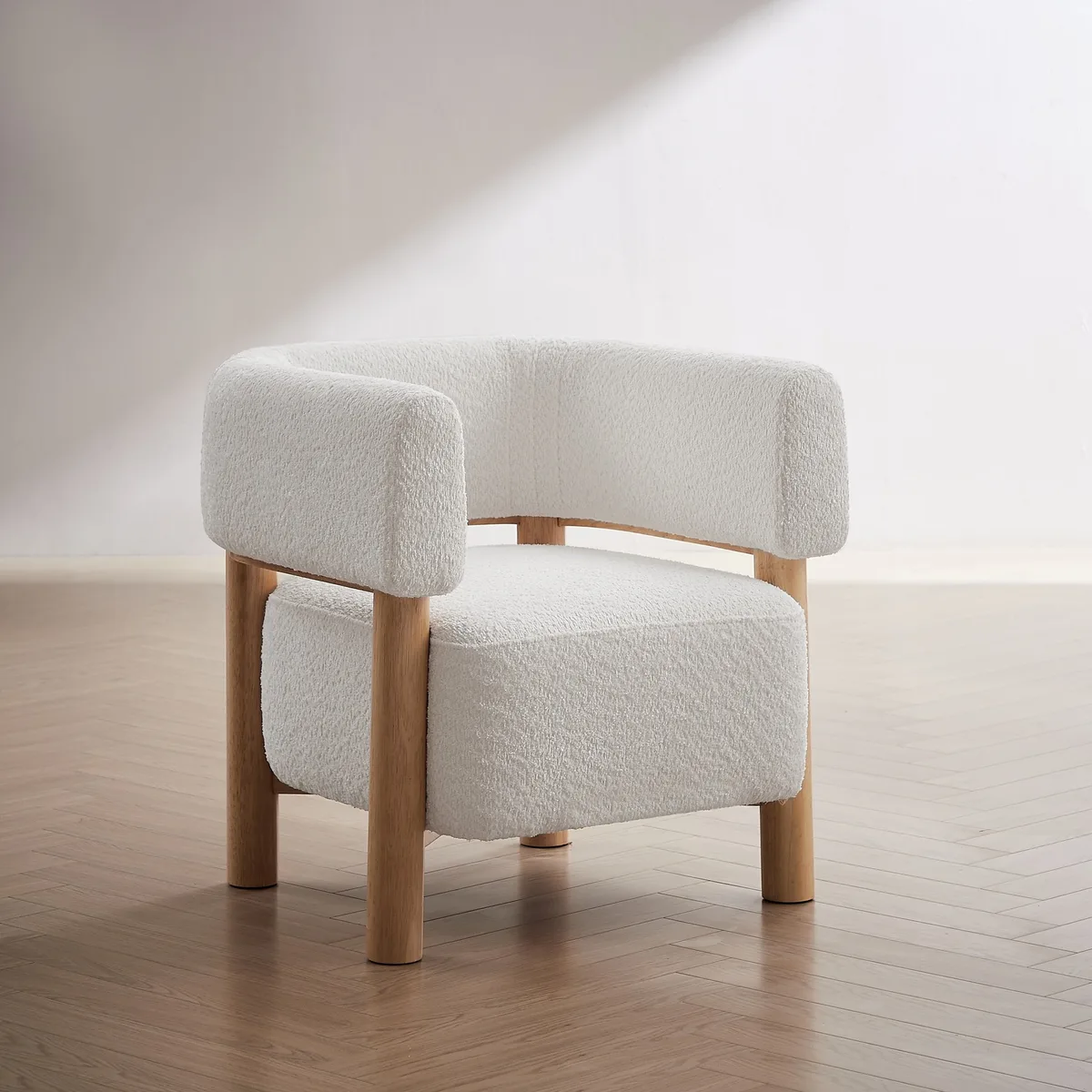
Image source: Bing (Web (fair-use with source credit))
| Style | Palette | Texture | Best For |
|---|---|---|---|
| California casual | Warm neutrals, clay, olive | Rough plus smooth, mixed | Sun-heavy homes, collected feel |
| Scandinavian | Cool white, pale wood | Minimal, tactile but restrained | Small spaces, clean lines |
| Coastal grandma | Blue and white, warm wood | Layered, traditional, cozy | Classic coastal homes |
| Boho | Earthy, saturated, patterned | Maximal, global, layered | Renters, expressive spaces |
Scandinavian is cooler and quieter. California casual leans warm and slightly undone. Coastal grandma is more traditional, with more blue and more pattern.
Boho goes maximal, with saturated color and global influence.
If you love Scandinavian but your house gets blazing afternoon sun, borrow its restraint and skip the cool grays. Warm the palette and add one natural fiber. That's California casual with a Scandinavian backbone.
Who each one is best for: Scandinavian suits small, light-starved apartments. California casual suits open, sun-heavy homes where collected objects and texture tell the story. Coastal grandma fits traditional coastal architecture.
Boho is best for renters who want layered personality without structural changes.
FAQs
How many layers does a California casual living room need?
Five layers is the working number: base rug, seating, textiles, height and light, and collected objects. You can add a layering rug and extra pillows on top of that. But five is the minimum for the look to read properly.
Skip two and the room feels thin.
What size rug should I use for a layered living room?
An 8×10 works for small living rooms, 9×12 for medium, and 10×14 for large or open-plan spaces. The better rule is measurement: size to your seating footprint plus 8 to 12 inches on each side. Front legs of every seat should sit on the rug.
Can I do California casual on a budget?
Yes. The style rewards vintage, consignment, and estate sale finds over matched sets. Jute base rugs are inexpensive.
Swapping pillow covers seasonally costs far less than new pillows. The look is built on editing and texture, not price tags.
What colors work best for California casual?
Warm neutrals lead the palette: warm white, sand, clay, olive, and terracotta. Skip cool grays, which read off in sun-heavy rooms. Add one deeper accent, like a vintage rug or a leather chair, so the room doesn't go flat.
How do I keep it from looking cluttered?
Use the restraint principle: add one object more than feels comfortable, then remove one. Keep tabletop surfaces mostly clear. Group small objects in odd numbers on trays.
Clutter comes from too many items, not too many layers.
Is California casual the same as coastal style?
No. Coastal style leans blue and white with nautical accents. California casual is warmer and more neutral, built on texture and collected pieces.
The two overlap in beach homes, but California casual works inland just as well.

Similar Posts