DIY Shower Niche Decor Ideas to Elevate Your Bathroom
This niche sees steam, soap scum, and hard water every single day, so most pretty bathroom decor dies fast in there. That's the real reason DIY shower niche decor trips people up. Styling shelves with regular bathroom objects looks great on day one.
By week three, you're scrubbing mildew off a reed diffuser.
The fix isn't buying fancier stuff. It's choosing materials and layout based on what a wet, humid box actually does. Building codes and tile standards treat shower walls as wet-area installations, and your decor has to survive that same environment.
Manufacturer specs for adhesives, suction mounts, and finishes all come with heat and moisture limits. So before we style anything, let's read the niche.
diy shower niche decor
DIY shower niche decor means styling your recessed shower shelf with waterproof, mildew-resistant items like sealed jars, faux greenery, and metal or stone trays. Use a two-to-one ratio of practical items to decorative ones. Keep the tallest piece at the back of the shelf.
Anchor small objects in a tray so they stay put. Avoid untreated wood and anything that rusts.
Read the Niche Before You Style It: Dimensions, Depth, and Drainage
Measure first. A niche that's 3.5 inches deep behaves completely differently from one that's 6 inches deep. Tape a quick sketch of the opening and mark the width, height, and depth in inches.
Also note whether the base slopes slightly toward the shower floor.
A properly built niche slopes forward so water runs out. If yours pools water, no decor will fix that. Clean it out and call a tiler instead.
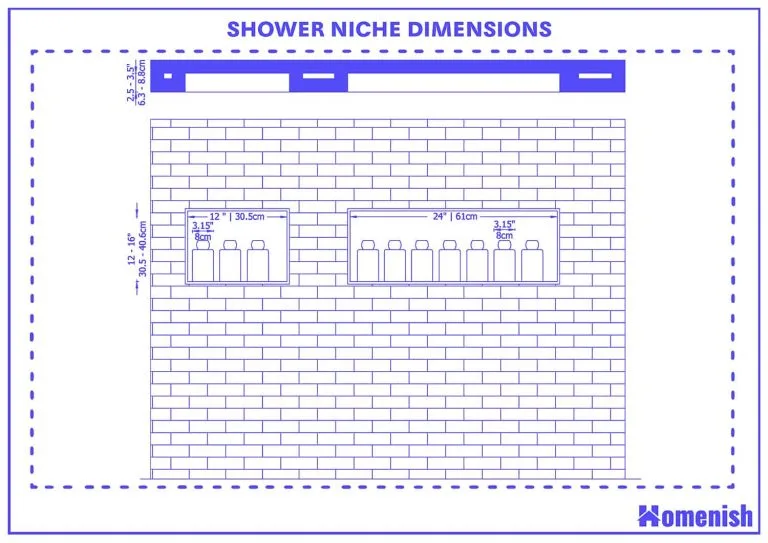
Image source: Bing (Web (fair-use with source credit))
How deep is a standard shower niche?
Most standard shower niches are 3.5 to 4 inches deep, and that's the number that should drive every styling decision you make. Common face sizes run 12×12, 12×24, and 14×14 inches. Builder-grade niches cluster around these dimensions because they fit standard tile modules.
So a 4-inch-deep niche on a 12-inch-wide opening isn't a display case. It's a shallow ledge. Anything wider than the niche looks cramped instantly.
If it's shallow, do this. If it's deep, do that.
Shallow niche (3.5 to 4 inches): go vertical. Slim bottles, one narrow tray, one tall stem. Skip big ceramic jars.
They'll cup the wall and block your elbow room.
Deep niche (5 to 6 inches): you've got actual staging space. Run two layers front to back. Everyday bottles go behind.
The decorative layer sits forward where you can see it.
Wide niche (24 inches or more): split it visually into two zones. One functional, one styled. Otherwise it reads as an empty shelf with random stuff on it.
Check drainage and slope before adding anything
Stand in the shower and run it for two minutes. Watch where water lands in the niche. If droplets bead on the shelf base and evaporate slowly, you've got a low spot.
Per TCNA wet-area guidance, niche bases should shed water forward. A tray with slotted drainage helps mask small pooling issues. It won't fix real slope problems.
The 3-Zone Layout: How to Place Tall, Mid, and Small Pieces So It Reads Intentional
Random objects look like clutter. Ordered ones look styled. The difference is almost always height placement, not the objects themselves.
Think in three visual zones: back-tall, mid-medium, forward-small. Your eye reads that as depth. It's the same trick retail shelves use.
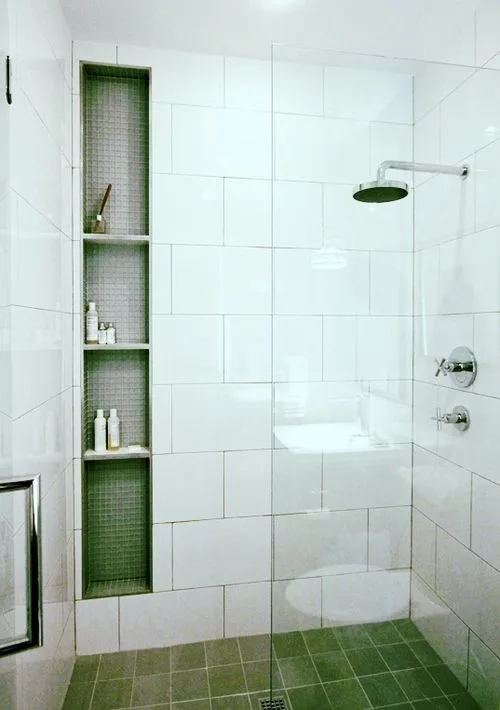
Image source: Bing (Web (fair-use with source credit))
Back row: the tallest single item
Pick one hero object and give it the back corner. A tall refillable pump bottle works. So does a single sealed glass jar or a bundle of dried eucalyptus in a slim vase.
One item only. Two tall objects fight each other and flatten the whole shelf.
Middle row: the everyday products
This is where shampoo, conditioner, and body wash live. Group them in a tray so they read as one unit instead of three loose bottles.
Matching bottles help a lot here. Aggregate reviews on refillable amber glass sets repeatedly mention that decanting branded bottles is the single biggest visual upgrade people make. It costs about $15 to $40 as of 2026.
Front edge: small accents only
Small pieces go at the front where the eye lands last. A bar of soap on a slotted dish. A folded sea sponge.
A single river stone.
Three small items maximum. Past that, it's noise.
The rule of three, and why odd numbers win
Odd-numbered groupings look natural to the human eye. Even numbers look arranged. It sounds fussy, but it's real, and it's why stylists default to three.
Your niche probably has three tiers or three zones. Give each one a single cluster. Don't fill every inch.
Ratio check: how much decor is too much
Aim for roughly 70% practical items and 30% decoration. That ratio keeps the niche usable while still looking styled.
If you can't reach your shampoo without moving a candle, you've overshot.
What Actually Survives Steam: Materials and Decor That Won't Mildew, Rust, or Melt
Steam is the enemy here, not water alone. Constant humidity keeps surfaces damp for hours after every shower. That's the window where mildew and corrosion start.
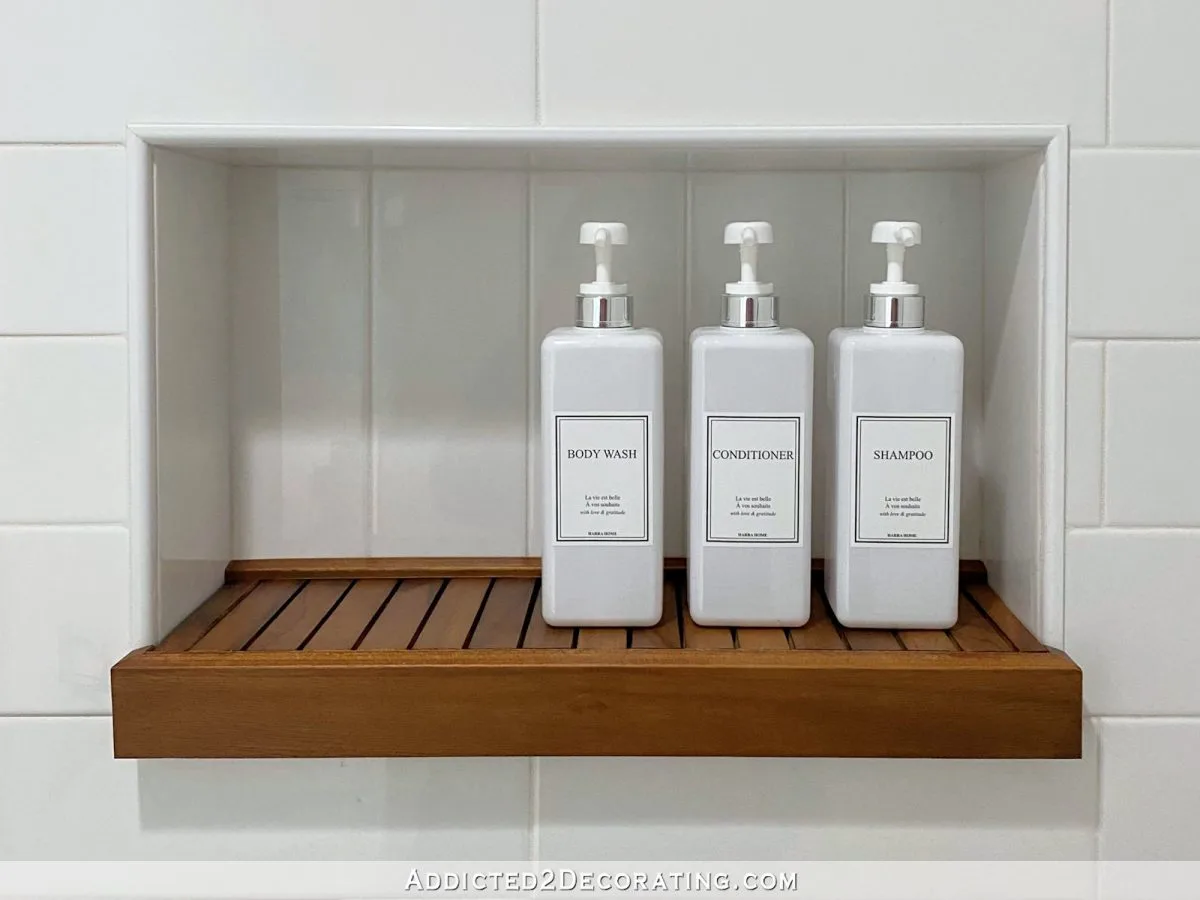
Image source: Bing (Web (fair-use with source credit))
Materials that hold up in a wet niche
- Glazed ceramic and porcelain (sealed)
- Glass, including amber and frosted bottles
- 304 stainless steel and anodized aluminum
- Natural stone trays (sealed with a penetrating sealer)
- Teak and other oily hardwoods (never untreated pine or MDF)
- Food-grade silicone
- Acrylic and PVC
- Sealed concrete or resin trays
Materials that fail fast
- Untreated wood, bamboo, and MDF
- Unsealed brass and cheap chrome-plated hooks
- Regular candles (they warp, tunnel, and grow mold on the wick)
- Paper labels and cardboard packaging
- Carbon steel anything
- Live plants that need drainage and airflow
- Fabric, including washcloths left permanently in the niche
What about real plants versus faux?
Real plants are the biggest trap here. Most shower-friendly species still need drainage and light that a niche doesn't provide. Steam doesn't substitute for watering.
Faux greenery wins on practicality. Aggregate buyer feedback on sealed faux eucalyptus stems is largely positive for the first month, with complaints clustering around dust and color fade after three to four months. Budget $3 to $15 per stem and replace seasonally.
Dried eucalyptus is the middle option. It handles humidity better than most dried botanicals, but it still discolors and needs replacing roughly monthly.
Waterproof lighting: what actually stays on
Battery puck lights are the low-risk option. Expect 20 to 60 hours of runtime per set. Stick them to dry tile above the niche, not inside where spray hits.
Hardwired LED niche strips look best, but they're a wet-location electrical install. Per NEC Article 410 in the US, fixtures in wet or damp locations must be rated for that use and GFCI-protected. In the UK, bathrooms fall under BS 7671 and often need a Part P registered electrician.
Don't skip this. A puck light is $12. A botched wet-location install is a different conversation entirely.
Mounting: adhesive, suction, or drilled
| Mount type | Typical rating | Best for |
|---|---|---|
| Suction cup | 3 to 10 lb | Light, removable, short-term |
| Adhesive strip | 5 to 15 lb | Renters, clean dry tile |
| Silicone adhesive | High | Semi-permanent, non-tile surfaces |
| Drilled anchor | Highest | Permanent, requires waterproofing repair |
Suction ratings collapse once steam and heat hit them. Manufacturer specs are tested on clean glass at room temperature, not inside a shower at 40°C. Treat those numbers as a ceiling, not a promise.
Styling Formulas You Can Copy: Spa Minimal, Refillable Clean, and Renter-Friendly
You don't need to invent a look. Pick one of these three and run it.
Spa Minimal
Neutral palette only: white, stone, warm grey, and one wood tone. Grab a stone tray, a sealed jar, three faux eucalyptus stems, and a bar of natural soap on a slotted dish. Skip lighting or add a single warm puck light above.
Best for: guest bathrooms, primary ensuites, anyone with a beige or grey tile scheme.
Refillable Clean
Everything matches. Four amber glass pump bottles in one long acrylic tray, water-resistant labels, and nothing else except one small stone accent. This is the look most people actually want, and it's the cheapest to maintain.
Cost runs about $25 to $60 depending on bottle count. Refill from a bulk jug of your regular product.
Renter-Friendly
Zero drilling, zero adhesive damage. Use a tension pole caddy for everyday bottles and keep the niche purely decorative with suction-mounted shallow trays. Test every suction mount for a week before trusting it with glass.
Best for: apartments, short-term rentals, anyone whose lease bans wall fixings.
Which one should you pick?
If you want low maintenance, pick Refillable Clean. If you're styling to sell or impress, Spa Minimal photographs best. If you can't touch the walls, go Renter-Friendly and accept a slightly busier look.
Mistakes That Ruin a Niche Fast, and the Weekly Reset That Keeps It Clean
Most niches don't fail on styling day. They fail in week three, when the first mildew spots show up behind a candle nobody moved.
Here are the mistakes we see most often in aggregate user complaints and styling forums.
- Treating the niche like a dry bathroom shelf
- Leaving washcloths or loofahs sitting flat on the base
- Putting soap directly on the tile instead of a slotted dish
- Stacking even numbers of objects
- Buying suction mounts and trusting them with glass
- Ignoring the low spot where water pools
- Overfilling a shallow niche with big ceramic jars
- Using paper labels that bleed and peel
- Forgetting the niche when you squeegee the walls
How often should you clean a shower niche?
Wipe the niche base weekly to stop soap scum and mildew from setting in, and do a deeper clean monthly. A squeegee pass over the shelf base takes ten seconds and prevents most buildup.
The weekly reset is simple. Pull everything out. Wipe the base with a mild bathroom cleaner.
Check every mount for looseness. Replace anything that looks damp underneath.
The 10-minute weekly reset checklist
- Remove all decor and bottles
- Wipe base and shelf edges
- Inspect suction cups and adhesive strips
- Flip or replace slotted trays
- Rotate faux stems so dust doesn't settle on one side
- Check for black spots in grout lines
- Dry everything before restyling
When to replace, not clean
Replace faux greenery every three to four months. Discoloration and dust buildup aren't worth fighting. Replace dried eucalyptus monthly.
Discard any tray that stays wet underneath.
If you spot black speckling in the grout around the niche, that's not decor. That's mold working into the tile assembly. Per CDC guidance on household mold, persistent growth means you need to fix the moisture source, not just clean the surface.
Budget Breakdown: What a Full DIY Niche Refresh Actually Costs
You can restyle a shower niche for anywhere between $25 and $250. The gap comes down to whether you're replacing decor or rebuilding the niche itself.
Here's what real numbers look like as of 2026.
| Refresh level | What's included | Typical cost |
|---|---|---|
| Decor-only refresh | Trays, bottles, stems, soap dish | $25 to $75 |
| Decor plus lighting | Above, plus battery puck lights | $50 to $150 |
| Full restyle with new inserts | Preformed foam or stone shelf inserts | $120 to $400 |
| Full niche rebuild | Demo, waterproof, retile, trim | $300 to $900+ |
Where the money actually goes
Refillable amber glass bottles run $15 to $40 for a set. Stone or teak trays land at $20 to $60. Faux eucalyptus stems are $3 to $15 each.
Sealed jars are $8 to $25.
Preformed tile-ready foam niches cost roughly $30 to $120 on their own. Installation is where the real spend sits.
What you can skip
Skip custom LED strips unless you've already got a wet-location electrician lined up. Skip natural stone trays if your water is hard. Skip real plants entirely.
Skip anything with paper labels.
What's worth spending on
Spend on the tray. A good slotted tray is the single piece that keeps everything else dry. Spend on bottles you actually like refilling.
Spend on one hero object you'll still like in a year.
Frequently Asked Questions
How do I style a small shower niche?
Style a small niche vertically with one tall item at the back, one tray in the middle, and one small accent at the front. Cap decor at three objects total. Skip large jars that cup the wall and block your arm room.
Do I need to waterproof decor before putting it in a shower?
Yes, for anything porous. Seal stone trays with a penetrating sealer. Seal wood with a marine-grade finish.
Avoid untreated bamboo, MDF, and paper entirely. Glass, ceramic, and 304 stainless don't need sealing.
What can I put in a shower niche that won't get moldy?
Glazed ceramic, glass, stainless steel, sealed stone, teak, silicone, and acrylic all resist mold well. Faux stems handle humidity better than real plants. Aromatherapy shower steamers work if you use them up quickly and keep them sealed between uses.
Can I drill into a tiled shower niche?
You can, but you'll breach the waterproofing layer. That's the risk. Per ANSI A118 tile installation standards, any penetration in a wet area must be resealed with a compatible waterproofing product.
If you're renting, don't drill at all.
Are candles safe in a shower niche?
Candles are a bad fit for steam. Heat and humidity warp the wax, tunnel the wick, and encourage mold growth on the surface. If you want ambiance, use a battery puck light rated for damp conditions instead.
How do I stop my niche decor from rusting?
Use 304 stainless steel, anodized aluminum, or sealed brass. Skip chrome-plated hooks and any carbon steel. Wipe metal items dry after showers and check for pitting monthly.
Suction and adhesive mounts fail before the metal does.

Similar Posts