Celadon Styling in Bathrooms: Serene Ideas That Work
Founder & Lead Interior Stylist at DIY Interior Decorating · NCIDQ Certified, ASID Professional Member · 14+ years in residential interior styling, DIY furniture upcycling, and spatial color harmony
Celadon styling in bathroom spaces looks simple until you try it. The color you saw online, that soft blue-green that felt calm and expensive, turns minty under your vanity lights or gray in a north-facing room. That shift isn't a mistake on your part.
It's how celadon actually behaves.
Celadon isn't one color. It's a family of glazes and paints spanning blue-green, gray-green, and warm sage-mint. Lighting changes it dramatically, and there's real science behind that.
Color temperature matters here: 2700K bulbs push celadon toward green, while 4000K pushes it toward mint. Manufacturer specs and the ANSI A137.1 tile standard confirm how much finish and variation affect what you actually see. So let's figure out which celadon you have before we style anything.
celadon styling in bathroom
Celadon styling in bathroom design means pairing a soft blue-green glaze or paint with neutral anchors, warm metal fixtures, and lighting that keeps the color true. Start by identifying your celadon family. Then test swatches under your real bathroom lighting.
Keep one neutral plus one metal accent, and choose grout that supports the tile instead of fighting it.
First, Figure Out Which Celadon You Actually Have
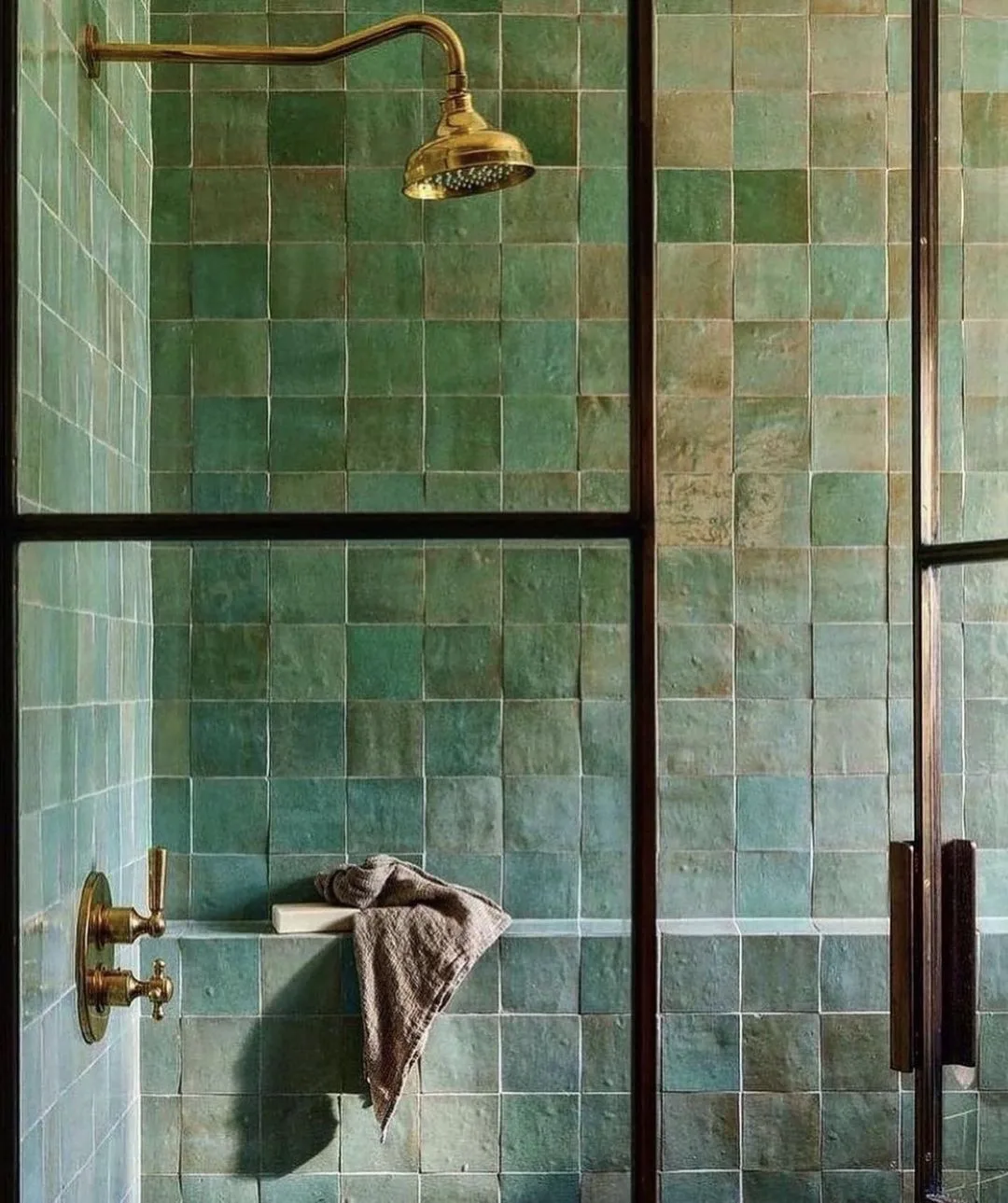
Image source: Bing (Web (fair-use with source credit))
If your celadon looks different from the photo that inspired you, the first suspect is the celadon itself. People use one word for four very different colors. Knowing which one you're holding changes every decision after this.
The Four Celadon Families (and Why They Don't Style the Same)
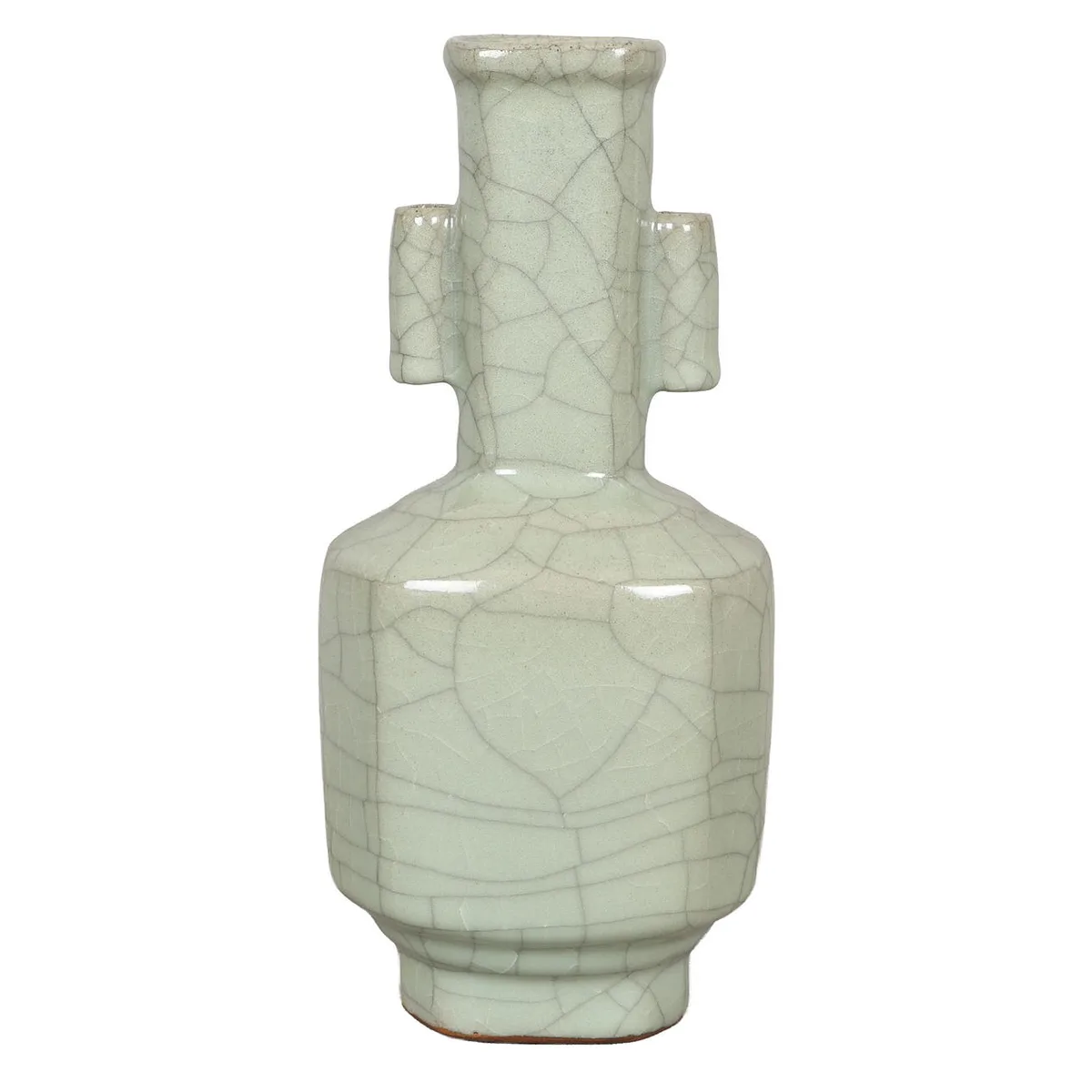
Image source: Bing (Web (fair-use with source credit))
Traditional Chinese celadon from Longquan runs soft blue-green and often shows crackle glaze. Korean celadon (Goryeo cheongja) sits cooler and grayer, sometimes with inlay work. Japanese seiji leans bluish and cooler still.
Western "celadon" paint is usually a warm sage-mint with no blue at all.
That last one is where most confusion starts. If you buy a celadon paint and expect it to match a celadon tile, you may be pairing two unrelated colors.
| Family | Dominant Tone | Common Form |
|---|---|---|
| Chinese Longquan | Soft blue-green | Crackle ceramic |
| Korean cheongja | Gray-green | Inlaid ceramic |
| Japanese seiji | Cool blue-green | Porcelain |
| Western paint | Warm sage-mint | Wall paint |
How to Identify Yours From a Photo, Sample, or Tile Box
Look at the label first. A tile box will usually list a shade variation rating (V1 through V4) and the glaze name. V1 means uniform.
V4 means dramatic variation within the same batch.
No label? Compare your sample to a true white sheet of paper in daylight. Warm celadon will look slightly yellow-green next to it.
Cool celadon will look slightly blue.
What Celadon Does Under Your Bathroom's Lighting
Your bathroom lighting rewrites the color. This is the single biggest reason celadon swatches look wrong once installed. Test before you commit, not after.
Color Temperature: Why 2700K Turns Celadon Green and 4000K Turns It Minty
Color temperature is measured in Kelvin. Lower numbers are warmer and push celadon toward yellow-green. Higher numbers are cooler and pull it toward mint or toothpaste territory.
Here's the practical range:
- 2700K: warm, cozy, but can muddy a cool celadon
- 3000K: neutral, the sweet spot for most celadon
- 4000K and up: crisp and clean, but celadon reads minty
For accurate color rendering, look for a CRI of 90 or higher. Lower CRI bulbs distort greens badly.
North-Facing vs. South-Facing Bathrooms
Natural light matters just as much. A north-facing bathroom gets cool, indirect daylight all day. That pushes celadon toward gray.
South-facing rooms get warm direct light and pull celadon toward yellow-green.
If you can't change the window, change the bulb. Match your artificial light to counteract the room's natural bias.
The Swatch Test That Actually Works
Here's the test that saves the most returns:
- Tape your tile, paint chip, and stone sample to the wall together.
- Look at them at 9am, 3pm, and 9pm.
- Turn on your actual vanity lights and look again.
- Photograph each sample on its own, then compare later.
If the celadon still looks calm at all three times, it's your color. If it goes minty or gray at any point, keep looking.
Building the Palette: Pairings That Hold Up
Celadon is a supporting color, not a scene-stealer. Build around it with restraint. The palette that works is almost always celadon plus a neutral plus one metal.
Fixture Finishes: Brass, Nickel, Chrome, and Matte Black

Image source: Bing (Web (fair-use with source credit))
Brass and celadon are the classic pairing. Unlacquered brass warms up a cool celadon beautifully and develops patina over time. Polished nickel sits between warm and cool and rarely clashes.
Chrome is the riskiest choice because it can make celadon look dated and cheap. Matte black adds contrast and works well in modern or Japandi bathrooms.
If you're unsure, brass or brushed nickel is the safer bet. Both soften celadon instead of sharpening it.
Stone, Grout, and Neutral Anchors
Celadon needs a neutral to breathe against. Warm whites, travertine, and limestone keep the room inviting. Cool Carrara and Calacatta marble push the whole scheme cooler.
Neither is wrong, but pick one temperature and stay consistent.
Grout deserves its own decision. Matching grout makes the tile look seamless. Contrasting grout adds pattern and visual texture.
The Layering Rule: Celadon Plus Neutral Plus Metal
The rule of three keeps celadon rooms from going flat. One celadon surface, one dominant neutral, one metal accent. Break that rule and you get the classic monotone mistake, where the tile, wall, and vanity are all celadon and the room feels like a single unbroken block of color.
Per TCNA guidance on wet-area design, balance also matters for maintenance. More grout lines mean more sealing and cleaning, especially in showers. Keep that in mind as you layer.
Choosing Celadon Surfaces: Tile, Paint, Stone, and Accessories
Not every celadon surface belongs in every bathroom. Where you put it changes how it performs and how long it lasts.
Zellige vs. Ceramic vs. Porcelain Slab
Zellige is handmade Moroccan tile with dramatic shade variation. Expect 15 to 30 percent difference between tiles in the same batch. It's stunning on walls but fussy in wet zones.
Ceramic celadon subway tile is uniform, affordable, and easy to install. It's the practical pick for most bathrooms. Porcelain slab gives you a large-format, low-grout surface that's excellent for shower walls and floors.
| Surface | Best For | Watch Out For |
|---|---|---|
| Zellige | Feature walls, backdrops | Needs sealing, high variation |
| Ceramic | General walls, backsplashes | Less color depth |
| Porcelain slab | Shower walls, floors | Higher cost, heavier |
Glossy vs. Matte vs. Crackle Glaze
Glossy celadon reflects light and feels fresh, but shows water spots. Matte is quieter and hides smudges better. Crackle glaze adds vintage character but needs sealing and gentle, pH-neutral cleaning.
Where Celadon Works and Where It Doesn't (Wet Zones, Floors, Small Rooms)
Celadon shines on walls, backsplashes, vanity fronts, and accent surfaces. It's riskier on floors. Glossy celadon floor tile can be slippery, so check the coefficient of friction.
Per ANSI A326.3, wet-area floors should hit a DCOF of at least 0.42.
In small bathrooms, keep celadon to one surface or two. Too much of it closes the room in.
Visual Mistakes That Wreck a Celadon Bathroom
Most celadon disappointments are visual, not structural. Here's what to watch for before you order anything.
Undertone Clashes and Same-Tone Flatness
A warm celadon next to a cool gray stone looks muddy. Two different celadons, like a paint and a tile, can fight each other badly. And a celadon vanity, wall, and tile together create a flat, monotone room with no depth.
The fix is simple. Anchor with a neutral and vary the finishes. Matte tile plus glossy paint gives the eye somewhere to land.
Grout, Lighting, and Photography Traps
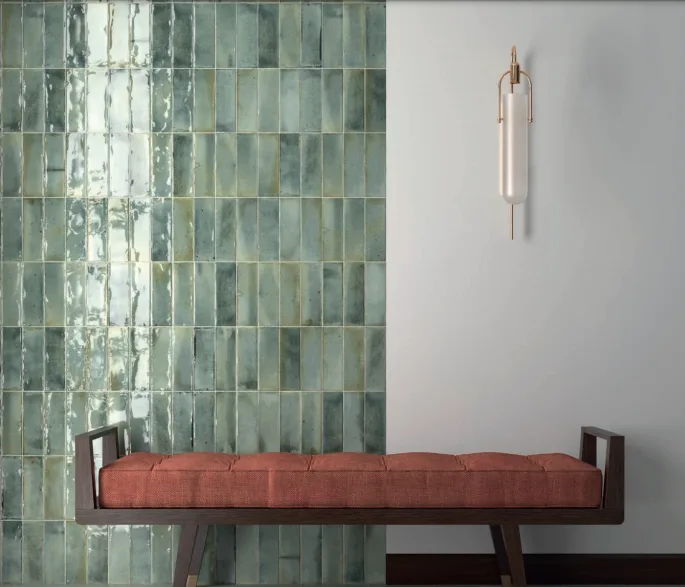
Image source: Bing (Web (fair-use with source credit))
Dark grout on light celadon makes the room busy and patterned. Bright white grout can wash the color out. A soft gray or matching grout is usually the safest call.
Lighting and photos are the other trap. Celadon photographs very differently under phone cameras and showroom lights. Sweep a quick check in your room at night before committing.
In our research, almost every celadon "bait and switch" complaint traces back to lighting or grout, not the tile itself.
Costs, Lead Times, and Specs Worth Knowing
Budget is where celadon plans stall. The color is cheap to paint and expensive to tile, and the gap between those two is bigger than most people expect.
Paint is the low-risk entry point. A gallon of quality celadon paint covers roughly 350 to 400 square feet and runs $40 to $90. One gallon usually handles a powder room with room to spare.
Tile costs spread much wider:
- Ceramic celadon: $3 to $8 per square foot
- Zellige celadon: $15 to $40 per square foot
- Porcelain slab: quote-based, often $40 plus per square foot
Add 10 to 15 percent overage for cuts and waste. For zellige, go 20 percent because shade variation means you'll reject some tiles.
Lead times matter as much as price. Ceramic ships in one to three weeks. Zellige runs four to eight weeks from Morocco.
Porcelain slab takes two to six weeks depending on the fabricator.
Plan the whole room on one timeline. If your tile arrives in eight weeks and your brass fixtures arrive in twelve, you'll have a half-finished bathroom and a frustrated installer.
Maintenance: Keeping Celadon Looking Right Long-Term
Celadon is low-maintenance if you treat each surface according to its finish. The wrong cleaner does more damage than neglect.
Clean glazed tile with a pH-neutral cleaner and a soft cloth. Skip acidic products entirely on crackle glaze. Acid etches the surface and dulls the celadon over time.
Seal zellige grout annually. Zellige tile itself is porous and absorbs moisture, so a penetrating sealer protects both the grout and the tile face. Reapply in wet zones like showers more often.
Crackle glaze needs the same treatment. That fine webbing is beautiful, but it invites water into the glaze surface. Seal it and clean gently.
Brass has its own routine. Unlacquered brass develops patina as it ages. Some people love that warmth.
If you want it shiny, a brass polish brings it back, but you'll strip the patina each time.
A Quick Surface Care Table
| Surface | Cleaner | Frequency | Sealer |
|---|---|---|---|
| Glazed ceramic | pH-neutral | Weekly | Not needed |
| Zellige | pH-neutral | Weekly | Annual |
| Crackle glaze | pH-neutral | Weekly | Annual |
| Unlacquered brass | Brass polish | As desired | Not needed |
Real Scenarios: Three Celadon Bathrooms and What Each Got Right
The same celadon behaves differently in different rooms. Here are three common setups and the decisions that made them work.
The Small North-Facing Powder Room
This is the toughest lighting case. Cool indirect daylight pushes celadon gray. The fix is warm artificial light at 2700K to 3000K and a warm neutral anchor.
Pair a celadon vanity with a warm white wall and brass faucet.
Keep celadon to one surface here. A full celadon powder room in cool light feels dim and flat.
The South-Facing Primary Bath
Warm direct light pulls celadon toward yellow-green. That's usually flattering, but it can go muddy. Anchor with cool stone like Carrara and brushed nickel.
The cool tones balance the warm light.
This room can handle more celadon. A zellige shower wall plus a celadon-painted vanity works because the natural light keeps the color lively.
The Renter-Friendly Refresh
No tile changes allowed. Celadon styling here means paint, accessories, and textiles. A removable peel-and-stick celadon backsplash or a repainted vanity front changes the room for under $200.
Keep fixtures neutral. Renting means you can't swap the chrome, so lean on linen towels, ceramic accessories, and a framed mirror instead.
Frequently Asked Questions
Is celadon warm or cool?
It depends on the family. Western paint celadon is warm sage-mint. Chinese and Korean celadon run cooler blue-green and gray-green.
Test your specific sample under your bathroom's lighting before you decide, because the same celadon reads warm in one room and cool in another.
Does celadon tile work in a small bathroom?
Yes, if you keep it to one or two surfaces. A celadon backsplash or vanity front adds calm without closing the room in. A full celadon small bathroom feels flat and dim, especially in north-facing light.
Anchor with white and add warm metal.
Can I mix celadon paint and celadon tile?
Only if they share the same undertone. Warm paint celadon next to a cool blue-green tile looks muddy. Compare both samples side by side in daylight.
If they fight, pick one celadon surface and let the other be a neutral.
What grout color goes with celadon tile?
Matching or soft gray grout is the safest choice. White grout can wash the celadon out. Dark grout makes the room busy and patterned.
In wet zones, seal the grout annually regardless of color. Zellige needs a penetrating sealer to protect both tile and grout.
Is zellige celadon worth the cost and upkeep?
It depends on where you put it. On a feature wall, zellige's variation and depth are hard to beat. In a shower, the sealing and cleaning load is real.
If you want low maintenance, ceramic or porcelain celadon gives you the color without the fuss.

Similar Posts