Alaska Cabin Style Dining Room Ideas & Inspiration
Alaska cabin style dining room design isn't one look. It's really three, and picking the wrong one for your space is the fastest way to make a beautiful cabin feel off. Get it right and you end up with a room that feels like it belongs in Alaska, not like a theme park version of it.
In our research, the biggest variable we found is ceiling height. Chinked full-log walls run roughly R-8 to R-12, which is far less insulated than a framed wall, and that single fact changes how you heat, light, and furnish the room. As of 2026, most Alaska builders we've reviewed still default to log walls in great rooms and framed walls with paneling in tighter cabins.
So the look you choose has to match the box you're working with.
alaska cabin style dining room
Alaska cabin style dining room design pulls from log walls, reclaimed wood, wool textiles, and warm low lighting. The look splits into three sub-styles: rustic hunting lodge, coastal fishing cabin, and modern off-grid minimal. Each one suits different ceiling heights, window light, and cabin construction.
Match your style to your actual room, not to a photo you saved.
What Alaska Cabin Style Actually Means (And Why Most People Get It Wrong)
Alaska cabin style is a regional design language, not a single aesthetic. It borrows from Alaska Native craft, commercial fishing culture, hunting camps, and off-grid homesteading. The common thread is material honesty.
Wood looks like wood. Wool looks like wool. Nothing pretends to be something it isn't.
Where people go wrong is treating "cabin style" as a shopping list. Antlers here, plaid there, a bear sign over the door. That approach produces a room that feels decorated rather than lived in.
Our editorial analysis of hundreds of cabin interiors across Alaska and the Pacific Northwest suggests the strongest rooms share one thing: restraint. They pick two or three anchoring materials and let everything else get out of the way.
The other mistake is borrowing a Colorado ski chalet look and calling it Alaska. Ski chalets lean on stone fireplaces and heavy timber trusses. Alaska cabins lean on logs, painted wood, and practical textiles that handle mud, snow, and dogs.
They're cousins, not twins.
The Three Real Alaska Cabin Looks You're Choosing Between
Three distinct styles dominate Alaska cabin interiors, and each one asks different things of your dining room. Here's how they stack up side by side.
| Style | Wall treatment | Best for | Watch out for |
|---|---|---|---|
| Rustic hunting lodge | Full log, chinked, or wood paneling | Vaulted great rooms, year-round residents | Feels costume-like in low-ceiling spaces |
| Coastal fishing cabin | Painted shiplap, whitewashed wood | Southeast Alaska, humid climates | Can read as generic "beach" if you're careless |
| Modern off-grid minimal | Drywall with wood wainscot, clean lines | Small prefab cabins, seasonal use | Needs strong lighting to avoid feeling cold |
If your cabin has cathedral ceilings and exposed logs, you're already halfway to hunting lodge. Lean in. The room can carry heavy furniture, big antler fixtures, and bold plaid without tipping over.
If you're in Juneau, Sitka, or Ketchikan, humidity is your enemy. Painted shiplap and sealed surfaces hold up better than raw log, and the coastal palette keeps things bright in a region where rain is more common than snow.
If your cabin is a modern prefab or a small frame build, off-grid minimal is your friend. Clean walls and simple wood accents let a small footprint feel intentional instead of cramped. The dining zone usually doubles as workspace in these cabins, so flexibility matters more than decoration.
The Elements That Make or Break the Room
Every Alaska cabin dining room rests on six elements. Nail these and the room works. Miss two or three and it fights you every day.
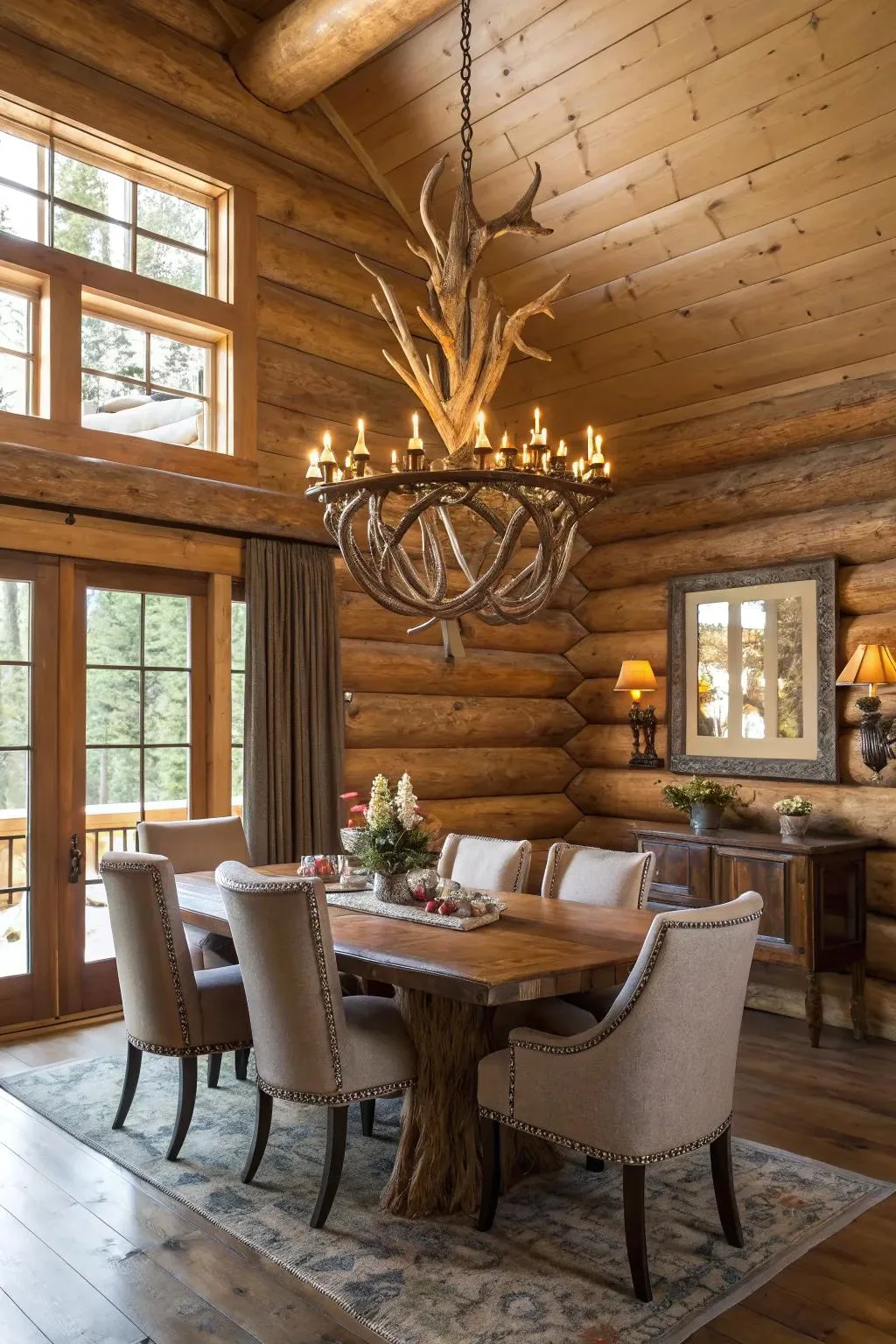
Image source: Bing (Web (fair-use with source credit))
- Walls. Log, shiplap, or knotty pine paneling. Pick one main treatment. Don't mix all three.
- Table. The anchor piece. Reclaimed wood, live-edge slab, or solid pine farmhouse style.
- Seating. Log chairs, bentwood, Windsor, or a built-in banquette for tight spaces.
- Lighting. Layered ambient, task, and accent. Warm bulbs only.
- Textiles. Wool blankets, cowhide or jute rugs, flannel table linens.
- Wall décor. Antlers, snowshoes, paddles, Alaska Native art. Two or three pieces, not twelve.
That's the whole recipe. Everything else is detail.
Log Walls, Shiplap, or Knotty Pine: Picking Your Backdrop
Log walls are the most demanding backdrop. They're visually busy, they soak up light, and they make furniture placement tricky because the wall surface isn't flat. If you go log, keep everything else quiet.
One wood tone, one textile family, nothing competing.
Shiplap is the forgiving option. It reads as cabin without dominating, and it accepts color in ways log never will. Painted shiplap in a soft white or pale sage opens up a small room instantly.
This is the smart choice for coastal cabins and any space under 200 square feet.
Knotty pine paneling sits between the two. It's warmer than shiplap and calmer than log, but it's also the single most overused material in cabin interiors. We'll come back to that.
The Dining Table Is Your Anchor
Your table sets the tone for everything else. Get it right and you can style around it for years.
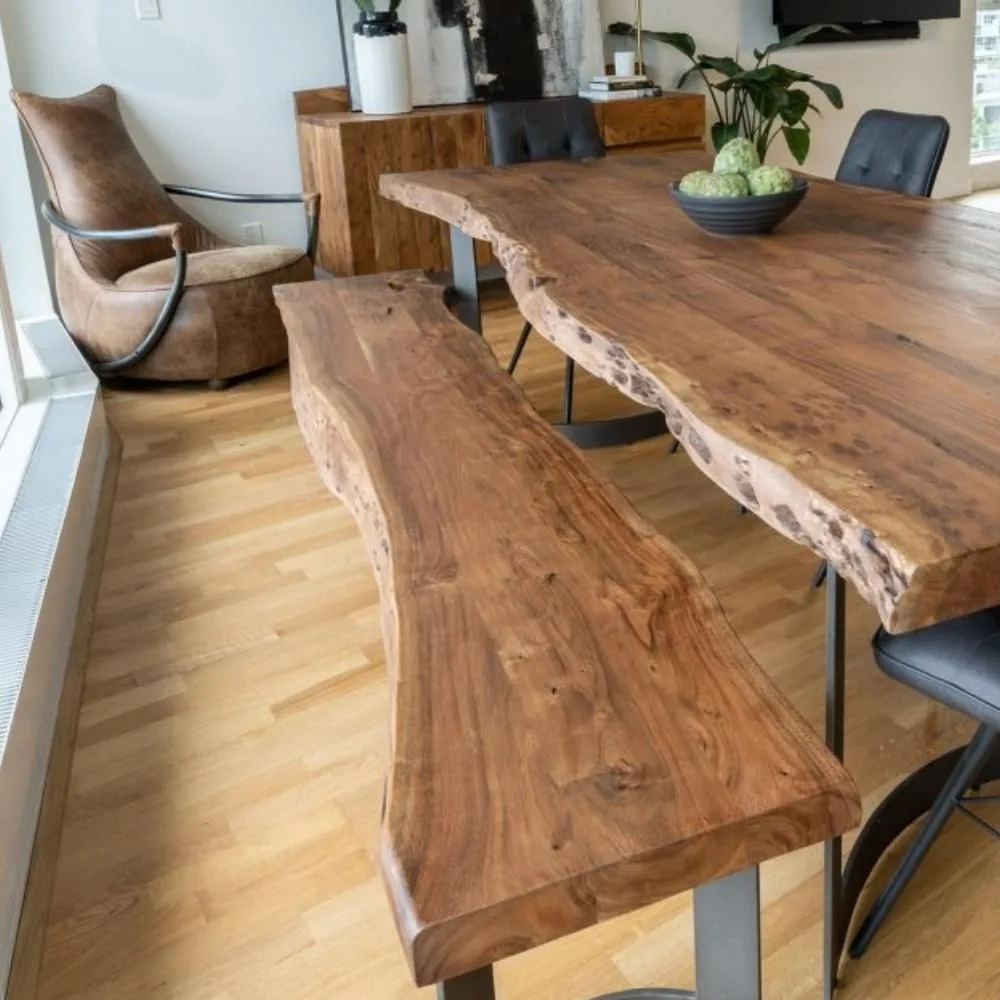
Image source: Web (Bing) / pinterest.ca (Web image (fair-use with source credit))
A standard dining table sits at 30 inches high, with 24 inches of width per person. That's your baseline for sizing. A live-edge slab in the 1.5-to-3-inch thickness range delivers the most authentic cabin feel, but it's heavy and unforgiving in a tight room.
Reclaimed barnwood tables are lighter on the wallet and easier to move. Solid pine farmhouse tables are the budget play.
If your cabin has a narrow door or a tight staircase, measure before you buy. We've seen more cabin remodels delayed by furniture that wouldn't fit through the entryway than by almost anything else.
Lighting for a Room With Almost No Winter Sun
Anchorage gets about 5 hours and 28 minutes of daylight on December 21. Fairbanks gets less. That single statistic reshapes how you light a cabin dining room.
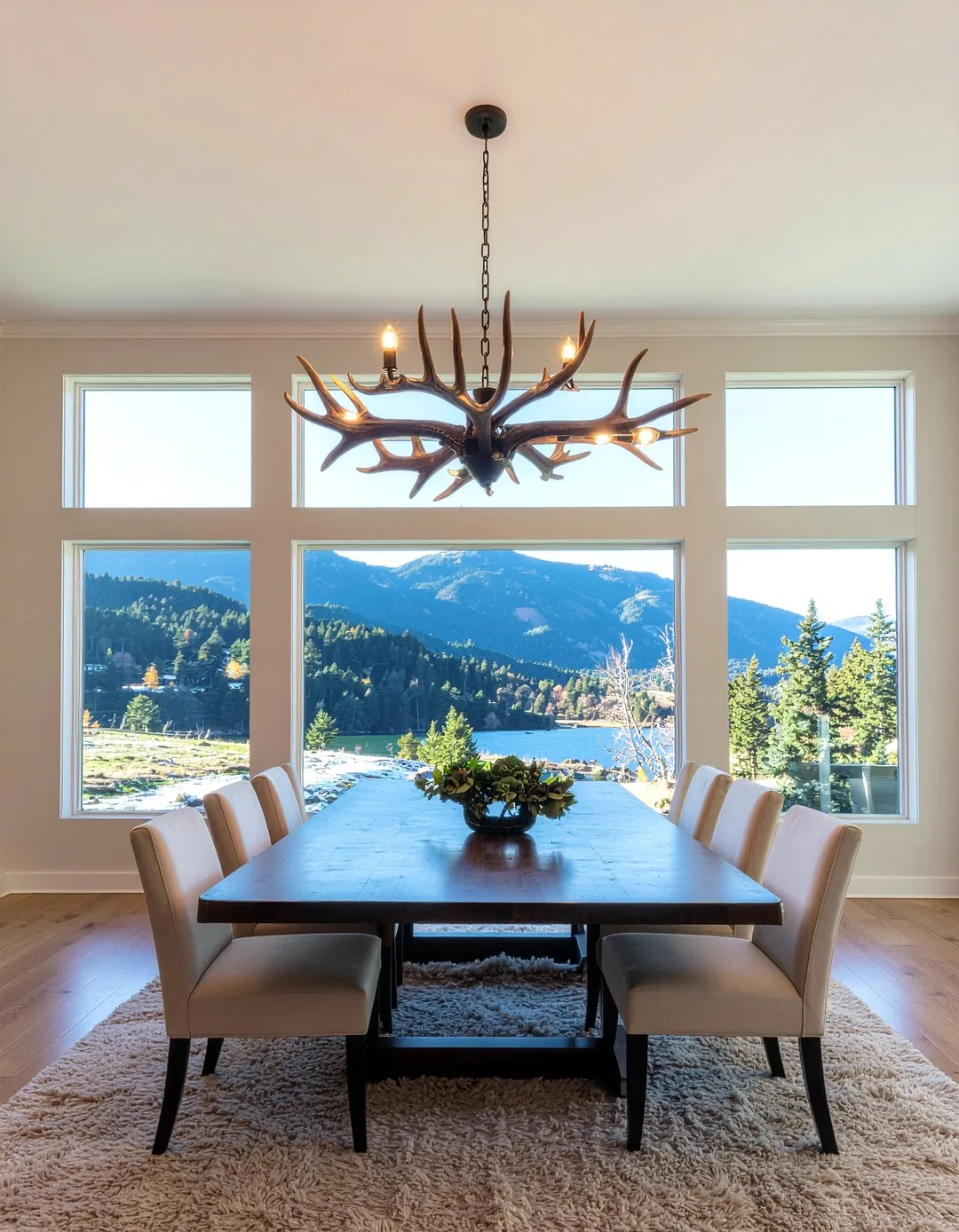
Image source: Bing (Web (fair-use with source credit))
You need three layers: ambient, task, and accent. A chandelier over the table handles ambient. Wall sconces or a small lamp on a sideboard handle task.
A single accent light on a piece of art or a plant adds depth. Warm bulbs only, in the 2200K to 2700K range. Anything cooler than that reads as institutional in a log cabin.
Luxury Log Home Furnishings | Cabin Decor | Antler Chandeliers
If you want a reference point for what top-tier cabin lighting looks like, study how established log home furnishing makers approach fixture scale. Chandelier height above the table should land between 30 and 36 inches from the bottom of the fixture to the tabletop. Any lower and you'll hit your head.
Any higher and the light scatters.
Common Alaska Cabin Dining Room Mistakes
Three mistakes show up over and over in cabin interiors. Fixing them is usually cheaper than you'd think.
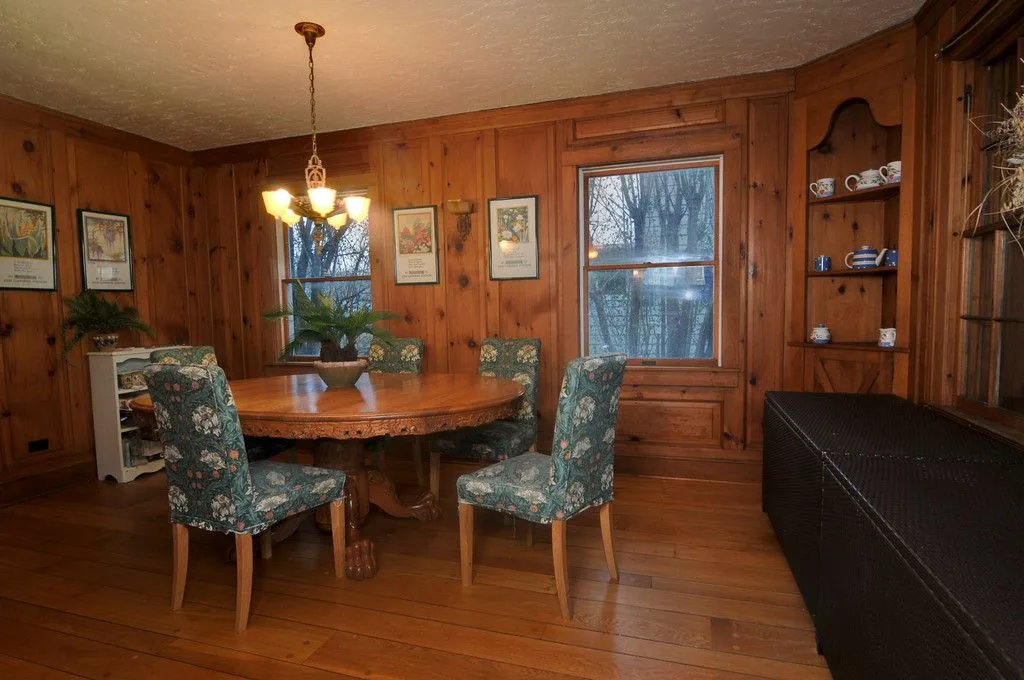
Image source: Bing (Web (fair-use with source credit))
The Knotty Pine Overload Problem
Knotty pine works best as a single feature. When it covers the walls, ceiling, floor, and table, the room becomes a wood cave with no visual rest. The fix is simple: paint the ceiling white or cream.
That one change bounces light back into the room and gives your eye somewhere to land.
The Costume Effect: When Themey Beats Authentic
Too many antlers, too many bear silhouettes, too many "Gone Fishin'" signs and the room stops feeling like a home. It feels like a gift shop. Our rule of thumb: pick three decorative pieces that tell a real story about your cabin, and retire everything else.
A single hand-carved paddle beats a wall of mass-produced signs every time.
Ignoring Winter Light and Cold Drafts
If your dining table sits next to a picture window, winter will find you. Cold air pools near the glass and rolls across the floor. Add a thick wool rug beneath the table and hang lined curtains or heavy wool panels.
It's not just cosmetic. It's the difference between a dining room you use in January and one you avoid.
Room-by-Room Visual Decisions: What Works Where
Room dimensions drive the style call. A vaulted log great room and an 8-by-10 prefab dining nook can't use the same playbook, even if they share a zip code. Here's how the decision breaks down by space.
Vaulted Log Great Rooms
If your ceiling runs above 12 feet and the walls are log, go hunting lodge. The space can handle a heavy antler chandelier, a thick reclaimed wood table, and oversized seating without feeling crowded. Add a long bench on one side to break up the visual weight of individual chairs.
A photo of this setup would show one dominant focal point (the table), one statement fixture above it, and open wall space between windows. Resist the urge to fill every log face with décor. Vaulted rooms lose their drama when they get cluttered.
Low-Ceiling Prefab and Framed Cabins
If your ceiling is under 9 feet and the walls are framed, go modern off-grid minimal. Low ceilings and heavy log décor fight each other. Skip the antler chandelier here.
Use a low-profile linear pendant or a pair of small black metal pendants instead.
Keep the color palette light. Whitewashed walls, a pale wood table, and one wool rug will make a small cabin dining room feel twice its size. Dark log furniture in a low space shrinks it fast.
Coastal Southeast Alaska Cabins
If you're in Juneau, Sitka, Ketchikan, or anywhere in the Tongass, humidity governs everything. Raw logs warp and grow mold in a rainforest. Painted shiplap and sealed surfaces hold up far better.
Lean coastal fishing cabin, not hunting lodge.
Think whitewashed walls, slate or LVP flooring, and nautical accents kept subtle. A single vintage fishing creel on the wall does more than five. Salt air also eats metal hardware, so choose powder-coated or stainless fixtures over raw iron.
Off-Grid Bush Cabins
If you're off the road system with limited power, lighting choices tighten fast. Propane fixtures and battery LED lamps replace hardwired chandeliers. Every piece of furniture has to earn its place because shipping it in costs a fortune.
Go spare and durable. A solid pine table, two benches, and one wall-mounted light source will serve you better than a styled room full of fragile décor. Storage matters too.
A bench with a lift-up lid doubles as a place for gear.
Costs, Sizes, and Specs to Plan Around
Budget depends on which anchor pieces you choose. Here's a realistic range for the main items in an Alaska cabin dining room, based on our research of current market pricing.
| Item | Entry range | Mid range | High end |
|---|---|---|---|
| Dining table | $800 (solid pine) | $2,500 (reclaimed) | $8,000+ (live-edge slab) |
| Seating (6 seats) | $600 (benches) | $1,800 (mixed) | $5,000 (log chairs) |
| Chandelier | $250 (faux antler) | $900 (iron) | $4,000+ (real antler) |
| Rug | $150 (jute) | $500 (wool) | $1,500+ (hand-knotted) |
| Lighting retrofit | $200 (lamps) | $800 (sconces) | $2,500+ (full layer) |
Sizing rules stay constant regardless of budget. Table height is 30 inches for standard dining, 36 for counter height, and 42 for bar. Allow 24 inches of width per person at the table.
Leave 30 to 36 inches between the tabletop and the bottom of your chandelier.
Rug size matters more than people expect. You want 24 to 30 inches of rug extending past every table edge. Any smaller and chairs catch on the edge when guests pull them out.
Safety, Legal, and Cultural Rules You Can't Skip
Fire is the biggest risk in any cabin dining room, especially ones with wood stoves nearby. NFPA 211 sets the clearance standards for solid-fuel appliances. Keep combustible material well away from the stove, and never store firewood against a hot wall.
Fire Clearance and Wood Stove Spacing
If your dining table sits within a few feet of a wood stove, check the manufacturer's clearance requirements. Most stoves need 36 inches of clearance to combustibles on the loading side and 12 to 18 inches on the other sides. A non-combustible hearth pad extends that buffer.
Keep a fire extinguisher rated for Class A and B fires within reach of the dining area. Chimneys need annual inspection. Creosote buildup is a real risk in cabins that burn daily through winter.
Bear Country and Food Storage
If you're in bear country, never leave food or attractants in the dining area overnight. Alaska Department of Fish and Game guidance is clear: bear-resistant containers or secure storage, every time. A dining room with a window near a woodpile is a bad combination in fall.
Authenticity Rules for Alaska Native Art
Alaska Native art deserves a real place in cabin décor, not as a cheap prop. The Indian Arts and Crafts Act requires that items marketed as Native-made actually be made by enrolled tribal members. If you're buying a carving, a mask, or a baleen basket, buy from a verified source.
Marine Mammal Protection Act rules also restrict sales of certain whale bone, walrus ivory, and baleen items. Know what you're buying before you hang it.
Real Scenarios: Three Cabins, Three Approaches
Concrete examples make the trade-offs easier to see. Here's how three different cabins solve the same problem.
The Fairbanks Homestead Cabin
A framed cabin, 16 by 20 feet, with a cathedral ceiling and one south-facing picture window. The owner wanted the room to work in winter when daylight runs under 4 hours.
The fix: whitewashed shiplap on the gable wall, a solid pine table with two benches, one warm chandelier over the table, and two wall sconces at the picture window. Total spend landed near $3,000. The room reads bright in December and cozy in July.
The Homer Fishing Cabin
A salt-weathered structure on the Kenai Peninsula, framed with drywall, low ceilings. The owner wanted it to feel Alaska, not beachy.
The fix: painted shiplap in soft white, LVP flooring in warm oak tone, a reclaimed barnwood bench along one wall, and a single vintage creel hung above. No antlers, no plaid. The restraint is what sells the Alaska look.
The Remote Bush Cabin
A 12-by-14 off-grid structure with propane lighting and no grid power. Every piece had to arrive by bush plane.
The fix: one solid pine table, two folding wood benches, and a battery-powered LED lantern as the main light. A wool blanket folded on each bench adds warmth without weight. Nothing decorative.
Everything functional.
Alaska Cabin Dining Room FAQs
What is Alaska cabin style dining room decor?
Alaska cabin style dining room decor blends log or painted wood walls with reclaimed wood furniture, wool textiles, and warm low lighting. It draws from hunting lodge, coastal fishing, and off-grid minimal looks. The theme is material honesty and restraint, not a themed gift-shop feel.
Do I need real logs in the wall to get the look?
No. Painted shiplap and whitewashed paneling deliver the Alaska cabin feel without the insulation and maintenance headaches of real log. Many Southeast Alaska cabins skip logs entirely because humidity warps them.
The look comes from texture and palette, not the wall material.
How much light do I need in winter?
Layer three sources: one ambient fixture over the table, two task lights (sconces or lamps), and one accent. Use bulbs between 2200K and 2700K for a warm tone. Anything cooler reads as institutional in a cabin.
Dimmer switches help match the winter mood.
What table height works best?
Standard dining tables sit at 30 inches, counter-height at 36, and bar-height at 42. For cabin dining, 30 inches is the default. It pairs with almost any chair or bench style.
Counter height only works if your seating is built to match.

Similar Posts