Bengaluru Apartment Kitchen: What to Look For
A kitchen in a Bengaluru apartment can look great in photos and fall apart in daily use. If you don't know what to check, you'll only find the problems after you've signed the agreement and moved your utensils in.
So when you visit a Bengaluru apartment, look for kitchen ventilation, water pressure, sink drainage, counter running feet, and society no-objection rules before anything else. These five things decide whether the kitchen actually works, far more than glossy modular shutters ever will.
bengaluru apartment look for kitchen
When you look at a Bengaluru apartment kitchen, check five things first. Confirm there's a real window or working exhaust. Test the tap pressure on that floor.
Watch how fast the sink drains. Measure counter running feet with a tape. Ask about society chimney and gas rules.
Everything else comes second.
What a Bengaluru Apartment Kitchen Actually Tells You Before You Sign
A kitchen tells you more about an apartment than the living room ever will. It shows how the builder treated the small, unglamorous spaces, and that's usually where the shortcuts hide.
Start with how you actually cook. Most Bengaluru households run on daily South Indian cooking: tempering, steaming, grinding, and frying. That style produces oil, steam, and masala smoke fast.
A kitchen built for light use will feel cramped and greasy within weeks if it can't clear that air.
Then ask the practical questions. Who cleans the kitchen shaft? What's the maintenance charge for plumbing repairs?
Is the modular unit part of the sale or just a render photo?
Also, match the kitchen to your stage of life. A family of four, a shared flat with three bachelors, and an NRI buying off-plan all need different things. The same layout can be perfect for one and a daily headache for another.
Here's the core idea before you walk in: you're not judging how the kitchen looks. You're judging how it behaves on a hot May afternoon while you're frying fish.
The Real Problems You're Looking For (And Why They're Local)
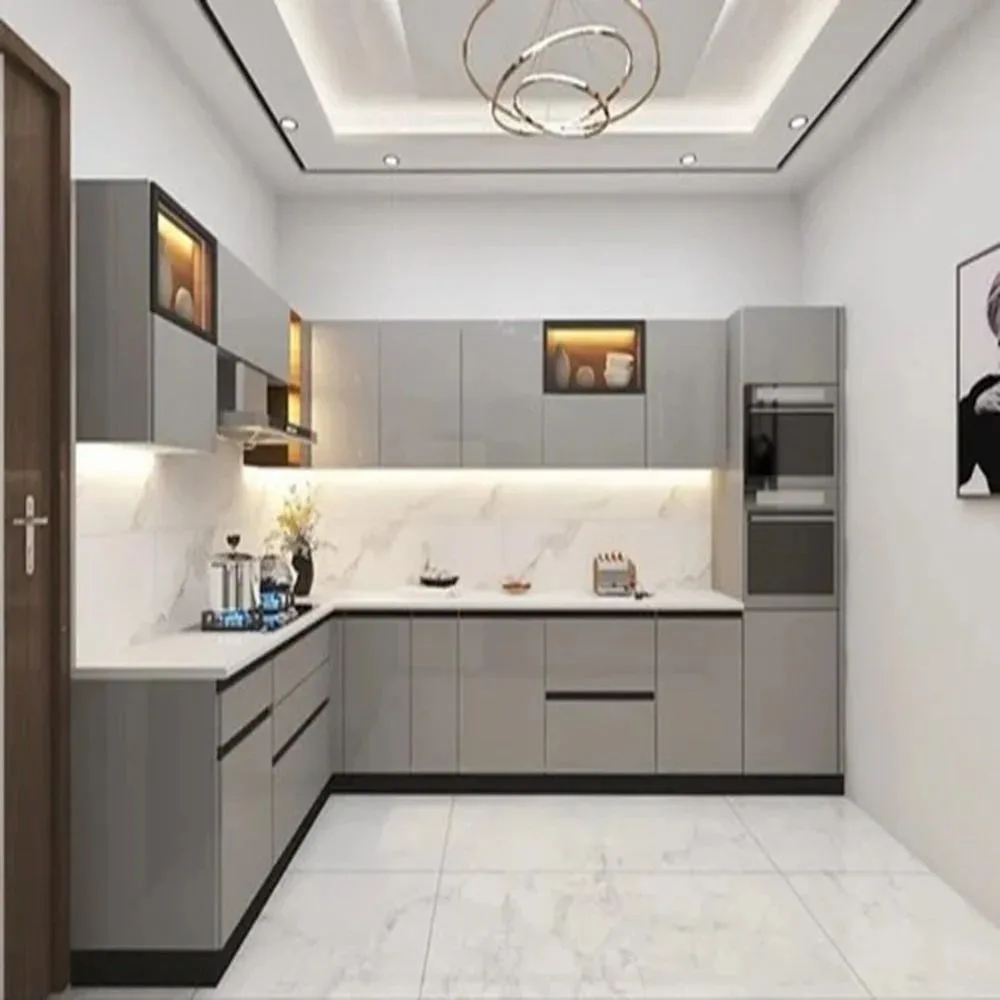
Image source: Bing (Web (fair-use with source credit))
Bengaluru kitchens fail in specific, repeatable ways. Once you know the local failure patterns, you can spot them in about ten minutes.
The big one is humidity. Bengaluru's wet months run from May to October, and that moisture attacks laminate, hinges, and particle board. Cabinets that look crisp in the listing start swelling and peeling within a year if the edge banding is thin.
Water is the second local factor. Supply differs by area: Cauvery in the south and south-east, borewell in outer zones like Whitefield's edges, and tanker dependence around Sarjapur and Electronic City. Borewell water is hard and stains fittings.
Cauvery is softer and kinder to your sink and taps.
Drainage is the third. Indian cooking sends oil, rice starch, and masala down the sink, and a shallow trap or a poor slope clogs fast. Newer flats under construction can't be commissioned for gas until the society pipeline is ready, so "ready to move" often means no gas for months.
Use this filter before you visit:
- If the kitchen has no external window and no ducted exhaust, treat it as a major problem.
- If the exhaust shares a shaft with bathrooms, expect smell to travel back in.
- If a dry waste chute sits on the kitchen wall, prepare for noise, odour, and pests.
- If the floor is 3rd or above and pressure is weak, budget for a pressure pump.
None of these show up in photos. They show up the moment you turn on a tap and stand still for two minutes.
How to Read a Kitchen in 15 Minutes: A Visual Walkthrough
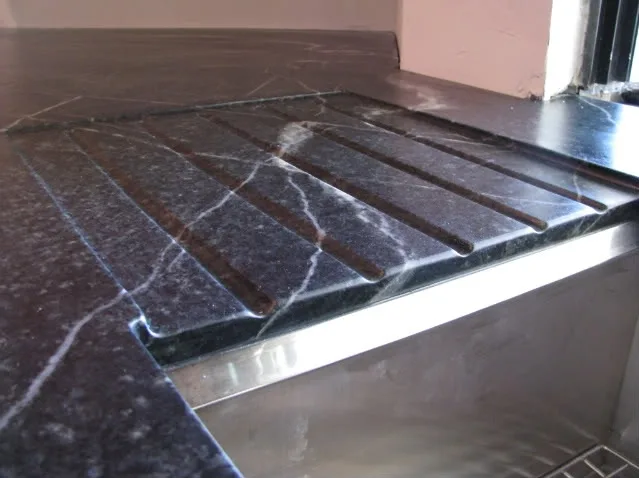
Image source: Bing (Web (fair-use with source credit))
You don't need an inspector to read a kitchen. You need a routine, done in the same order every time.
From the Doorway: Airflow, Light, and the Shaft
Stand at the entrance and pause. Ask yourself if air moves. A window facing a wall six feet away isn't real ventilation, no matter how big it is.
Trace where exhaust goes. Follow the fan or duct to the shaft and see what else empties into it. Check that daylight reaches the counter; a blind kitchen forces lights on at noon.
At the Counter: Sink, Hob, and the Work Triangle
Walk the triangle between hob, sink, and fridge. If it's cramped or broken, cooking becomes a shuffle. Measure the gap between sink and hob; 24 to 36 inches keeps the workflow clean.
Look under the sink for the trap and pipe joints. A clean, dry cabinet is a good sign. Damp wood, peeling board, or a soggy base is a red flag.
Inside the Cabinets: Hardware, Edge Banding, and Damp

Image source: Bing (Web (fair-use with source credit))
Open every door and drawer. Check the edge banding on the shutter edges; thin, uneven tape swells in humidity. Test the soft-close hinge and the drawer channel by hand.
Smell the inside. Musty cabinet interiors often mean past seepage. Check the base panels for water stains and the back panel for mould.
Under the Sink and Above the Ceiling: Plumbing and Seepage
Pour a litre of water into the sink and time it. It should drain in seconds, not minutes. Slow drainage means a clog or a bad slope.
Look up. Water stains on the kitchen ceiling are a classic sign of a leaking flat above. Note any POP cracks and any exposed wiring where a light should be.
The Bengaluru Dealbreakers: Blind Kitchens, Shared Shafts, and Chute Walls

Image source: Bing (Web (fair-use with source credit))
Some kitchens aren't worth negotiating around. They're dealbreakers because fixing them means structural changes you may not be allowed to make.
A blind kitchen is the worst. No window, no external air, and odour that lingers for hours. If the society won't allow facade ducting, a ducted chimney becomes nearly impossible.
A shared shaft is subtle until you live with it. The building code requires kitchens to have ventilation open to external air, and stacked shafts technically meet that on paper. In practice, bathroom odour drifts back through the shared duct and into your cooking space.
A chute on the kitchen wall is a slow annoyance. It carries dry waste down multiple floors, bringing sound, smell, and a steady supply of cockroaches along the joints. Check the wall the chute runs behind before you sign.
Finally, check the society's rules. Many Bengaluru societies restrict chimney ducting through external walls and discourage washing machine drainage onto dry balconies. Ask for the written NOC process, not a verbal yes.
What the Listing Won't Show You: Modular vs Civil, and Running Feet Reality
The word "modular" is doing heavy lifting in most Bengaluru listings. Sometimes it means a proper factory-built unit. Often it means one laminate shelf and a shining hinge.
Know the difference before you visit. A civil kitchen is masonry with a granite slab, common in flats built before 2010. It's tough but hard to change.
A modular kitchen uses factory-made cabinets, replaceable shutters, and organised internals.
Then there's "running feet," the number that actually matters. It's the usable length of your kitchen platform. A 2BHK usually has 6 to 10 running feet and a 3BHK about 10 to 14.
Builders quietly shave this to make rooms look bigger.
Refrigerator niches are the same story. Listings imply space, but a niche under 26 inches won't fit most fridges. Measure it.
Check whether the fridge blocks a door when open.
Countertop height matters too. Standard is 32 to 36 inches, and depth is 22 to 24 inches. If you're tall or short, a mismatch means back pain daily.
Here's a quick visual reference for what you're comparing:
| Feature | Civil kitchen | Modular kitchen |
|---|---|---|
| Countertop | Granite slab, fixed | Granite or quartz, replaceable |
| Shutters | None, open or built | Laminate, acrylic, PVC |
| Best for | Buyers who want durability | Renters and redesigners |
Neither is automatically better. A granite-topped civil kitchen in good condition often outlasts a cheap modular unit. Judge the build, not the label.
Renovating or Living With It: Costs, Society Rules, and Where You Can't Compromise
Sometimes the kitchen is fine to live with. Sometimes it needs work, and that changes the whole decision. The trick is knowing what you can fix cheaply and what you can't fix at all.
Cosmetic changes are easy. Swapping a chimney, adding under-cabinet LED strips, fitting an RO unit, or replacing door handles costs little and takes a weekend. These are the safe fixes.
Structural fixes need permission and money. Moving the sink line, rerouting drainage, or adding a window means breaking walls and getting society approval. In most Bengaluru apartments, that's where you hit a wall.
So apply your own if/then test.
- If the layout is wrong but the plumbing is fine, renovate. You're changing shutters and counters, not pipes.
- If plumbing is bad and the society won't sanction work, walk away. You'll fight that battle for years.
- If ventilation is the only problem and ducting is allowed, install a ducted chimney and move on.
- If ventilation is blocked and society bans facade work, treat it as unfixable.
Costs matter, so plan around real Bengaluru numbers rather than guesses.
Bengaluru Modular Kitchen Cost Bands
Prices vary widely by material and finish. Treat these as working ranges, as of 2026, drawn from aggregate contractor quotes.
| Kitchen type | Cost per running foot | Best for |
|---|---|---|
| Basic modular laminate | ₹1,200–₹1,600 | Renters, budget builds |
| Mid-range acrylic | ₹1,700–₹2,100 | Families who want durability |
| Premium PU and glass | ₹2,200–₹2,500+ | Buyers upgrading for the long term |
A full civil kitchen with granite often lands between ₹60,000 and ₹1,20,000 for a 10-foot L-shape. A ducted chimney runs ₹12,000 to ₹35,000 plus installation. An RO unit is ₹8,000 to ₹20,000.
Society NOCs, PNG Rules, and What the Agreement Should Say
Piped natural gas must be installed by a licensed plumber, following PNGRB city gas norms. No rubber hose through a closed cabinet. This is a safety rule, not a suggestion.
Under Bengaluru's building bye-laws, a kitchen needs ventilation open to external air. That's why blind kitchens are a compliance problem, not just a comfort one.
Get everything in writing. Your rental agreement should spell out who fixes the chimney, who cleans the shaft, and who handles a leaking sink. Verbal promises disappear when the tap drips.
For broader safety guidance on ventilation and indoor air, the Central Pollution Control Board publishes indoor air quality advisories worth checking.
Common Mistakes Renters and Buyers Make in Bengaluru Kitchens
Most people read a kitchen the way they read a menu. They look at the shiny top layer and skip the fine print. That's where the money goes.
The first mistake is trusting the word "modular." Editorial analysis of listings suggests the label gets used loosely. Always measure the actual running feet and open every shutter.
The second is ignoring water pressure until move-in day. Weak flow on a fourth-floor flat can make a sink feel broken. Test it during the visit, not later.
The third is skipping the shaft check. If the exhaust shares a duct with bathrooms, you'll smell it every evening. Look behind the fan before you decide.
The fourth is assuming appliance space exists. A fridge below 26 inches wide won't fit a standard model. A hob point shortage means extension boards across your counter.
Here are the ones that trip people up most often:
- Not testing the sink drain speed with a litre of water.
- Missing water stains on the kitchen ceiling.
- Ignoring the pooja room's proximity if it matters to your family.
- Failing to ask whether gas is commissioned or pending.
- Overlooking society rules on dry balcony washing machine drainage.
None of these are hidden. They just need you to slow down and look.
Kitchen-Specific Questions Bengaluru Buyers and Renters Keep Asking
Is a blind kitchen always a dealbreaker?
Not always, but it's a serious one. A blind kitchen has no external window, so odour lingers and moisture builds. If society allows ducted exhaust and you install a strong chimney, it can work.
If ducting is banned, walk away.
How much water pressure is acceptable in a Bengaluru flat?
Aim for 1.5 to 3 bar at the kitchen tap. In practice, check how fast a one-litre bottle fills. Under eight seconds is good.
Over fifteen seconds means you'll want a pressure pump.
Does a civil kitchen need replacing before I move in?
Only if the slab or plumbing is failing. A solid granite counter and clean pipes last for years. Replace the shutters and add organisation, and you've got a workable kitchen for a fraction of a full rebuild.
Can I run a washing machine on the dry balcony?
It depends on your society's drainage rules. Many Bengaluru societies restrict greywater flow onto dry balconies. Confirm the rule in writing before you commit, because retrofitting a drain later is costly.
What running feet should a 2BHK kitchen have?
A 2BHK usually has 6 to 10 running feet of usable platform. A 3BHK runs about 10 to 14. Builders often shrink this to make rooms look larger, so always measure with a tape instead of trusting the floor plan.
Should I get a ducted or filterless chimney?
Ducted is better for daily Indian cooking because it pushes smoke outside. Filterless recirculates air and needs regular cleaning. If your kitchen has shaft access and society approval, go ducted.
Otherwise, filterless is the practical fallback.
Your Final Walk-Through Checklist Before You Commit
Before you sign, run the kitchen through a short, repeatable check. It takes fifteen minutes and saves months of regret.
Confirm ventilation first. A real window or a ducted exhaust is non-negotiable for daily cooking. Then test the tap and the sink, and note the pressure and drain speed.
Measure the counter, the fridge niche, and the hob-to-sink gap with a tape.
Open every cabinet and smell the interiors. Check the edge banding and the hinges for quality. Look at the ceiling for seepage and the floor for pooling water.
Locate the shaft and see what else drains into it.
Ask the society about chimney ducting, gas commissioning, and dry balcony rules. Get every repair responsibility written into the agreement.
If the kitchen passes those checks, you can live with it and improve it over time. If it fails on ventilation or plumbing, no amount of modular shutters will save you. The kitchen you'll cook in every day deserves that fifteen minutes of honesty.

Similar Posts