Cream and Lavender Hallway Ideas for a Serene Home
You've picked a soft, sophisticated palette, but the wrong cream or lavender can turn your hallway grey and tired in a single afternoon. That's the real trick with cream and lavender hallway ideas: the colors only work when their undertones agree and the light plays along. Get those two things right, and a narrow corridor suddenly feels calm, bright, and intentional.
Here's the number that matters most. Paint manufacturers put out sample pots in roughly 100 to 250 ml sizes, and that's plenty for a large A2 swatch. Why bother?
Because cream can swing warm-yellow or cool-grey, and lavender can drift grey-blue or pink-grey. Below, we'll walk through what these two colors actually do to a hallway, where each element goes, and the exact steps to get it right.
cream and lavender hallway ideas
Cream and lavender make a calm, airy hallway pairing. The cream does the heavy lifting on walls and trim, while lavender adds a soft accent on doors, lower panels, or a single feature wall. Keep both colors in matching undertones.
Warm cream pairs with pinkish lavender. Cool cream pairs with grey-blue lavender.
What Cream and Lavender Actually Do to a Hallway
Cream and lavender change a hallway in ways you can see before you commit. Cream bounces light back into the space. Lavender absorbs a little of it and adds a soft, cool depth.
Together they widen a narrow corridor and soften a dark one.
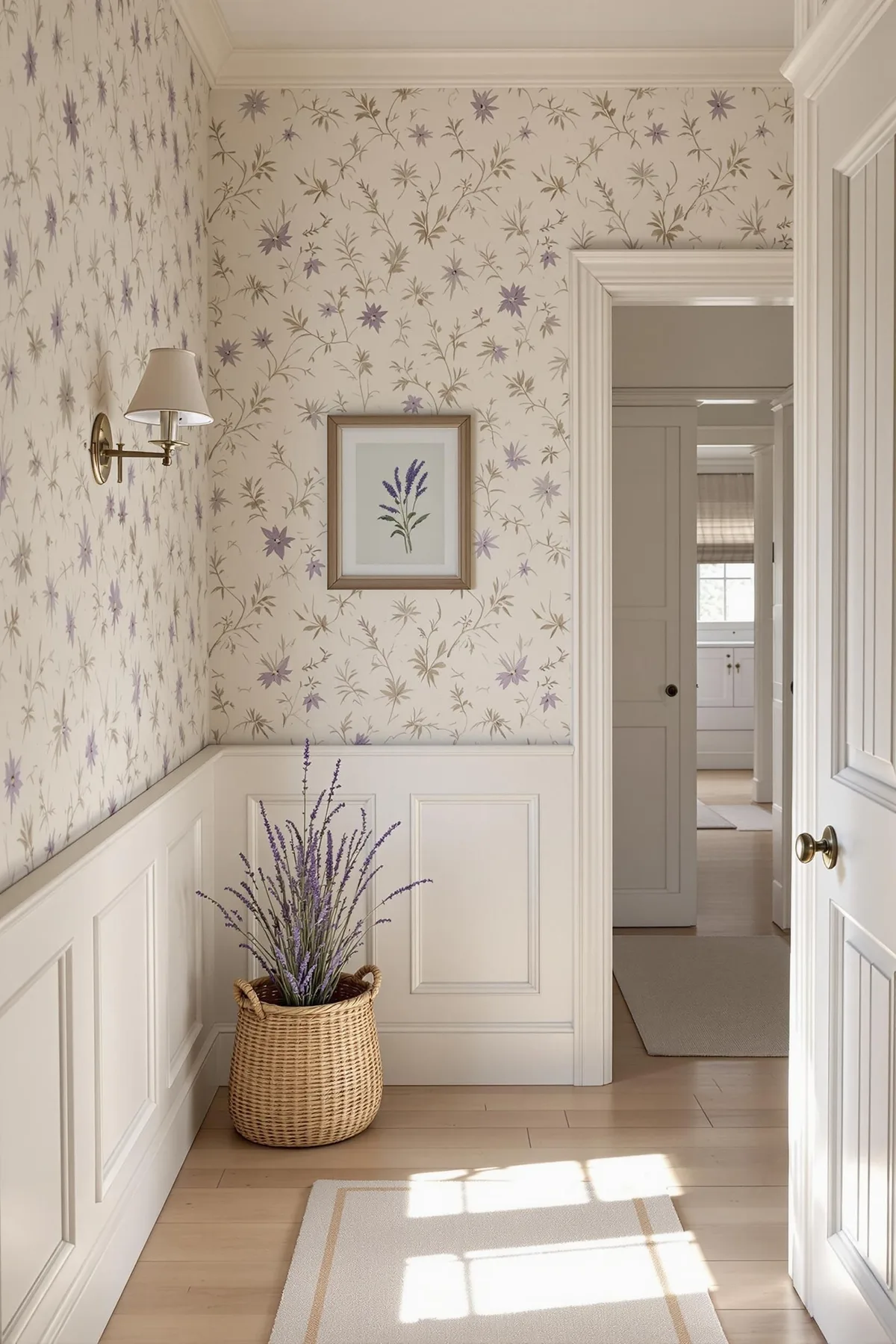
Image source: Bing (Web (fair-use with source credit))
How Undertones Make or Break the Pair
Undertone is the hidden color inside a color. Warm cream carries yellow or peach. Cool cream carries grey or green.
Lavender splits the same way: blue-grey, pink-grey, or true violet. When the undertones clash, both colors look muddy and slightly dirty.
Matching is simpler than it sounds. Warm cream wants pinkish lavender. Cool cream wants grey-blue lavender.
Per manufacturer color guidance, painting a large swatch on the wall tells you more in five minutes than a color card ever will.
Why Hallway Lighting Changes Everything
Lighting decides which undertone you actually see. A north-facing hallway pulls cool tones forward, so lavender can read grey and cream can look dingy. A south-facing hallway does the opposite, warming both colors and sometimes pushing cream toward yellow.
Bulbs matter just as much as daylight. Warm white bulbs (2700 to 3000K) flatter lavender and keep it soft. Cool white bulbs (4000K and up) flatten it into a grey wash.
In our research, this single variable explains most "why does my lavender look grey" complaints.
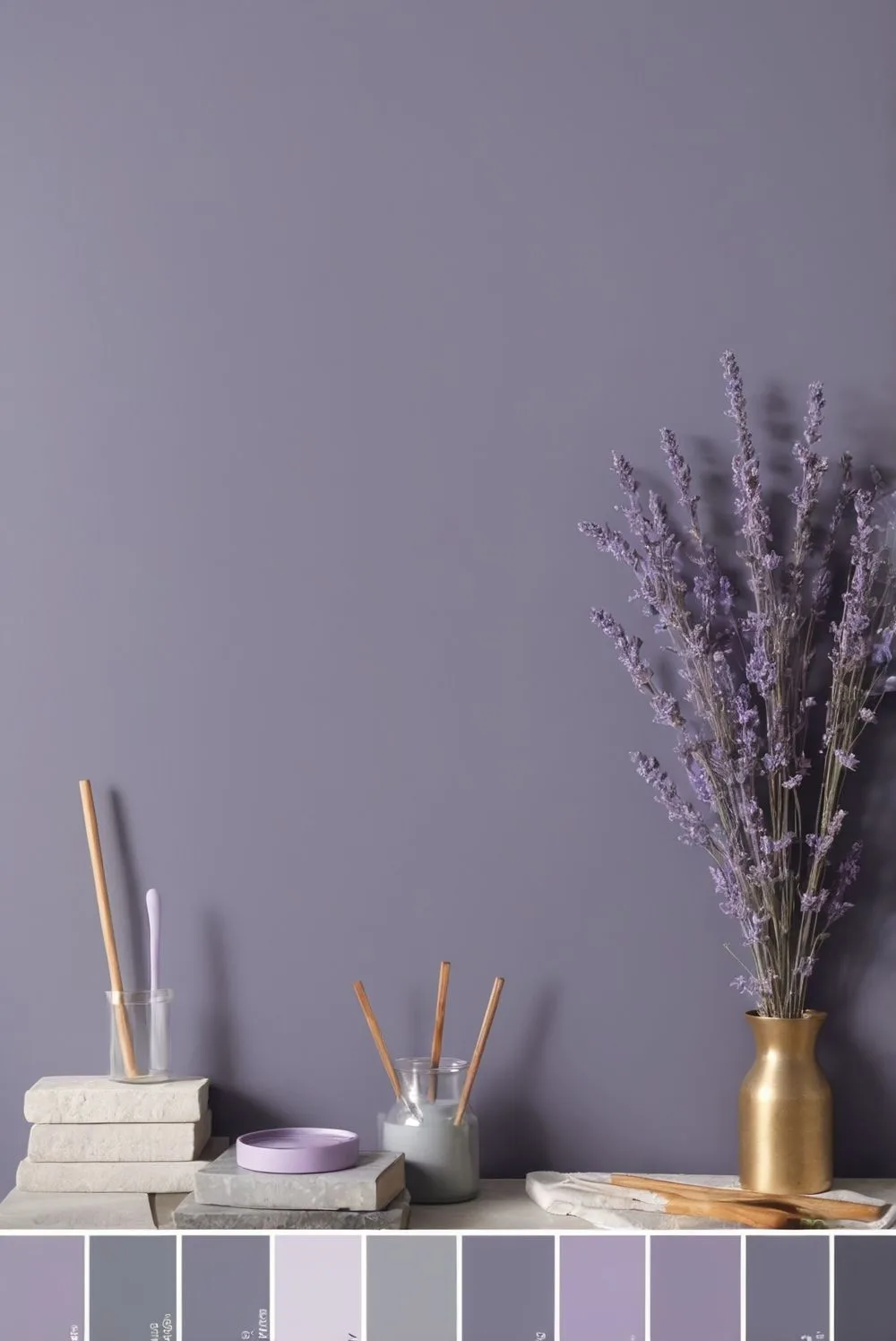
Image source: Bing (Web (fair-use with source credit))
The Visual Building Blocks: What Goes Where
Every cream and lavender hallway is built from the same few pieces. Walls, trim, doors, ceilings, floors, and hardware. The color decision isn't really "which colors" but "which piece wears which color." Change the assignment and the whole hallway shifts.
Walls, Trim, Doors, and Ceilings
Walls usually take cream. It keeps a small space open and forgiving. Then you have a clear choice for lavender.
- Lavender walls, cream trim. Softer and more enveloping. Best for a hallway you want to feel cozy.
- Cream walls, lavender door. A quiet accent that works in rentals and small spaces.
- Cream walls, lavender lower panel. A two-tone dado split. Period homes love this one.
- Cream walls and ceiling, lavender on one wall only. Useful for a long corridor that needs a focal point.
Keep the ceiling cream or a half-shade lighter. A lavender ceiling can feel heavy in a low hallway. Apply the old 60/30/10 rule: cream dominant, lavender supporting, a metallic for the accent.
Image source: Bing (Web (fair-use with source credit))
Floors, Runners, and Stair Treatments
Floors anchor the palette and quietly set the undertone. Light oak and pale stone lean warm. Grey concrete and cool tile lean cold.
If your flooring is warm, lean the cream warm to match. If it's cool, keep the cream cool. A lavender runner over wooden treads adds color underfoot without repainting a thing.
Just make sure the runner doesn't fight the floor underneath it.
Lighting, Mirrors, and Hardware
Hardware finishes either sharpen or soften the pairing. Brass and antique brass warm the whole scheme. Brushed nickel stays neutral.
Matte black adds a crisp modern edge.
- Matte black: clean and contemporary. Best for modern hallways.
- Antique brass: warm and traditional. Best for period homes.
- Brushed nickel: safe and versatile. Best if you plan to change things later.
A mirror earns its place in any hallway. It bounces light and makes the corridor feel twice as deep. Lean it, hang it, or take it full-length near the stairs.
Wallpaper, Paneling, and Texture
This is where a cream and lavender hallway stops being flat. Lavender florals, cream stripes, beadboard, or shaker panels all add depth that paint alone can't give.
A common approach: beadboard below the chair rail, cream above it, and a lavender floral on the upper wall. Stripe or botanical wallpaper works well on a single landing wall. Texture lets you use more lavender without the space feeling closed in.
Step-by-Step: From Sample Pots to Finished Hallway
Here's the part people rush, and it's the part that decides the result. Treat the decision in two stages: test, then paint. Skipping the testing stage is how good palettes go wrong.
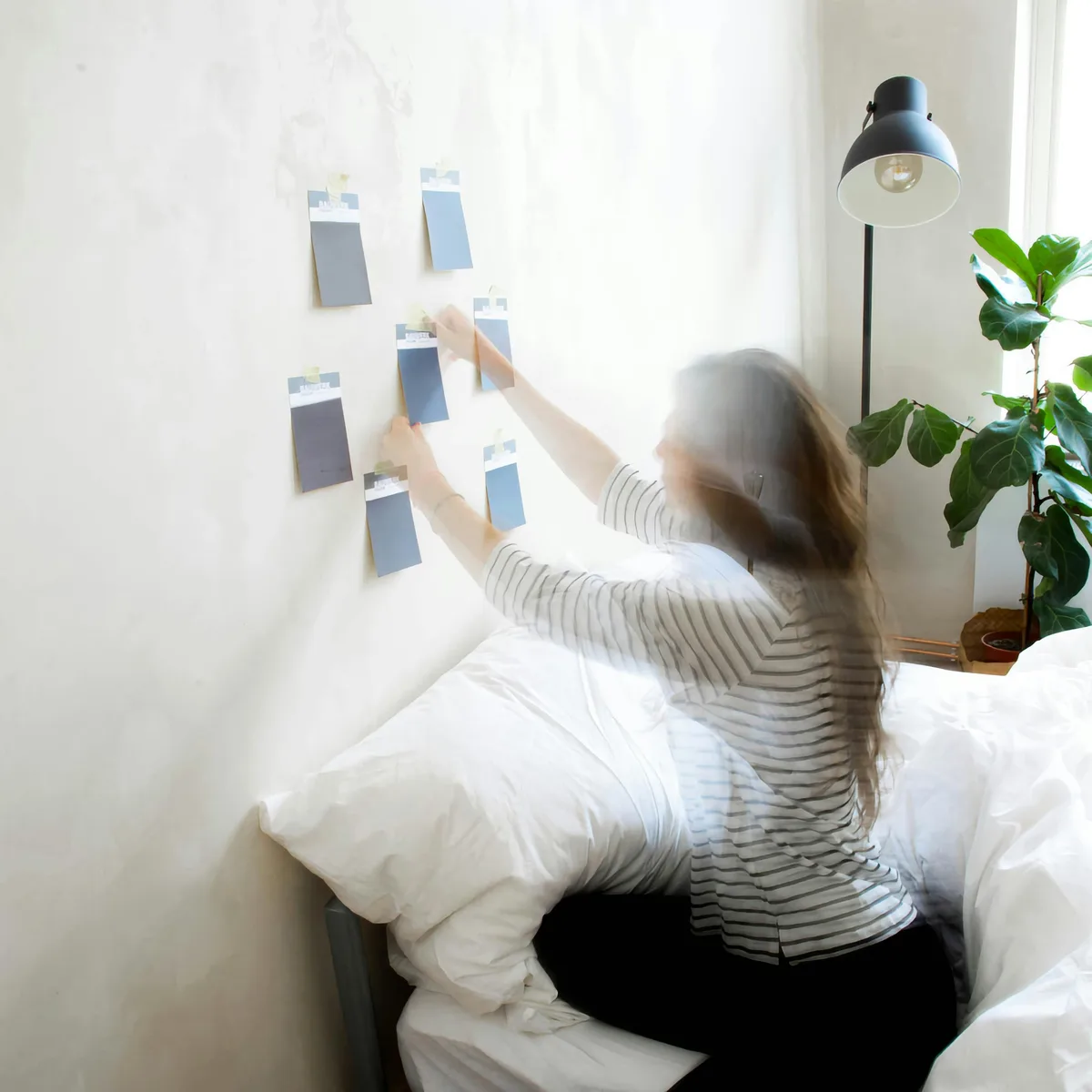
Image source: Bing (Web (fair-use with source credit))
The Test Stage
- Choose two creams and two lavenders.
- Paint each into a large A2 swatch on the actual hallway wall.
- View the swatches at morning, midday, and evening light.
- Check them again under your hallway bulb, not just daylight.
- Pick the pair whose undertones agree, then stop second-guessing.
The Paint Stage
- Clean and sand the walls. Fill any holes.
- Prime over dark or patchy existing colors.
- Cut in the ceiling, corners, and trim edges.
- Roll two coats of cream on the walls, following the recoat window.
- Paint the trim and doors in satin, typically last.
- Style with runner, mirror, art, and a bunch of dried lavender.
If you're working in an older property, check for lead paint before you sand. The U.S. EPA has clear guidance on dealing with lead paint in pre-1978 homes.
Low-VOC and zero-VOC paints are the better pick indoors, especially in a closed hallway.
Real Hallway Scenarios: Which Layout Fits Yours
Different hallways need different layouts. Use the matches below as if/then rules.
| Your Hallway | If This Is You | Then Do This |
|---|---|---|
| Small, north-facing | Feels dark and cool | Warm cream walls, pinkish lavender door, warm bulbs |
| Long corridor | Feels narrow and endless | Cream walls, one lavender end wall, brass hardware |
| Period home | Has dado rails and cornices | Cream upper wall, lavender lower panel |
| Modern new-build | Builder-cream everywhere | Full cream repaint, lavender accent, matte black trim |
| Rental | Can't make permanent changes | Peel-and-stick lavender wallpaper, no paint |
| Stair landing | Has strong natural light | Deeper lavender on the landing wall, cool cream surround |
The pattern holds. More light means you can carry more lavender. Less light means cream should dominate and lavender should stay an accent.
Common Mistakes That Turn Cream and Lavender Muddy
Cream and lavender don't fail because the colors are wrong. They fail because of a handful of repeatable mistakes.
- Mixing warm and cool undertones. The single biggest error. Warm cream plus grey-blue lavender equals mud.
- Testing only in daylight. Your hallway light tells the real story.
- Choosing the wrong trim white. Stark white trim fights lavender. Keep trim in cream or a matching off-white.
- Overdoing the lavender. More than 40 percent lavender in a small hallway feels closed in.
- Ignoring the flooring. Warm floors want warm paints. Cool floors want cool paints.
- Painting before priming. Two coats over dark paint still shows through.
- Forgetting sheen. Matte walls hide flaws. Satin trim cleans up easily.
- Chasing a trend blindly. Lavender is classic, but the intensity dates fast. Stay softer for longer life.
Fix those and the pairing holds up for years, not just a season.
Costs, Coverage, and What to Expect
Budgeting a cream and lavender hallway is simpler than people think. Paint does the heavy lifting, and accessories fill the rest. Here's what the numbers look like as of 2026.
| Item | Typical Cost (US / UK) | Notes |
|---|---|---|
| Sample pots (2-4) | $4-$8 each / £3-£6 each | 100-250 ml, enough for one A2 swatch each |
| Wall paint, 2.5 L / 1 gallon | $30-$90 / £20-£60 | Covers 10-12 m² per litre per coat |
| Trim paint, 750 ml-2.5 L | $20-$50 / £15-£40 | Satin finish recommended |
| Primer | $25-$60 / £18-£45 | One coat over dark colors |
| DIY total | $150-$350 / £100-£250 | Two weekends of work |
| Professional repaint | $500-$1,500 / £400-£1,200 | Depends on hallway size and prep |
Coverage math is where most people undershoot. Measure your wall area, then divide by 10 to 12 m² per litre per coat. Allow two coats.
A typical 2.5 L tin covers roughly 25 to 30 m² across two coats. Hallways eat more paint than rooms because of trim cut-in and multiple doorways.
Timelines depend on the paint you choose. Water-based formulas recoat in 2 to 4 hours. Oil-based formulas need 16 to 24 hours between coats.
Full cure takes longer, often 7 to 30 days depending on humidity. Don't scrub walls until cure is complete.
If you're hiring a painter, UK day rates run £150 to £300. US rates sit around $250 to $500 per day. A small hallway usually takes one to two days.
Does Cream and Lavender Work in Every Hallway
No. It works in most, but a few conditions change the answer. Run each hallway through the if/then check below.
- If your hallway has strong natural light: full lavender on one wall is safe. The light will keep it from reading grey.
- If your hallway is north-facing and dark: lean cream heavy. Keep lavender to doors or below the rail.
- If your ceilings are under 2.4 m: avoid a lavender ceiling. It closes the space in.
- If your hallway is wider than 1.5 m: you can carry more lavender without it feeling tight.
- If you have warm oak flooring: pick warm cream and pinkish lavender. Cool tones fight the wood.
- If you have grey concrete or cool tile: pick cool cream and grey-blue lavender.
- If you rent: skip the paint entirely. Peel-and-stick lavender wallpaper and cream textiles do the job.
The pattern is consistent. Light and warmth determine how much lavender the space can hold. Cream is the constant.
Lavender is the variable.
Small hallways benefit most from restraint. One lavender element is often enough. A door, a runner, or a single framed print will read stronger than a full accent wall in a tight space.
Maintenance and Long-Term Care for a Painted Hallway
Hallways take more abuse than any room in the house. Bags brush walls. Shoes scuff skirting.
Hands mark door frames. A little planning keeps cream and lavender looking fresh.
Matte finish hides imperfections well but scuffs easily. Satin or eggshell on trim wipes clean. If your hallway is high-traffic, use eggshell on the walls and satin on the trim.
Keep a small tin of each color for touch-ups. Match the sheen exactly, or the patch will show. Water-based paints store well for years if sealed properly.
Wipe marks promptly with a damp cloth. For stubborn scuffs, a mild soap solution works. Avoid abrasive cleaners, which dull the finish.
Lavender and cream show dirt differently. Cream hides dust but shows dark marks. Lavender hides marks but shows dust.
Plan cleaning based on which color dominates.
Every two to three years, check for fading near windows. UV light strips lavender first. A single refresh coat restores the softness.
Frequently Asked Questions
Does lavender look grey in a hallway?
Yes, lavender often reads grey in hallways with cool or dim light. This happens when the lavender has a strong grey-blue undertone. Warm white bulbs (2700-3000K) and a warmer cream on surrounding walls pull the color back.
Test a large swatch in your actual hallway before committing.
Should the walls be cream and the trim lavender, or the reverse?
Cream walls with lavender trim usually works better in small hallways. Cream opens the space. Lavender trim adds a soft accent without closing things in.
For period homes with dado rails, cream upper walls and lavender lower panels is a classic, balanced choice.
What color goes with cream and lavender in a hallway?
Brass, antique gold, and warm grey all sit well with cream and lavender. Matte black adds modern contrast. For softer schemes, use pale blues and muted greens.
Keep a third color to about 10 percent of the visual weight so the main pairing stays clear.
Can I paint a cream and lavender hallway if I rent?
Yes, with limits. Peel-and-stick lavender wallpaper in removable form works on painted walls. Cream textiles, runners, and framed art add the tone without paint.
Always check your tenancy agreement first, and use removable products that won't damage the wall behind.
How many coats of paint does cream over lavender need?
Two coats minimum, sometimes three. Lavender under cream is a strong shift in depth. A primer coat first blocks the old color and cuts the total to two cream coats.
Skipping primer usually means three coats and a patchy result.
What finish is best for cream and lavender hallway walls?
Eggshell is the best all-round pick for hallway walls. It wipes clean and hides minor marks. Use matte if your hallway is low-traffic and you want a softer look.
Use satin on trim and doors. Avoid high-gloss on walls, which highlights every flaw.
Final Take: Getting Cream and Lavender Right in Your Hallway
Cream and lavender reward patience. The colors themselves are forgiving. The mistakes come from rushing undertones, lighting, and finish.
Test large swatches first, match the undertones, then pick your finish. Get those three things right and the hallway does the rest.

Similar Posts