Can You Mix Antique Brass and Nickel? Expert Tips
Can you mix antique brass and nickel in the same room? Yes, and designers do it all the time. The trick isn't whether you can mix antique brass and nickel, it's whether the mix looks intentional or accidental.
Get the undertones and placement right, and the two finishes read as layered and rich.
Get them wrong, and your kitchen just looks unfinished. Nickel finishes run cool with a soft grey-blue cast, while antique brass runs warm and yellow. Per EU Nickel Directive (EN 1811) testing standards, nickel is also a known skin sensitizer, something to keep in mind for high-touch hardware.
Here's how to make the mix work in your space, as of 2026.
mix antique brass and nickel
Yes, you can absolutely mix antique brass and nickel. Pick one as your dominant metal, roughly 70% of visible fixtures. Use the other as an accent.
Keep each metal to its own zone, match undertones under real room lighting, and the mix looks deliberate.
Why Mixing Warm Brass and Cool Nickel Is Tricky (But Worth It)
The problem is undertone, not color. Antique brass carries a warm yellow or gold base. Nickel sits cool, with grey and blue notes underneath.
Put them side by side with no bridge, and your eye reads the clash as a mistake.
It's worth pushing through because a matched single-metal room can feel flat. Layering brass against nickel adds depth. It also lets you keep fixtures you already own instead of ripping everything out.
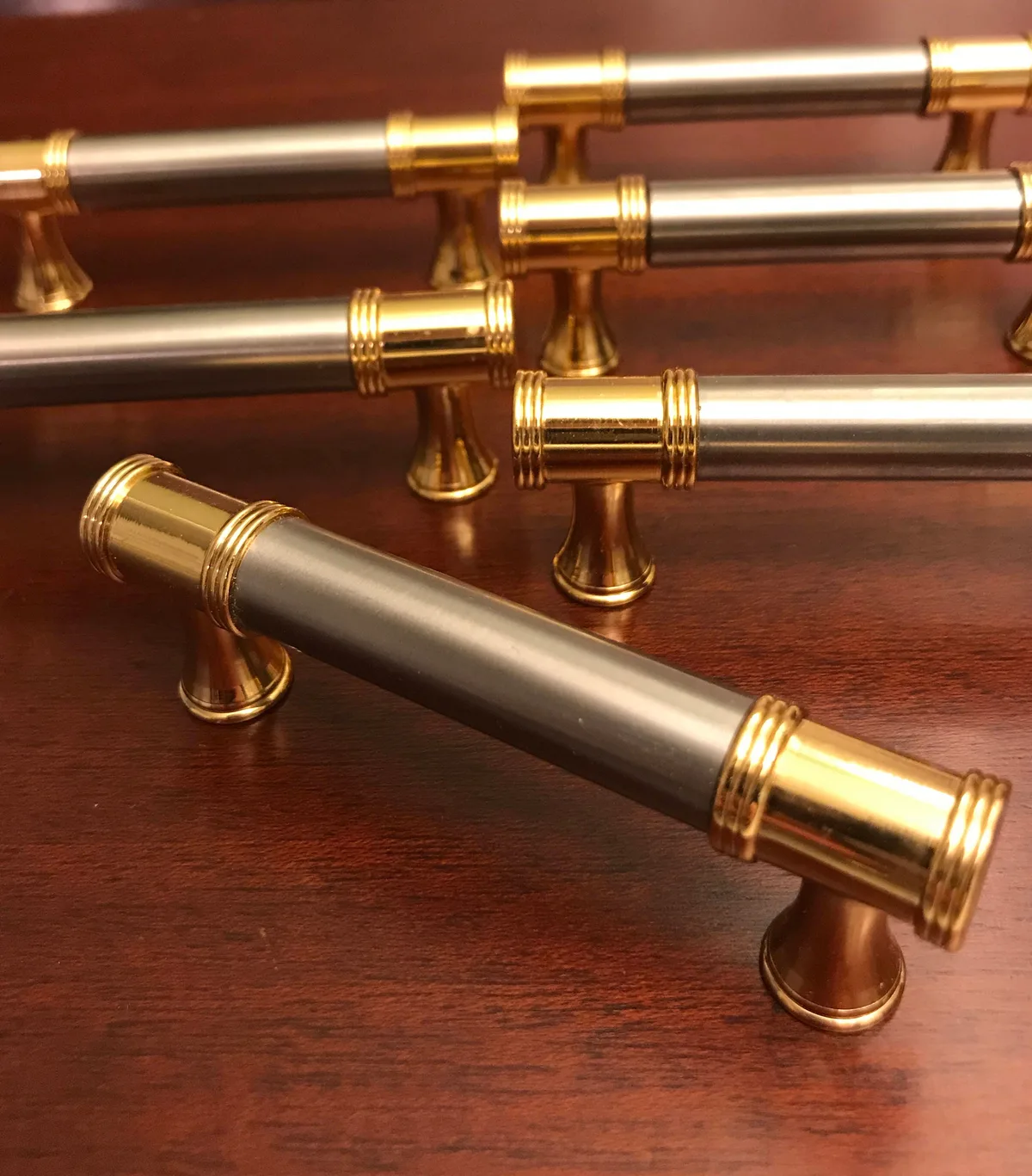
Image source: Bing (Web (fair-use with source credit))
There's a practical angle too. Most homes aren't built with one finish throughout. Builder-grade kitchens often ship with brushed nickel hardware, while homeowners add brass faucets or lighting later.
Mixing isn't a style choice so much as a reality you're working with.
So when does the mix work? When both metals share the same sheen level or the same scale. A satin brass knob next to a satin nickel pull looks calmer than a high-gloss brass fixture beside a matte black nickel one.
If your two metals sit at the same function and the same visual weight, they compete. If they sit in different zones and different roles, they cooperate. That's the whole game.
The Undertone Rule: Why Antique Brass and Nickel Clash or Click
Opposite undertones either attract or repel. Warm undertones (yellow, orange, gold) clash hard against cool undertones (grey, blue, silver) when they sit directly next to each other. Move them apart, and that same tension becomes contrast.
The fix isn't changing the finish. It's changing the distance. Brass on the upper cabinets and nickel on the lower pulls reads as balanced.
Brass faucet directly beside a nickel soap dispenser reads as wrong.
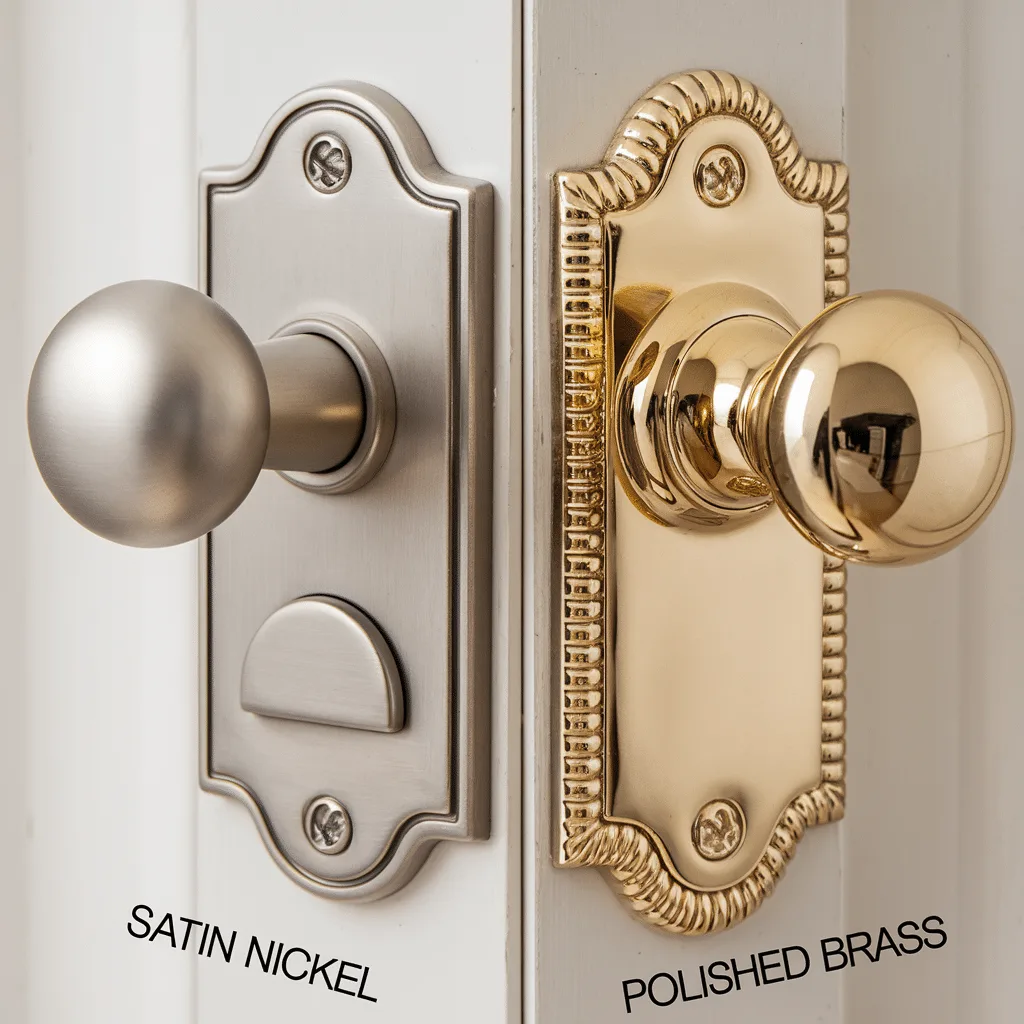
Image source: Bing (Web (fair-use with source credit))
Lighting changes everything. A 4000K cool-white bulb will make brass look orange and nickel look clinical. A 2700K warm bulb softens both.
Manufacturer specs typically list color temperature in Kelvin, and it's one of the most overlooked variables in finish matching.
Here's the quick rule we use:
- Same sheen, different tone: safe.
- Same tone, different sheen: risky but workable.
- Different sheen and different tone: almost always looks accidental.
If you can only control one variable, control tone. Match both metals to either warm or cool lighting, and the room feels cohesive even when the finishes differ.
Your Decision Tree: When to Mix Brass and Nickel, and When to Stop
Run through these five steps before you buy anything. Each one narrows your choices, and skipping a step is how a project turns into a redo.
Step 1: Pick Your Anchor Metal
Choose the metal you'll see most. Whichever finish appears on the majority of your visible fixtures becomes the anchor. Aim for about 70% anchor, 30% accent.
If your cabinets already have nickel pulls, nickel is your anchor and brass is the accent. If you're starting fresh, pick the metal that matches your permanent fixtures, like your sink or tub.
Step 2: Assign Metals by Zone (Plumbing, Hardware, Lighting)
Give each metal its own zone. Plumbing (faucets, shower trim, drains) gets one finish. Cabinet hardware gets the other.
Lighting can pick up either as a repeat.
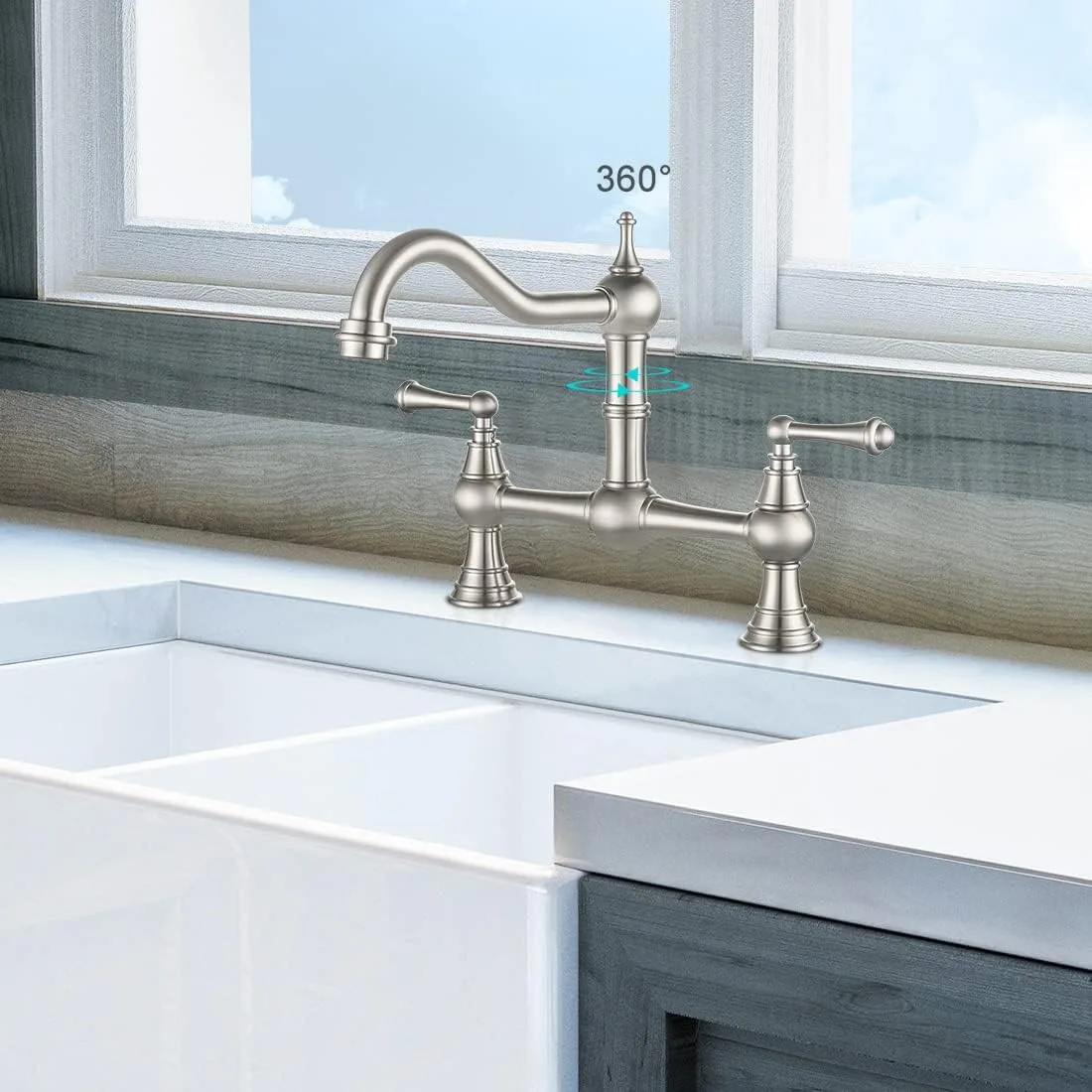
Image source: Bing (Web (fair-use with source credit))
If your faucet is antique brass, make your cabinet pulls nickel. If your knobs are brass, keep plumbing in polished or satin nickel. Never mix finishes within the same zone, like a brass faucet and a nickel drain on the same sink.
That's the fastest way to look unfinished.
Step 3: Check Undertones Under Real Room Lighting
Bring samples home. Look at them under your actual bulbs, not the store display. Daytime and evening light will read differently.
A finish that looks right at noon can look muddy at night.
If possible, buy one sample finish in each metal. Hold them up against your cabinet fronts and countertop. You're checking whether the brass pulls too yellow or the nickel pulls too blue in that specific space.
Step 4: Repeat the Accent Metal at Least Twice Per Room
A single brass doorknob in a nickel kitchen looks like a mistake. Two or three brass accents (a faucet, a pendant light, a drawer pull) read as a deliberate choice. Repetition is what turns the mix into a pattern.
Step 5: Bridge the Two Metals With a Neutral Third Element
Wood, stone, matte black, or white countertops act as visual bridges. They absorb the contrast between warm and cool. In our research, mixed-metal rooms that include a strong neutral element feel calmer and more intentional than rooms that rely on brass and nickel alone.
If you don't have a natural neutral in the room, add one. A wood cutting board, a stone tray, or a black metal detail will do the job.
Where the Mix Works Best: Kitchens, Bathrooms, and Powder Rooms
Some rooms handle the mix better than others. Here's where each metal pairing shines.
- Kitchens: Brass lighting and hardware against nickel plumbing is the classic pairing. The kitchen's size and variety give the mix room to breathe.
- Bathrooms: Brass faucet and mirror frame with satin nickel cabinet pulls. Keep the tile neutral so it doesn't fight both finishes.
- Powder rooms: These small spaces do well with bold pairing because they're seen less often. A single brass sconce against nickel faucets makes an impact.
- Open-plan kitchens: Pick one dominant metal for the kitchen and repeat the accent in the adjacent living area. Sightline continuity keeps the mix from looking cut off.
If your space is under 40 square feet with wall-to-wall fixtures, one metal is usually safer. Two finishes in a small powder room with no neutral can read as chaos.
Whichever room you're working on, anchor the mix in a repeat pattern. One accent is a mistake. Three accents is a design decision.
Mixing Mistakes That Make Brass and Nickel Look Accidental
The biggest mistake is putting two competing metals at the same focal point. A brass faucet and a nickel soap dispenser sitting two inches apart fight for attention. Spread them out and let each own its zone, and the clash disappears.
Second on the list: forgetting the sheen. Aggregate reviews report that homeowners often buy a polished brass fixture to pair with a satin nickel pull, then wonder why it looks off. If one metal is shiny, the other should be too.
Match reflectivity first, then worry about color.
Another common slip is treating builder-grade nickel as a neutral. It isn't. Brushed nickel has a distinct grey-blue cast that fights warm brass directly.
The fix is to bring in a true neutral like matte black or natural wood to absorb the tension.
Here are the mistakes we see most often:
- One accent metal in an otherwise uniform room. Repeat it two to three times.
- Mixing finishes inside a single zone, like a brass faucet with a nickel drain cover.
- Buying samples online only. In our research, finish color shifts dramatically under different bulbs.
- Ignoring scale. A chunky brass bar pull next to a delicate nickel knob looks chaotic.
- Using abrasive cleaners that strip lacquer off brass and dull the PVD coating on nickel.
There's one more trap: over-mixing. Three or more metals in a small kitchen reads as noise. If you're already running brass, nickel, black, and copper, pull one out.
Two metals plus a neutral is the sweet spot.
Costs, Finish Durability, and What to Know Before You Buy
Cabinet knobs usually run $3 to $15 each in either finish. Bar pulls sit between $5 and $25 depending on length and material. Faucets in brass or nickel typically land between $100 and $500, and high-end models push past that.
Durability differs by finish type, not by metal name. Here's how the two compare:
| Finish | Typical Lifespan | Care Needs | Wear Pattern |
|---|---|---|---|
| Antique brass (lacquered) | 5 to 15 years | Avoid abrasives | Lacquer chips; brass darkens underneath |
| Unlacquered (living) brass | Decades | Occasional polish | Even patina, darkens within 6 to 18 months |
| Polished nickel | 10+ years | Wipe water spots | Shows smudges easily |
| Satin or brushed nickel | 10+ years | Minimal | Hides fingerprints well |
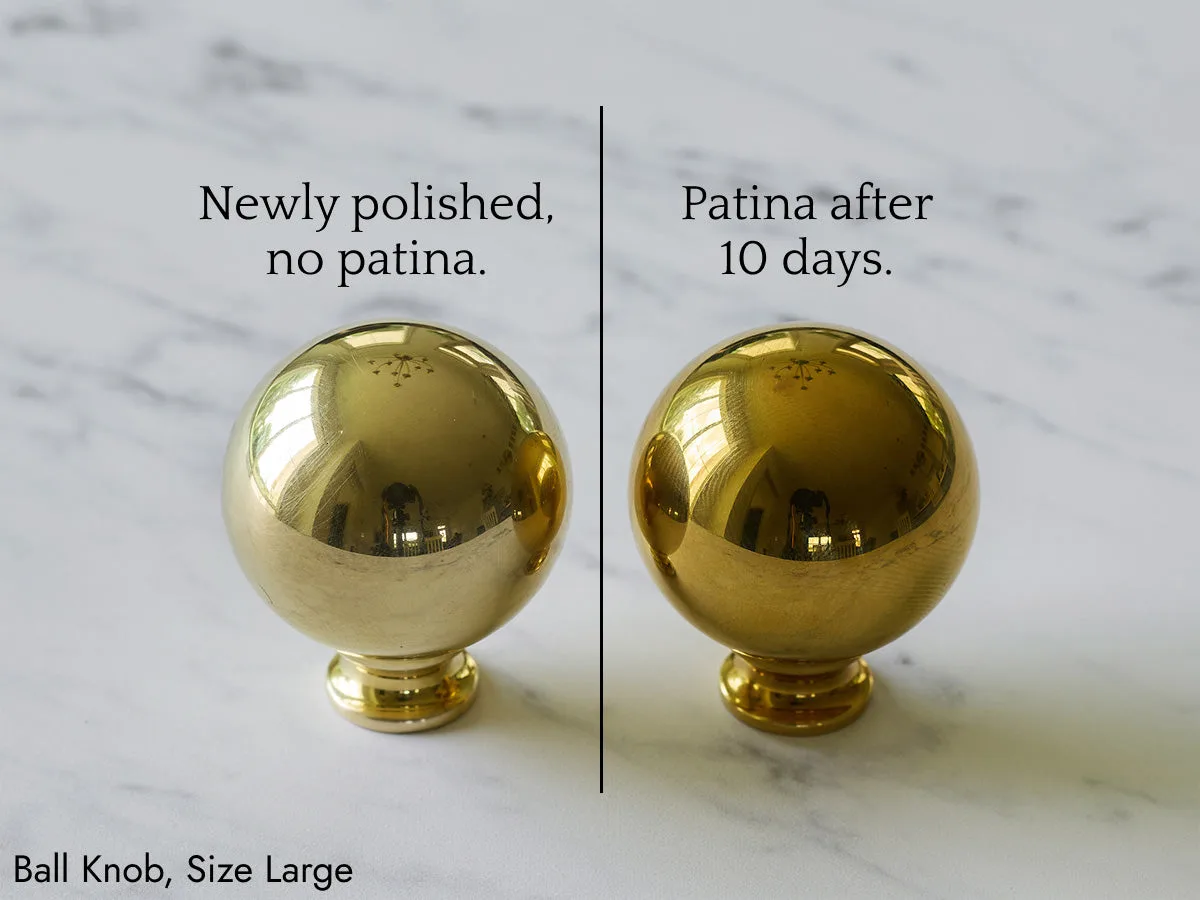
Image source: Bing (Web (fair-use with source credit))
Living brass is the wild card. It darkens with daily handling, developing a mottled patina that some love and others read as dirty. If you want a predictable look, buy lacquered brass.
If you want character, go unlacquered and accept the change.
Nickel allergies matter here too. Per the EU Nickel Directive (EN 1811), items in prolonged skin contact must limit nickel release. Doorknobs and cabinet pulls count.
If anyone in your home has a known nickel sensitivity, check with the CPSC or pick coated hardware to reduce exposure.
On cost, the mix itself doesn't add expense. You're not buying a special product. You're just choosing two finishes instead of one, and often reusing what's already installed.
Brass and Nickel Mixing FAQs
Can you mix antique brass and nickel in a kitchen?
Yes, and it's one of the most common pairings in transitional kitchens. Keep brass on hardware and lighting, nickel on plumbing. Repeat the accent metal at least twice per room, and add a neutral like wood or stone to bridge the warm and cool tones.
Does mixing brass and nickel lower home value?
Not on its own. Buyers care more about cohesion than matching finishes. A poorly matched single-metal scheme can look cheaper than a confident two-metal mix.
Keep the pattern consistent and the room reads as designed, not accidental.
Should brass and nickel touch each other?
No, keep them apart. When two contrasting finishes sit directly beside each other, the clash looks like a mistake. Give each metal its own zone with at least a few inches of neutral space between them.
Is unlacquered brass hard to maintain?
It's lower maintenance than most people think. Unlacquered brass patinas naturally and doesn't need polish. If you want to slow the darkening, wipe it with a dry cloth.
Harsh cleaners strip the finish, so stick to mild soap and water.
What metal should the faucet be if the knobs are brass?
Nickel works well as the faucet finish when knobs are brass. That keeps plumbing in one zone and hardware in another. Match the sheen to your knobs so the two zones feel related, not random.
Can I mix polished brass with brushed nickel?
You can, but it's risky. Polished brass is highly reflective while brushed nickel is matte. The two read as different visual weights and often look unbalanced.
If you try it, repeat the brass accent several times so it feels intentional.
Final Decision Guide: Should You Mix Them, or Stick to One Metal?
If your space is small, your lighting is mixed, and you have no natural neutral to bridge the two, stick to one metal. Two finishes with no anchor look accidental fast.
If your room has clear zones, consistent lighting, and at least one neutral element, mixing brass and nickel adds depth that a single finish can't match. Pick your anchor, assign each metal to a zone, repeat the accent at least twice, and let a wood or stone surface do the bridging work.
The mix works when it follows a pattern. It fails when it looks random. That's the difference between a designer kitchen and a redo.

Similar Posts