Wall Mounted Nightstands: Ultimate Space-Saving Guide
Wall mounted nightstands solve a very specific problem: you need a bedside surface, but the floor next to your bed is already spoken for. Maybe your bedroom is tight, maybe you're renting and can't commit to bulky furniture, or maybe you just want that clean, floating look. Whatever the reason, the fix works only when you match the right type to your wall and your storage needs.
Here's why that match matters. A standard mattress top sits roughly 24 to 26 inches off the floor, so your nightstand surface usually lands 4 to 8 inches above that. But a wall mounted unit is only as strong as the anchor behind it.
As of 2026, the U.S. Consumer Product Safety Commission still ranks furniture tip-over among the top home safety hazards, and a wall-mounted piece shifts that whole calculation. Get the mounting right and it's one of the safest, smartest small-space buys you can make.
wall mounted nightstands
Wall mounted nightstands are bedside tables fixed directly to the wall instead of resting on the floor. They come in four main styles: open floating shelves, drawer units, hinged cabinets, and flip-down designs. Most hold 15 to 50 pounds depending on the anchor.
They free up floor space and suit small bedrooms, rentals, and dorm rooms.
What a Wall Mounted Nightstand Actually Solves (And When It Doesn't)
Let's start with the honest version. A wall mounted nightstand is a space and sightline fix first, a storage fix second. If your bedroom floor is cramped, if you want the illusion of more room, or if you're tired of banging your knee on a nightstand leg, it delivers.
If you need to stash three books, a water bottle, a CPAP machine, and a lamp, a floating shelf won't cut it. A hinged cabinet might.
So the first question isn't "which one looks best." It's "what am I actually putting on this thing, and what wall am I drilling into."
Most people assume any wall-mounted shelf will hold anything a floor nightstand does. That's where things go wrong. A floor nightstand passes its load straight down into the floor.
A wall-mounted one passes it sideways into anchors and drywall, which is a much weaker arrangement.
When a Wall Mounted Nightstand Is the Right Call
- Your bedroom is under about 100 square feet and you need floor space back.
- You rent, and you want a unit you can remove with minimal wall damage.
- You have a platform bed or floating bed frame, and a floor nightstand breaks the visual line.
- You want a nightstand for a guest room that rarely gets heavy use.
- You have kids or pets, and you want to remove a tip-over hazard from the floor entirely.
When It's the Wrong Call
- You need real storage, like several books, a drawer of medications, or medical equipment.
- Your only free wall is plaster or lath, and you don't want to deal with masonry anchors.
- You move often and don't want to patch and repaint every relocation.
- You want a surface you can slide around or bring to the bed on a whim.
That last point matters. A wall-mounted unit is fixed. If you like repositioning furniture every few months, a bedside cart or a small floor piece is more forgiving.
Here's the practical takeaway. Wall mounted nightstands win on space, safety, and aesthetics. They lose on capacity and flexibility.
Decide which of those you can't live without before you shop.
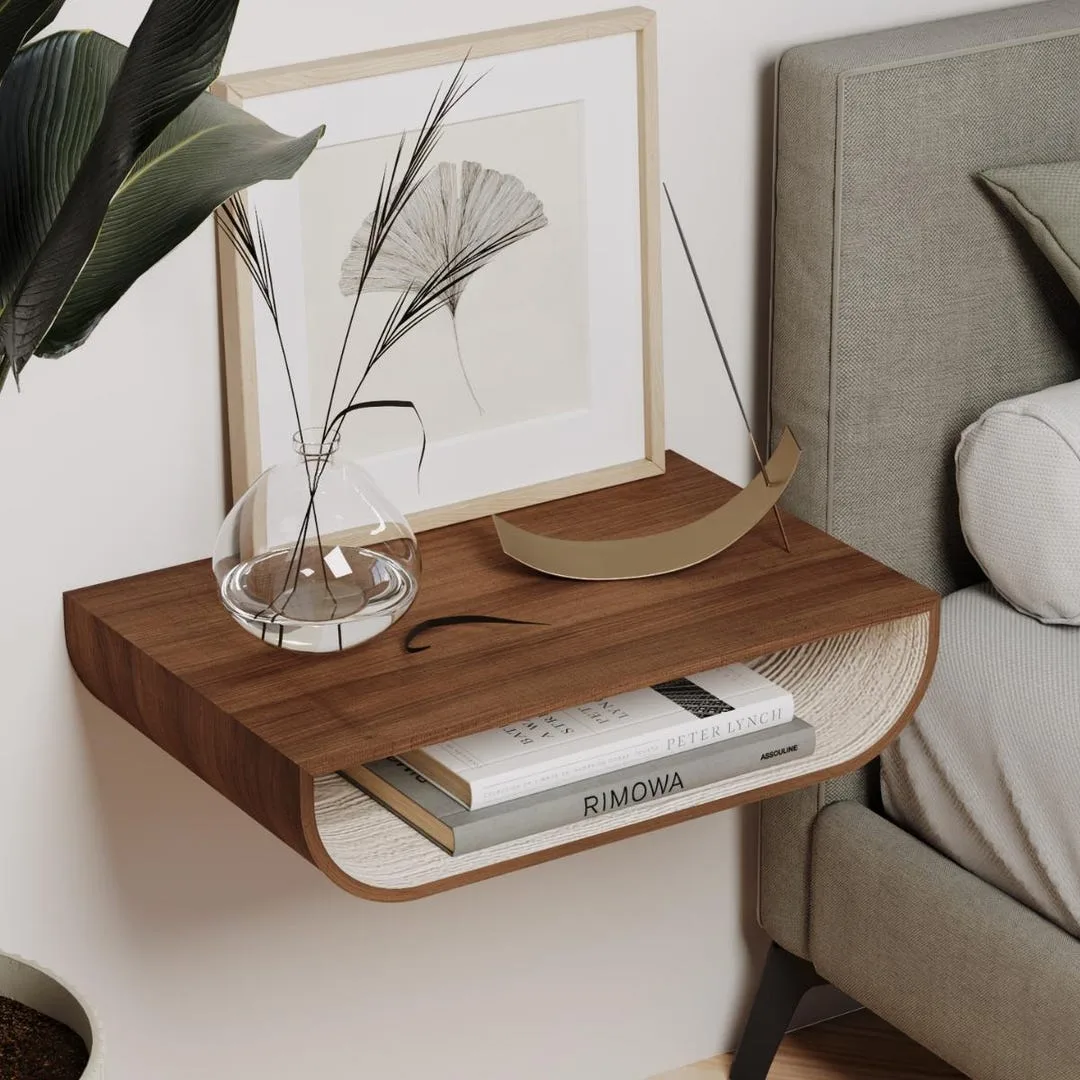
Image source: Bing (Web (fair-use with source credit))
The Main Types, Side by Side
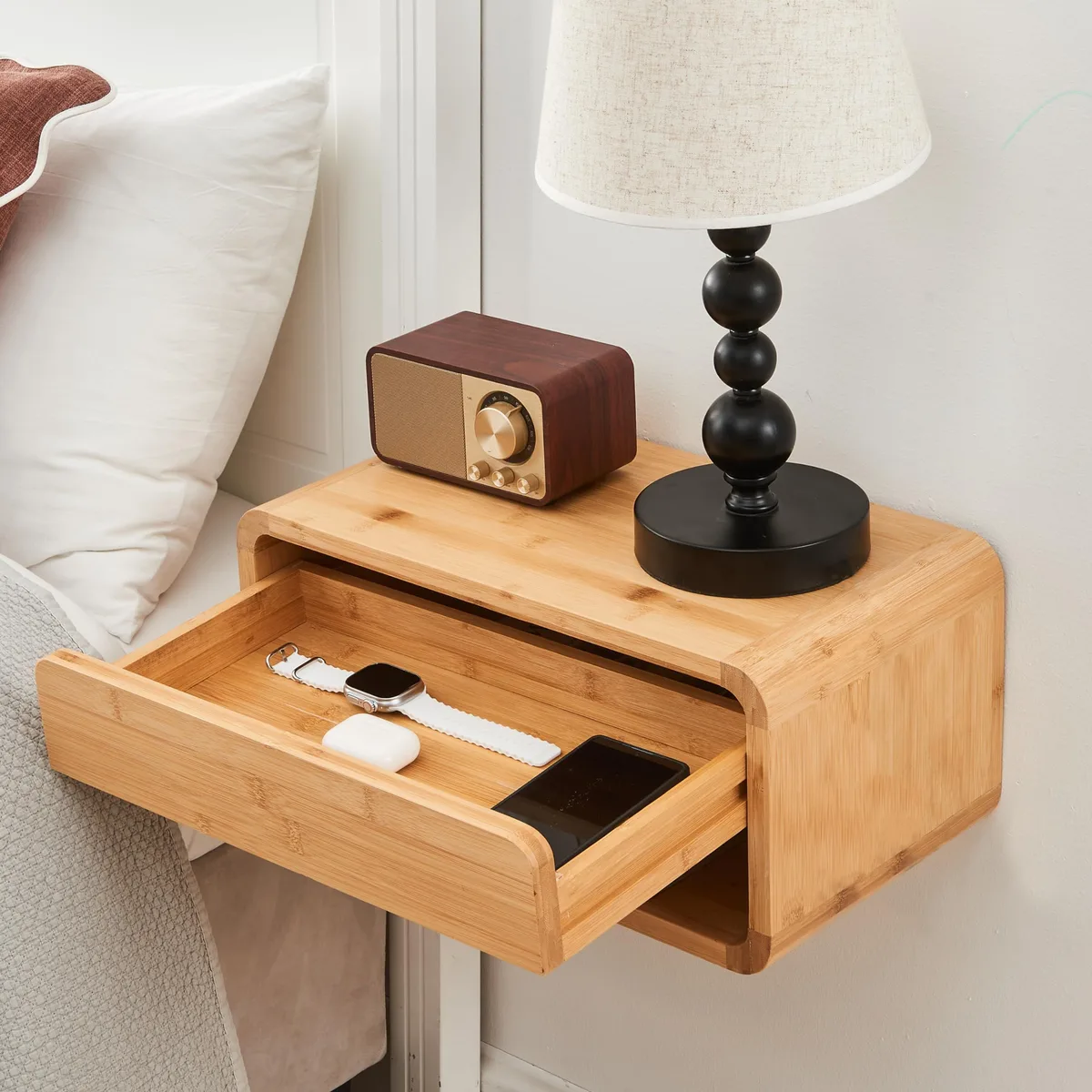
Image source: Bing (Web (fair-use with source credit))
There are four types worth knowing, and each one is genuinely best for a different bedroom. Let's break them down without the marketing fluff.
Floating Shelf Nightstand
A single open shelf, usually 16 to 24 inches wide and 8 to 12 inches deep. No drawers, no doors. This is the lightest and cheapest option, and the easiest to install.
Best for: light loads like a phone, a book, a small lamp, and a glass of water. Renters who want a clean look. Rooms where you want the wall to feel open.
Watch out for: sagging. Manufacturer specs on particleboard shelves often cap loads around 10 to 15 pounds. That's less than it sounds once a lamp and a hardcover book are on it.
Drawer Unit Nightstand
A wall-mounted box with one or two drawers. Typically 18 to 24 inches wide and 10 to 14 inches deep. This is the closest thing to a traditional nightstand you can hang on a wall.
Best for: people who want enclosed storage, a place to hide chargers, and a surface that stays uncluttered.
Watch out for: drawer clearance. If the unit sits too low, the drawer hits your bedding or pillows when it opens. Plan at least a few inches of swing room below the drawer face.
Hinged Cabinet Nightstand
A wall-mounted cabinet with a door instead of drawers. Often 12 to 20 inches tall. These tend to hold more weight and look more like real furniture.
Best for: heavier storage, larger lamps, and bedrooms where you want a finished, furniture-grade look.
Watch out for: depth. Cabinets are deeper than shelves, so they intrude more into your space. In a tight room, that can defeat the whole purpose.
Flip-Down or Drop-Leaf Nightstand
A shelf or small cabinet that folds flat against the wall when not in use. You pull it down, use it, then push it back up.
Best for: guest rooms, tiny homes, and any wall that doubles as a walkway. It's the ultimate space-saver.
Watch out for: hinge quality. Cheaper flip-down units develop sagging hinges over time, and the mechanism is harder to repair than a simple bracket.
Quick Type Comparison
| Type | Typical Capacity | Best For | Main Trade-Off |
|---|---|---|---|
| Floating shelf | 10 to 15 lbs | Minimal, light use | No enclosed storage |
| Drawer unit | 25 to 50 lbs | Everyday bedside items | Needs swing clearance |
| Hinged cabinet | 30 to 60 lbs | Heavier storage, larger lamps | Deeper, takes more space |
| Flip-down | 15 to 30 lbs | Guest rooms, walkways | Hinge wear over time |
If you're undecided, here's the simple rule. Light and cheap, go shelf. Real storage, go drawer or cabinet.
Occasional use, go flip-down.
What Changes the Answer: Storage, Wall Type, Rental Rules, and Budget
Two people can ask the exact same question and need completely different answers. The type that's perfect for one wall is a bad idea on another. Here's what actually moves the needle.
How Much You're Storing
Add up everything you actually keep bedside. A lamp, a phone, a charger, a book, a water glass, maybe reading glasses. That's usually 5 to 10 pounds.
Now imagine a hardcover novel plus a ceramic lamp plus a full water bottle. You're at 15 pounds fast.
If your real-world load is under 10 pounds, a floating shelf works. Push past 20 pounds and you want a drawer unit or cabinet anchored into studs.
Your Wall Type
This is the deal-breaker most people ignore.
- Drywall with wood studs behind it: ideal. You can anchor into studs for real strength.
- Drywall with no stud where you need it: workable, but you'll rely on toggle bolts rated for 50 pounds or so.
- Plaster and lath: trickier. Plaster cracks easily, and masonry bits and anchors are usually needed.
- Brick or concrete: strong but unforgiving. You need a hammer drill and masonry anchors, and mistakes are permanent.
Per NAHB wall construction standards, most U.S. homes use studs spaced 16 inches on center, with some newer builds at 24 inches. Measure yours before you buy anything.
Rental Rules and Damage
If you rent, check your lease before you drill. Many leases prohibit wall holes, and anchor holes can eat into your security deposit. Adhesive options exist, but they hold far less weight, often 5 to 15 pounds, and they can rip paint when removed.
Budget
Price tracks closely with material and mechanism.
| Price Band | What You Get |
|---|---|
| $15 to $40 | Adhesive or basic shelf, light loads |
| $30 to $80 | Floating shelf, decent wood or MDF |
| $60 to $180 | Drawer or cabinet unit, real hardware |
| $150 to $500+ | Solid wood, designer, integrated charging |
Spending more mostly buys you better materials and stronger hardware, not more capacity by magic. A cheap shelf into a stud beats an expensive cabinet into drywall anchors every time.
Weight Limits, Anchors, and Mounting Systems Compared
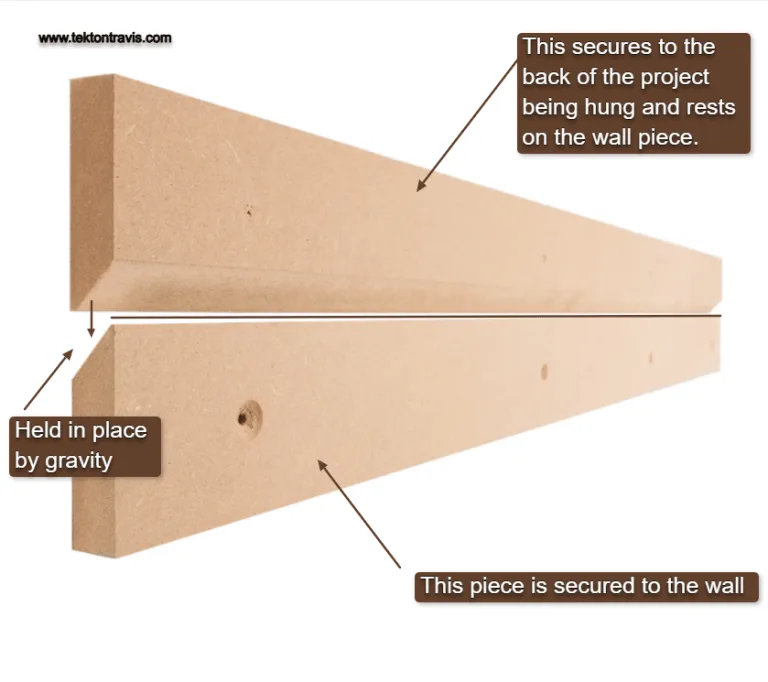
Image source: Bing (Web (fair-use with source credit))
This section is where good installs are won and lost. The anchoring method matters more than the nightstand itself.
The Mounting Systems
- French cleat: a beveled bracket split into two halves, one on the wall and one on the unit. Strong, self-leveling, and great for cabinets. This is the gold standard for heavier wall-mounted pieces.
- Z-bar: similar to a French cleat, often metal, interlocking when hung. Common on ready-made cabinets.
- Keyhole hanger: two keyhole slots that drop over screws. Fine for light shelves, weak under heavy loads.
- L-bracket: visible and utilitarian. Strong when screwed into studs, but not pretty.
- Hidden floating bracket: a metal rod driven into a stud, with the shelf sliding over it. Gives that true "floating" look. Only as strong as the stud it enters.
- Adhesive strips: no drilling, but capacity drops to 5 to 15 pounds and removal can damage paint.
Anchor Strength, Honestly Compared
| Anchor Method | Realistic Capacity | Best For |
|---|---|---|
| Adhesive strips | 5 to 15 lbs | Light shelves, renters |
| Drywall anchors / toggle bolts | 20 to 50 lbs | Shelves without studs |
| Screws into studs | 50 to 100+ lbs | Cabinets, drawer units |
| French cleat into studs | 100+ lbs | Heavy cabinets |
How to Choose Your Anchor
First, find your studs with a stud finder or a magnet. If a stud lines up where you need it, use it. That's your strongest option and it costs nothing extra.
If no stud is available and you're mounting a light shelf, toggle bolts or heavy-duty drywall anchors will hold. For anything heavier than a shelf, reposition the unit so at least one side hits a stud. A cabinet hanging on drywall anchors alone is a gamble you don't want to take.
One rule that saves installs: never trust a manufacturer's capacity rating on drywall alone. Those numbers usually assume a stud. When in doubt, go into the stud.
Best Wall Mounted Nightstand Type for Each Bedroom Setup
Now we get to the actual decision. Find your situation below and skip straight to the answer.
Small Bedrooms and Studio Apartments
A floating shelf or drawer unit is your best bet. The shelf maximizes the open feeling, and the drawer unit adds storage without eating floor. Keep depth under 12 inches so it doesn't crowd the bed.
For studio apartments where every inch counts, the drawer unit usually wins because it hides clutter.
Renters and Dorms
Two options work here. Flip-down units and adhesive-mounted shelves avoid drilling entirely, which protects your deposit. If your lease allows small holes, a simple cleat-mounted shelf is stronger and only leaves two small anchor holes you can patch with spackle.
Kids' Rooms and Nurseries
A wall-mounted unit is safer than a floor nightstand because there's nothing to tip over. A drawer unit anchored into studs at kid height works well, but keep the surface clear and mount it high enough that small hands can't pull on it. Per CPSC guidance, anchoring furniture to the wall is the single most effective tip-over prevention step.
Guest Rooms and Tiny Homes
A flip-down nightstand or simple floating shelf is ideal. Guests need a surface for a phone and a glass, nothing more. Flip-downs keep the wall clear when the room isn't in use, which matters in a tiny home where a nightstand might block a walkway.
Shared Beds with Uneven Wall Space
If one side of the bed has wall space and the other doesn't, mix and match. A wall unit on one side and a slim floor piece on the other is fine. Just match the surface heights so both sides feel balanced.
Aim for the top of each surface to sit within an inch of the other.
A Simple If-Then Guide
- If you need under 10 pounds of storage and want the cheapest option, choose a floating shelf.
- If you want enclosed storage and a real surface, choose a drawer unit.
- If you need the most capacity and a furniture-grade look, choose a hinged cabinet.
- If you only use it occasionally or the wall doubles as a walkway, choose a flip-down.
- If you can't drill at all, choose adhesive, but keep the load under 15 pounds.
Mistakes That Wreck the Install (And How to Avoid Them)
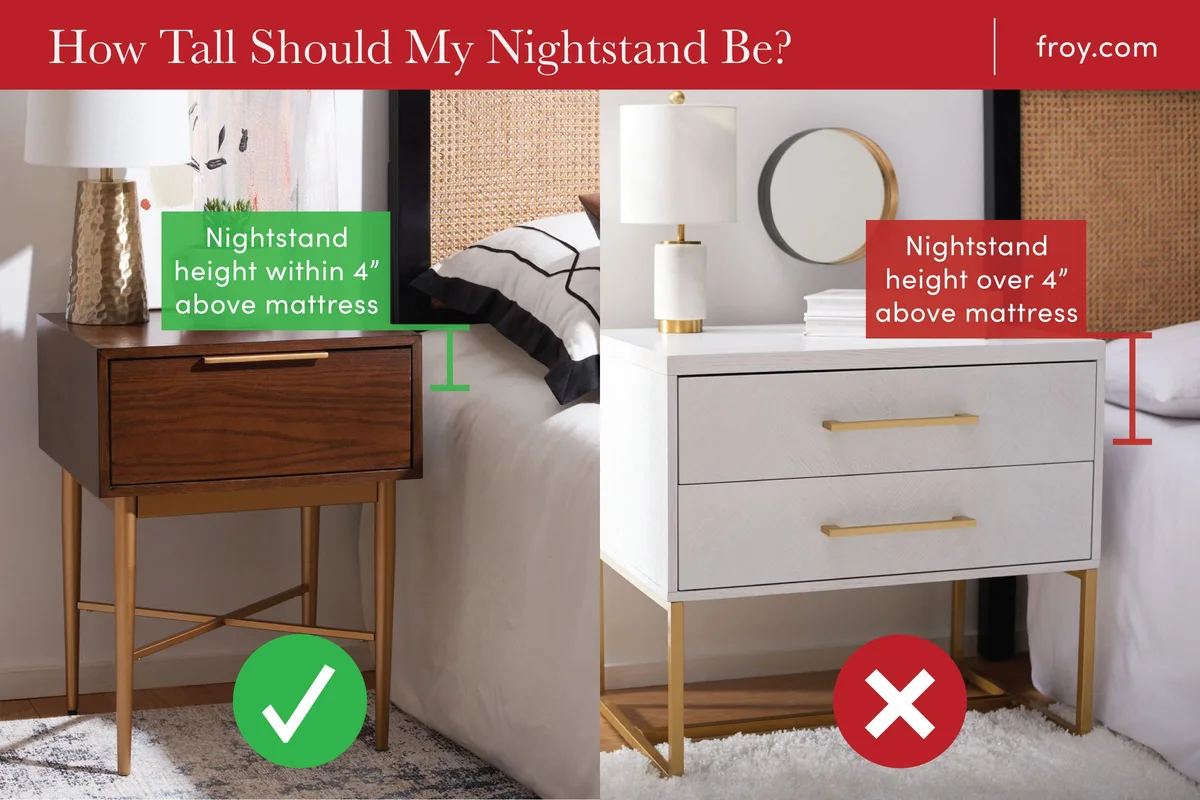
Image source: Bing (Web (fair-use with source credit))
Most wall-mounted nightstand failures aren't the furniture's fault. They're install mistakes. Here are the ones we see come up again and again in user reviews and manufacturer support threads.
Mounting Too High or Too Low
This is the number one regret. The surface should sit roughly 4 to 8 inches above your mattress top for comfortable reach. Measure your mattress height first, then mark the wall.
Sitting up in bed and reaching should never feel like a stretch.
Skipping the Studs on a Hollow Wall
If you mount a cabinet into drywall anchors only, it may hold for a while and then fail without warning. Always put at least one anchor into a stud. Drywall alone is not a structural material, and it won't forgive a heavy load.
Overloading a Cheap MDF Unit
Medium-density fiberboard and particleboard shelves sag over time under constant load, especially in humid rooms. If you're hanging a shelf, keep it light. If you want to load it up, pay for solid wood or plywood.
Ignoring Drawer Swing Clearance
A drawer unit mounted too low will hit your bedding every time you open it. Leave at least 4 to 6 inches between the bottom of the drawer face and the top of your mattress.
Forgettering Cords and Charging
A nightstand with no outlet nearby means dangling cords and a phone on the floor. If you need charging, either pick a unit with an integrated USB port or plan an extension cord route before you drill. Never run a cord where it can be yanked or tripped over.
Not Leveling Before You Screw
A cleat mounted a few degrees off makes the whole unit look crooked forever. Use a torpedo level on the cleat before driving screws. It takes ten seconds and saves a redo.
Choosing Adhesive for a Load It Can't Handle
Adhesive strips are rated for light loads, often 5 to 15 pounds, and their real-world capacity drops on textured or painted walls. Use them for a phone shelf, not for a cabinet.
Forgetting the Move-Out Patch
If you rent, plan for the removal. Keep the anchor screws, buy matching spackle, and photograph the wall before you drill so you can match the paint later.

Similar Posts