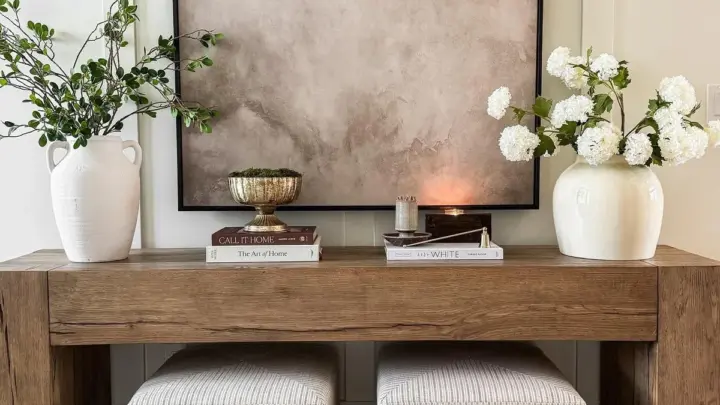
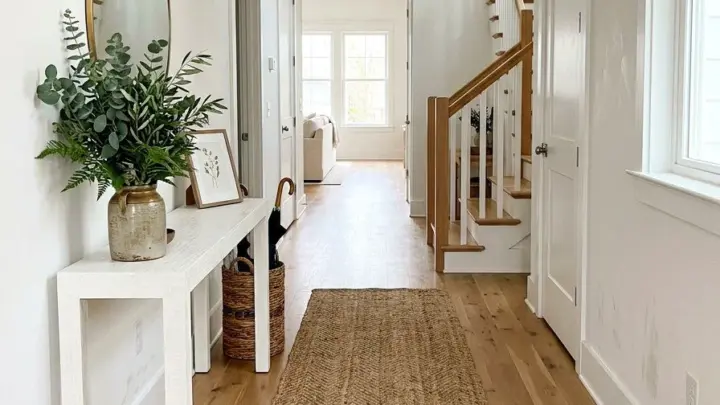
Faux Fireplace Mantel Ideas to Cozy Up Any Room
Take a bare wall or unused corner and give it a fireplace it never had. The best faux fireplace mantel ideas aren't about faking the real thing. They're about building a focal point so well-proportioned and thoughtfully styled that nobody asks whether it's real.
Faux fireplace mantels come in three main builds: a floating shelf, a full surround with an electric insert, and a freestanding console. Standard shelf height sits around 54 inches from the floor, per manufacturer specs across most kits. Get the proportions right and everything else falls into place.
Here's how to plan, build, and style one that holds up close.
faux fireplace mantel ideas
Faux fireplace mantel ideas use a decorative surround, shelf, or insert to fake a real fireplace. The three main types are floating shelf, full surround, and freestanding console. Standard shelf height is about 54 inches from the floor.
Common insert widths run 23 to 36 inches. Costs range from $80 to $2,500.
What a Faux Fireplace Mantel Really Is (and What It Isn't)
A faux fireplace mantel is a decorative surround and shelf that mimics a real fireplace without any combustion. There's no chimney, no venting, and no gas line. What you get is a focal point you can mount, style, and move.
The confusion starts with the word "faux." Some people mean a purely decorative shelf with nothing behind it. Others mean a full surround with an electric insert that throws real heat. Both are legitimate.
They just solve different problems.
The three build types you'll see everywhere
- Floating shelf: A single chunky shelf mounted to the wall at mantel height. Cheapest option. Zero heat. Best for renters and small spaces.
- Full surround: A frame around an insert, with a shelf across the top. This is the classic look. Pairs with an electric insert for warmth and flame effect.
- Freestanding console: A complete unit you set against the wall. No drilling required. Great for apartments where the lease is strict.
Real fireplace vs. electric insert vs. purely decorative
A real masonry fireplace costs $5,000 to $15,000+ and needs a permit. An electric insert runs $150 to $600 and plugs into a standard 120V outlet. It typically puts out 4,000 to 5,200 BTUs, which covers roughly 400 square feet.
Here's the catch. A purely decorative mantel gives you the look with none of the heat. If you want warmth, you need an insert with a UL listing.
If you just want the visual anchor, skip the insert entirely.
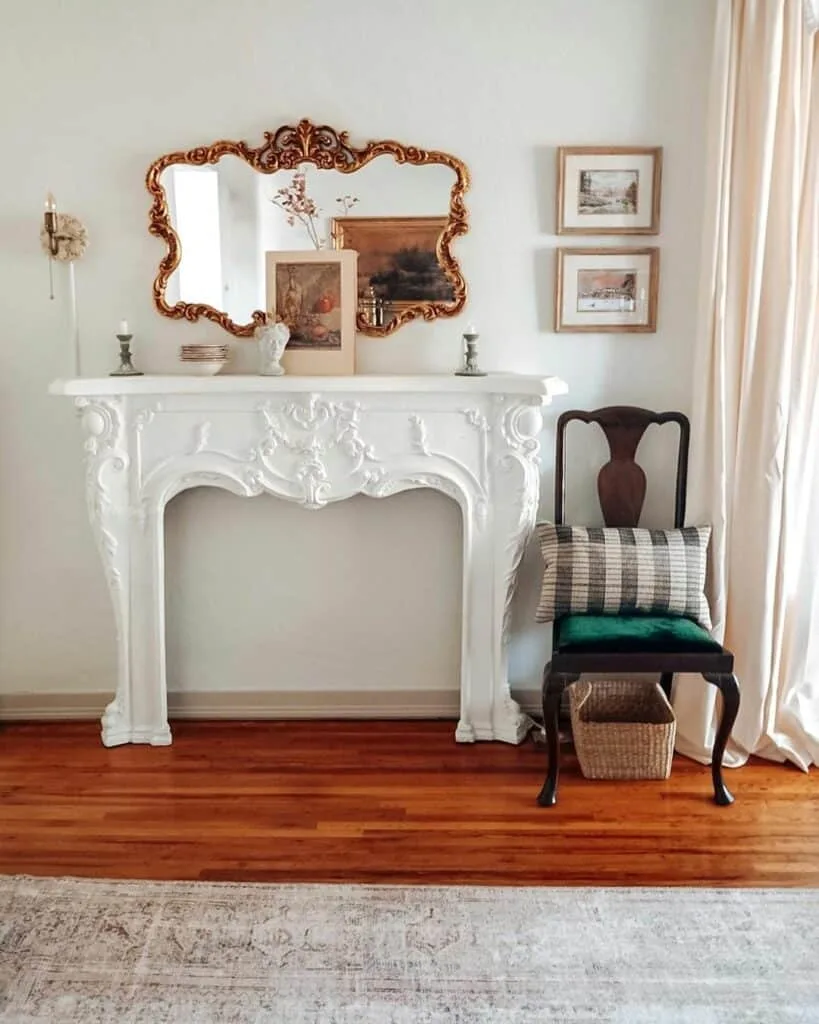
Image source: Bing (Web (fair-use with source credit))
Quick sizing reality check
Mantel height matters more than most people realize. The standard is about 54 inches from floor to the top of the shelf. Too low and it looks squat.
Too high and it crowds the ceiling.
Insert widths are commonly sold at 23, 26, 28, 30, 33, and 36 inches. Your surround should run 6 to 10 inches wider than the insert on each side.
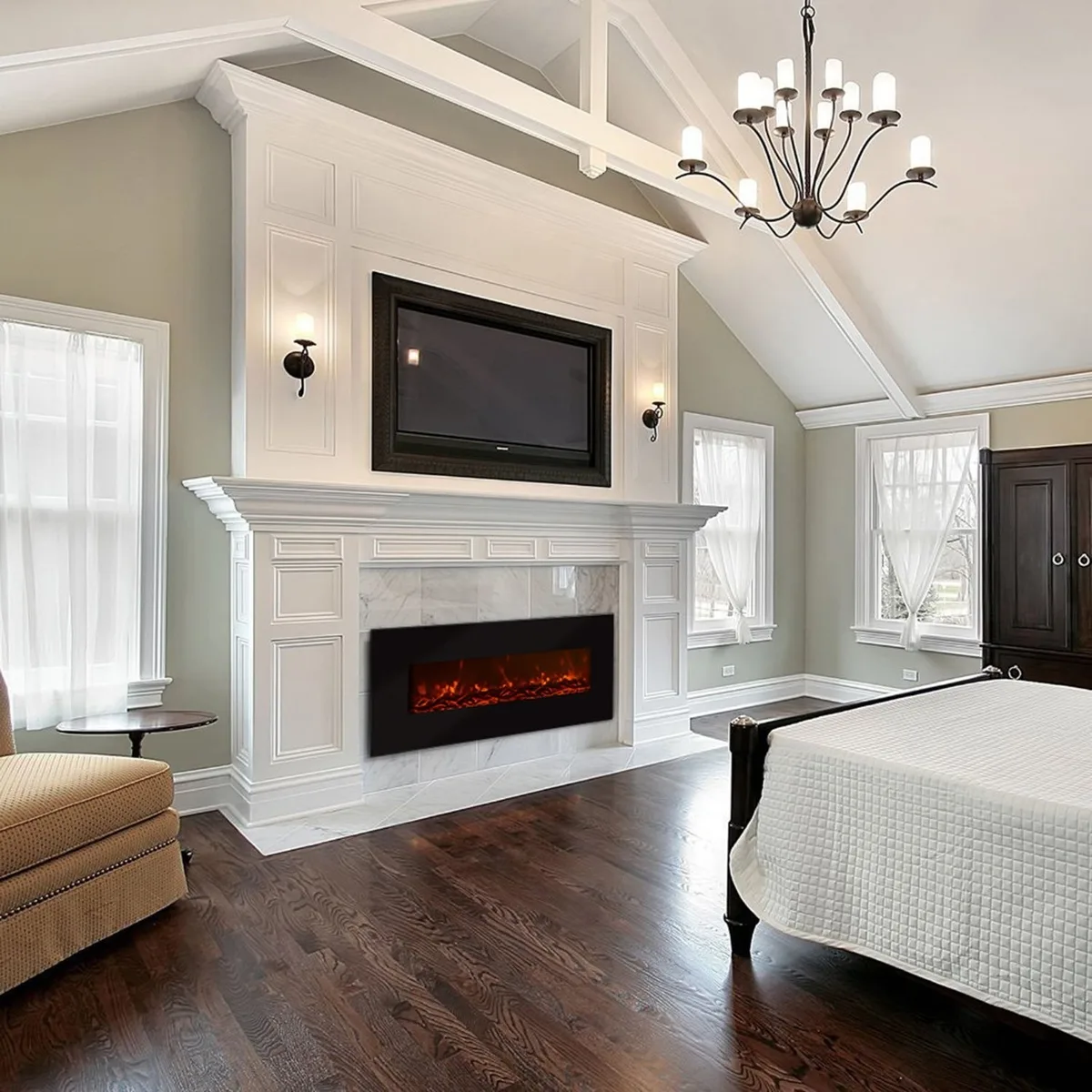
Image source: Bing (Web (fair-use with source credit))
If you're mounting a TV above it, leave 6 to 12 inches of breathing room between the shelf and the bottom of the screen. That's a sight-line rule, not a hard code. But ignore it and you'll be craning your neck every night.
How to Pick the Right Look for Your Wall
The look you pick has to match the wall it's going on. A faux brick surround in a modern minimalist apartment fights the room. The same surround in a farmhouse living room feels inevitable.
Start with the material. Then match it to your room's existing style.
Faux brick, shiplap, stone veneer, reclaimed wood, cast stone
- Faux brick veneer panels: Read as industrial or farmhouse. Peel-and-stick versions run $1.50 to $5 per square foot. They fail in humid rooms.
- Shiplap: Clean, bright, modern farmhouse. Easy to paint. Shows seams if panels aren't staggered right.
- Stone veneer: Heaviest look, highest impact. Real stone veneer costs more and needs more support.
- Reclaimed wood: Warm, rustic, one-of-a-kind. Prone to cracking in dry climates.
- Cast stone composite: Reads as traditional carved stone. Lighter than real stone. Pricier than MDF.
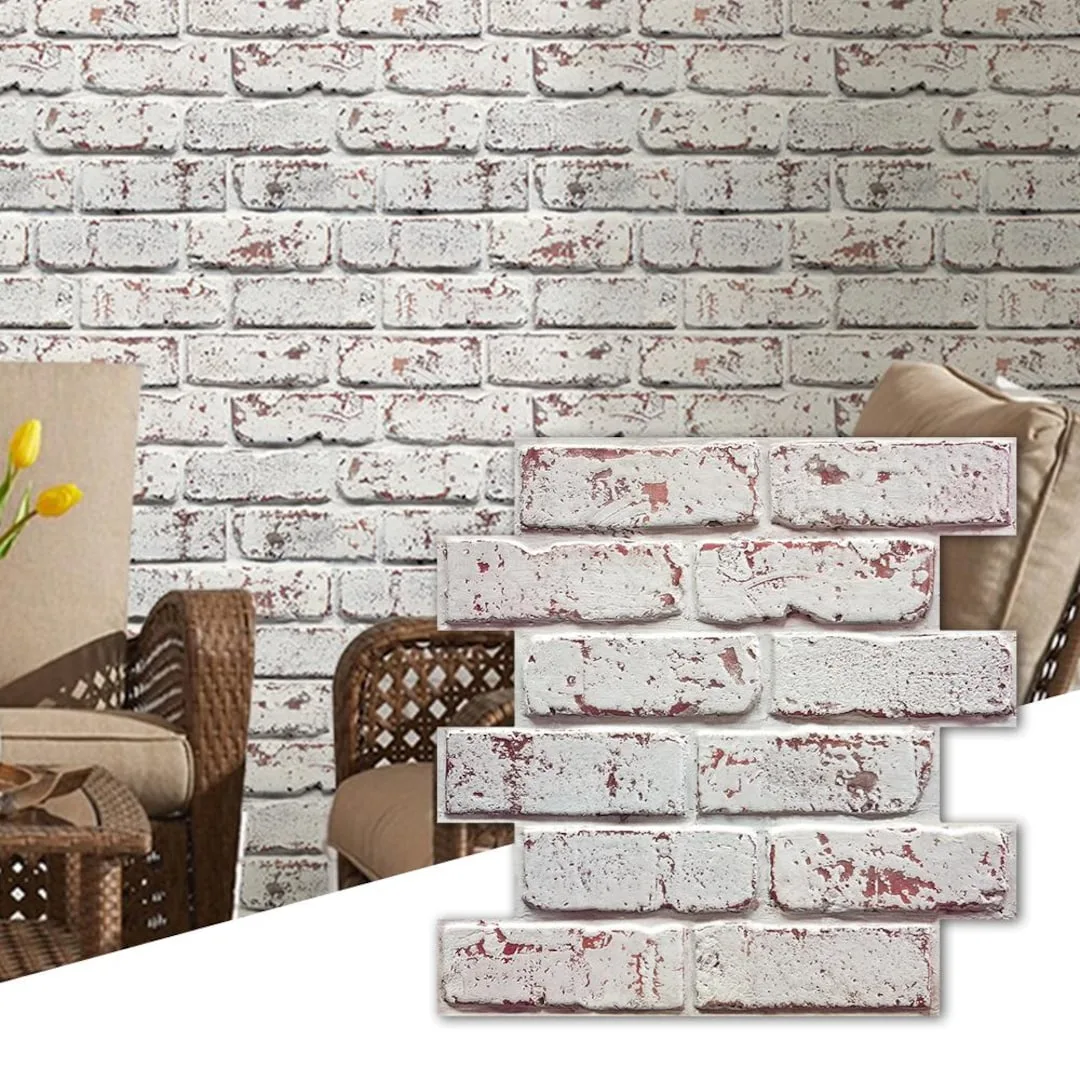
Image source: Bing (Web (fair-use with source credit))
Matching style to room
If your room leans farmhouse, go shiplap or reclaimed wood with a chunky shelf. If it's modern minimalist, think clean lines and cast stone or sleek painted MDF. Coastal rooms do well with whitewashed finishes and light wood.
Boho spaces can handle raw, uneven textures.
The rule is simple. Pick a material your room already speaks. Don't introduce a new language in one corner.
The TV-over-mantel question
Should you mount a TV above a faux mantel? Only if the proportions work. Your screen should be no wider than the surround.
If the surround is 60 inches and the TV is 65, it looks top-heavy and cheap.
Also check clearance. Electric inserts often list zero clearance to combustibles, but decor and cords still need space. Keep anything flammable well away from the insert vent.
Step-by-Step: Building and Styling Your Faux Mantel
The build itself is not complicated. The order of operations is what trips people up. Do things out of sequence and you'll redo them.
Measuring, height, and studs
Measure the wall width first. Then decide your insert width. Then work outward from there.
For height, 54 inches from floor to shelf top is the working standard. Mark it with painter's tape and stand back. If it looks off, trust your eye and adjust.
Find your studs with a stud finder. Mark them with tape. A 30-pound shelf needs real anchor points, not drywall plugs.
Mount, wire, finish: the install order
- Rough-in the outlet or cord path. If you're hardwiring, this is the time.
- Mount the surround frame to studs.
- Install the insert into the frame per manufacturer specs.
- Attach the shelf on top of the surround.
- Caulk seams, fill nail holes, and paint or stain.
Do the outlet before the surround. Running a cord after the fact means visible wires or cutting into finished work.
Hiding cords and making MDF look intentional
Cord-hiding channels are cheap and effective. Paint them to match the wall. If you're renting, adhesive cord clips do the job without damage.
MDF gets a bad rap. It reads cheap when seams are visible or edges are raw. Sand the edges, caulk the joints, and use a satin or semi-gloss finish.
With a good finish, MDF looks like painted wood.
Shelf styling: the rule of three
This is where faux mantels either look real or look like a kit. Follow three rules.
Layer front to back. Put taller items at the back, mid-height in the middle, and smaller pieces up front.
Vary height dramatically. A row of same-height objects flattens the whole thing.
Group in odd numbers. Three or five objects read better than four.
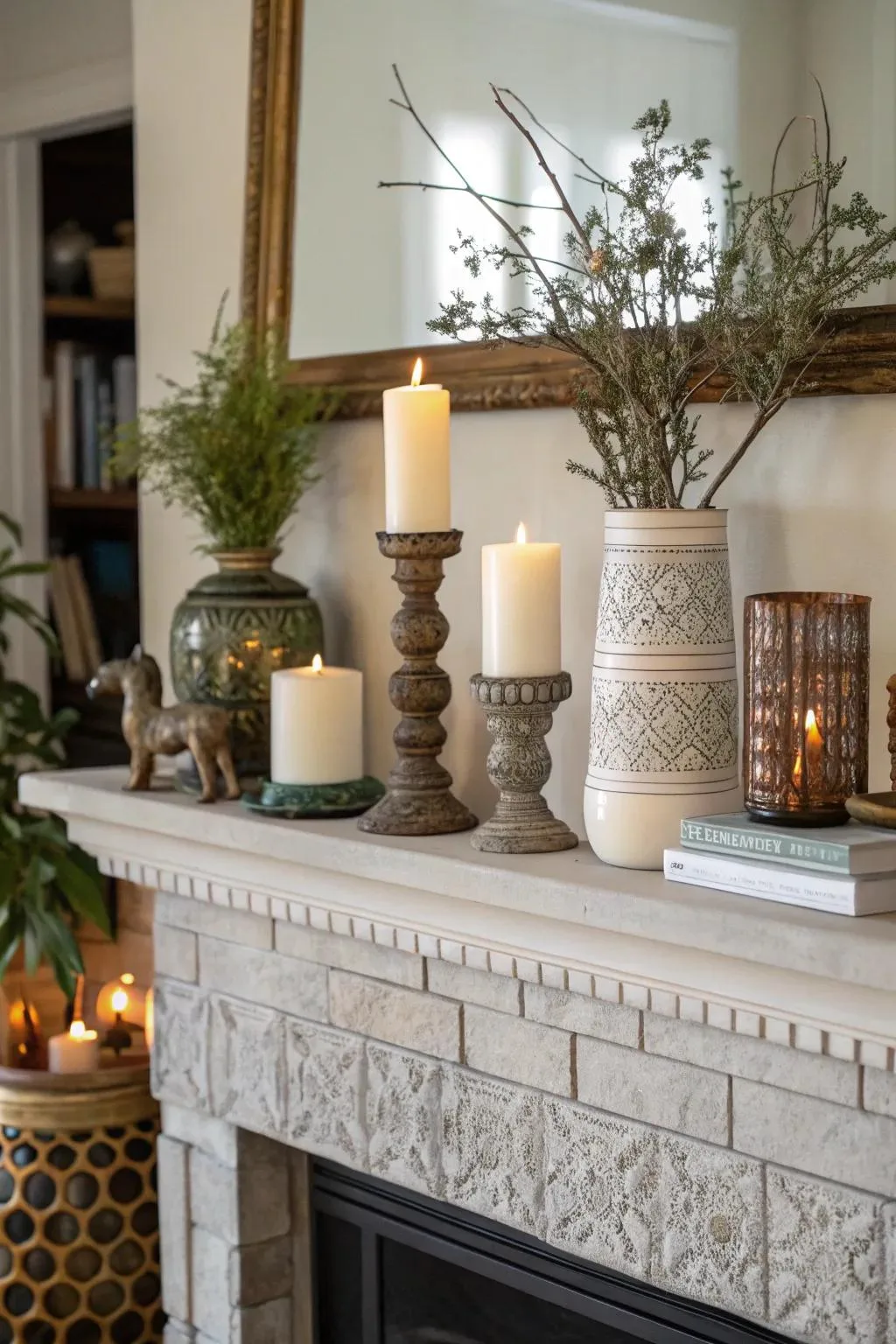
Image source: Bing (Web (fair-use with source credit))
Skip the seasonal overload. One strong anchor piece plus two supporting objects beats ten small knick-knacks.
What It Costs and Where the Money Goes
Prices swing wildly depending on build type. Here's the real breakdown.
| Build type | Typical price range | Best for |
|---|---|---|
| Peel-and-stick brick + floating shelf | $80-$300 | Renters, tight budgets |
| MDF surround kit + electric insert | $400-$1,200 | Living rooms, TV walls |
| Custom hardwood + tile surround | $600-$2,500 | Long-term homeowners |
The insert is usually the biggest single line item. A basic electric log set runs $150. A larger insert with adjustable flame and remote runs $400 to $600.
Hardwood mantels jump the price fast. Poplar and oak shelving alone can run $300 to $800 depending on length and finish.
BTUs, amps, and running costs
Most electric inserts draw 12 to 15 amps at 120V. That's a standard household circuit. Don't plug one into a shared circuit with a space heater.
Heat output sits between 4,000 and 5,200 BTUs. That's zone heating, not whole-home. Expect it to warm a single room, not a floor.
Running costs land around $0.15 to $0.30 per hour on flame-plus-heat mode, depending on your electricity rate. Flame-only mode costs almost nothing.
For context, the U.S. Department of Energy publishes zone-heating guidance at energy.gov that supports using supplemental heat for single occupied rooms.
Mistakes That Make a Faux Mantel Look Cheap
The fastest way to blow a faux mantel is bad proportions. A 48-inch shelf on a 12-foot wall looks lost. Same shelf with a TV towering above it looks worse.
Cheap materials show fast. MDF seams crack. Peel-and-stick brick lifts in bathrooms and basements.
Wet adhesive fails within months.
Overcluttered shelves kill the effect. So does mixing finishes. A whitewashed shelf on a raw brick surround reads confused, not curated.
For renters, the biggest mistake is adhesive residue. Peel-and-stick panels can pull paint at move-out. Use removable adhesive and test a hidden corner first.
Safety, Rentals, and Rules You Shouldn't Ignore
Start with the listing mark. A real electric insert carries a UL or ETL mark on the data plate. UL 127 and UL 2021 are the two you'll see most often.
No mark means no protection, so walk away.
Clearance matters even on electric units. Many list zero clearance to combustibles, but the vent still gets hot. Keep stockings, garland, and curtains away from the vent face.
Can you put a faux mantel in a rental?
Yes, if you choose reversible methods. Freestanding consoles and floating shelves with removable anchors leave the smallest footprint. Peel-and-stick panels are riskier.
They often pull paint at move-out, and that comes out of your deposit.
Test a hidden corner before committing to full adhesive coverage. A 24-hour patch test tells you whether the paint will survive removal.
When does a permit actually apply?
Plug-in electric inserts rarely need a permit. Hardwired units usually do, because they tie into household wiring. Bathrooms and basements need GFCI protection either way.
Check three things before you drill. Your lease, your HOA rules, and your local building department. A quick call saves a costly teardown.
Faux Mantel Ideas by Room and Situation
Room dictates build. Situation dictates method. Match both and the project practically designs itself.
Small apartments and studios
Go freestanding or floating. A corner console fills dead space without blocking traffic. Floating shelves read lighter and keep the floor clear.
Both come down at move-out with minimal patching.
If you can't drill at all, a freestanding console is your only real option. No anchors, no residue, no landlord conversation.
Living rooms with a TV
Match the surround to the screen width. The surround should be equal to or wider than the TV. Anything narrower looks top-heavy.
Leave 6 to 12 inches between shelf and screen bottom. Run cords through a painted channel behind the surround. Visible cables are the fastest way to make a nice build look unfinished.
Bedrooms, entryways, and dining rooms
These rooms reward drama over function. A tall cast stone surround with a chunky hardwood shelf makes a strong focal wall. Flame-only mode works well here, since you don't need heat in a bedroom.
In entryways, a narrow console with flanking storage reads intentional. In dining rooms, center the mantel behind the table for a natural backdrop.
Staging and short-term rentals
Photographs drive bookings. A faux mantel with peel-and-stick brick and styled shelves photographs beautifully and costs under $300. Keep it reversible so the next owner can remove it.
Skip permanent finishes. Paint, caulk, and hardwired inserts are hard to undo. Stick to freestanding and removable options.
Frequently Asked Questions
How tall should a faux fireplace mantel be?
The standard is about 54 inches from the floor to the top of the shelf. That height reads balanced against most ceiling heights. If your ceiling is unusually high or low, adjust up or down a few inches and trust your eye.
Can you put a TV above a faux mantel?
Yes, if the surround is at least as wide as the TV. Keep 6 to 12 inches of space between the shelf and the screen. Anything tighter strains your neck and crowds the styling.
Do faux fireplace mantels need a permit?
Plug-in electric inserts usually don't. Hardwired units typically do, since they connect to household wiring. Check with your local building department before you commit.
What's the cheapest way to fake a fireplace?
A floating shelf plus peel-and-stick brick runs $80 to $300. It's the lowest-cost option that still reads as a real focal point. Skip the insert if you don't need heat.
Will peel-and-stick brick damage my wall?
It can pull paint at removal, especially on fresh or glossy finishes. Test a hidden corner for 24 hours first. Removable adhesive and a slow peel reduce the risk.
Do electric faux fireplaces actually heat a room?
Yes, within limits. Most put out 4,000 to 5,200 BTUs, which covers roughly 400 square feet. That's zone heating for one room, not whole-home warmth.
Final Recommendation: Match the Build to Your Wall, Budget, and Lease
The right choice depends on three things. Your wall, your budget, and how long you're staying.
Renters, first-time buyers, and long-term owners
Renters should stick with freestanding consoles or floating shelves. Both come down clean. If you want the brick look, use removable peel-and-stick and test first.
First-time buyers can go further. An MDF surround kit with an electric insert gives you the full look for $400 to $1,200. It's reversible enough to change your mind later.
Long-term owners should invest in a custom hardwood mantel and tile surround. That build runs $600 to $2,500 and holds up for decades.
The one rule that separates "looks real" from "looks like a kit"
Proportion beats material every time. A cheap MDF surround sized correctly looks better than an expensive hardwood shelf sized wrong. Measure the wall, set the height at 54 inches, and match the surround width to the insert or TV.
Get those three numbers right and the rest falls into place.
Finish the details. Caulk the seams, hide the cords, and style in odd numbers. That's the difference between a focal point and a fake.

Similar Posts