Walk-In Closet Chandelier Styling Ideas That Wow
Walk in closet chandelier styling fails most often for one quiet reason: the fixture gets picked from a dining room rulebook. A 24-inch chandelier that looks elegant over a table can look cramped in a tight walk-in and absurd under a seven-and-a-half-foot ceiling. What works in your closet depends on four numbers first, then on how the fixture reads in a mirrored, enclosed space.
In our research, most closet lighting guidance borrows from kitchen and dining standards, which assume taller ceilings and open sightlines. The Illuminating Engineering Society (IES) treats residential lighting as a layered system, not a single central fixture. So we'll start with measurements, move through visual judgment, and finish with what actually goes wrong on install day.
walk in closet chandelier styling
Walk in closet chandelier styling means sizing the fixture to your ceiling height and aisle width, then hanging it roughly 7 feet above the floor. Warm dimmable light around 2700K to 3000K with a CRI of 90 or higher keeps clothing colors reading true. Crystal, drum, and lantern styles all work.
Proportion and placement matter more than the fixture itself.
The Four Numbers That Decide Everything Before You Shop
Measure before you browse. Four numbers eliminate most bad choices before money changes hands, and they take ten minutes with a tape measure.
Ceiling Height and Aisle Width
A standard US ceiling runs 8 to 9 feet, while many UK homes sit closer to 7.5 feet. That difference decides whether a chandelier is even an option. If your aisle is under 30 inches wide, a hanging fixture will feel like an obstacle.
Fixture Diameter (Room Length + Width in Inches)
Add your closet's length and width in feet, then convert that total to inches. A 6-by-8-foot walk-in gives you 14, so you're shopping for a fixture around 14 inches in diameter. It's a starting point, not gospel, but it stops you from buying something that visually swallows the room.
Drop Length and the Seven-Foot Floor Rule
Hang the bottom of the fixture at least 7 feet above the floor. On an 8-foot ceiling, that leaves roughly 12 to 18 inches of drop. Higher ceilings give you more room to play.
Lower ceilings often push you toward a semi-flush mount instead.
Junction Box Weight and Location
Manufacturer specifications indicate most standard ceiling junction boxes in US homes are rated for 35 to 50 pounds when properly braced. Check yours before buying a heavy crystal piece. If there's no box at all, that's an electrician's job, not a weekend project.
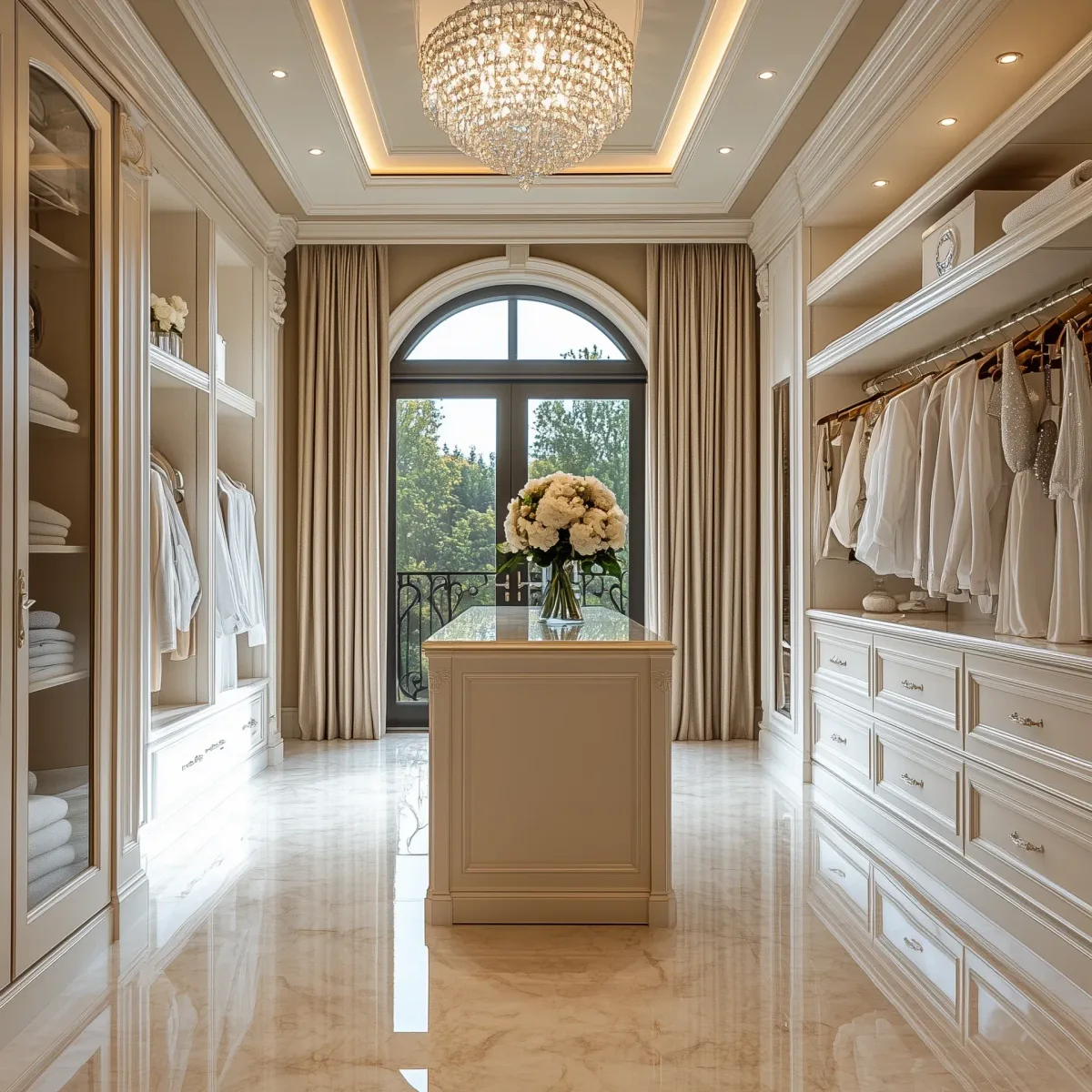
Image source: Bing (Web (fair-use with source credit))
| Number | Why It Matters | Quick Rule |
|---|---|---|
| Ceiling height | Decides fixture type | Under 8 ft, go semi-flush or flush |
| Aisle width | Prevents head bumps | Keep 30+ inches clear |
| Diameter | Controls visual scale | Length + width in feet, in inches |
| Junction box | Safety and support | 35–50 lb rating minimum |
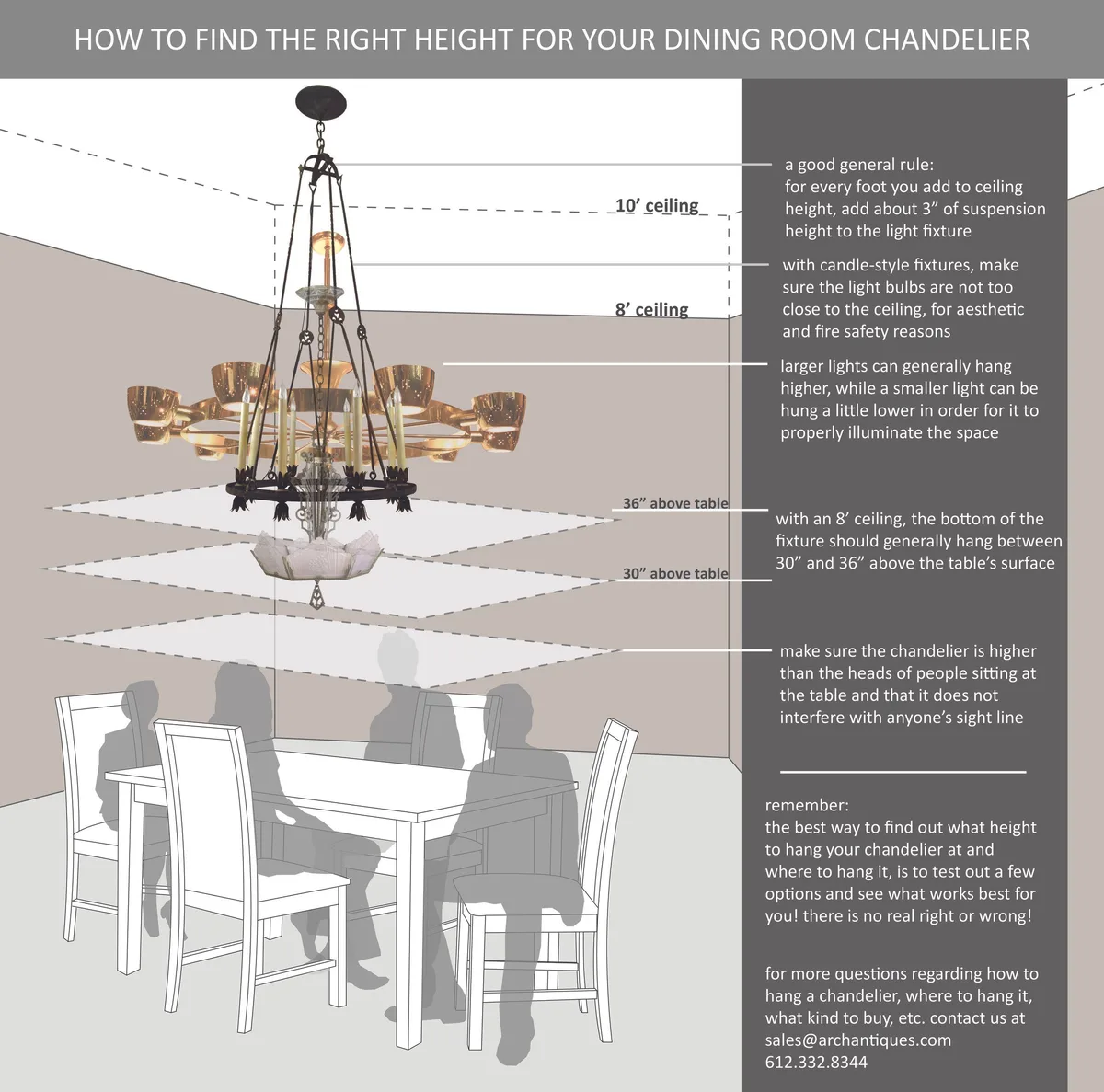
Image source: Bing (Web (fair-use with source credit))
Reading a Walk-In Closet Like a Designer: Visual Cues That Change the Pick
Photos and renders tell you more than numbers ever will. What looks balanced on a spec sheet can read completely wrong once it's in the room.
Low Ceilings (7.5 to 8 ft): Why Flush and Semi-Flush Often Win
If your ceiling is at or under 8 feet, a full chandelier leaves almost no breathing room. A semi-flush mount gives you style without stealing vertical space. If you want sparkle, choose a compact crystal piece with a shallow profile.
Standard Ceilings (9 to 10 ft): Where Chandeliers Earn Their Place
This is the sweet spot. You've got enough drop to make a statement without crowding the room. A 15- to 20-inch chandelier with an adjustable chain lands comfortably here.
Vaulted and Tray Ceilings: Chain, Rod, and Lift Options
Vaulted ceilings demand longer drops and often a slope-ceiling adapter. Tray ceilings can handle a pendant, but keep the drop proportional to the recess. For steep vaults, a chandelier lift makes bulb changes realistic instead of a ladder job.
Mirrored Walls, Glass Shelving, and the Reflection Problem
Mirrors double everything, including glare. A bright fixture appears twice in a mirrored closet, which can feel overwhelming in tight rooms. Position the fixture so its reflection doesn't land directly in your line of sight from the doorway.

Image source: Bing (Web (fair-use with source credit))
Choosing the Style: Crystal, Drum, Lantern, or Quiet Minimal
Style is where the eyes take over. Each family of fixtures behaves differently in a walk-in, and the differences show up in photos long before they show up in daily life.
Crystal and Glass: Boutique Hotel Look, Real Dust Reality
Crystal reads luxurious, especially against mirrored walls. But it collects dust fast in a humid closet, and cleaning individual pieces is genuinely tedious. If you've got the patience, the payoff is dramatic.
Drum Shades and Fabric: Soft Light, Forgiving in Photos
A drum shade diffuses light and softens shadows, which photographs cleanly. Fabric shades hide dust better than crystal and rarely create harsh glare on shelving. They're the safest pick if you want the room to feel calm, not theatrical.
Lanterns, Globes, and Geometrics: Modern and Low-Maintenance
Open-frame geometric and lantern fixtures are the practical sweet spot. They look modern, clean easily, and rarely dominate a small closet. If you tend to skip dusting, start here.
Finish Pairing Against Your Closet Palette
Brass warms up cool gray cabinetry. Matte black anchors airy white closets. Nickel feels neutral and disappears into a mostly white scheme.
Match the finish to the hardware already in the room, or choose a deliberate contrast.
Layering the Light: Chandelier Plus Sconces, Recessed, and LED Strips
A chandelier alone rarely lights a walk-in well. It casts light downward and leaves corners dim, especially in closets with deep shelving.
Add recessed cans at the perimeter to reach shelves, and LED strips inside shelves for detail. Wall sconces beside a mirror or dressing area fill the gap between task and ambient light. Per IES guidance, layering produces the most usable, flattering light in enclosed spaces.
Bulbs matter as much as the fixture. Aim for 2700K to 3000K, CRI 90+, and 800 to 2,500 lumens depending on closet size. Cool 4000K bulbs make clothes look washed out, and cheap LEDs flicker on incompatible dimmers.
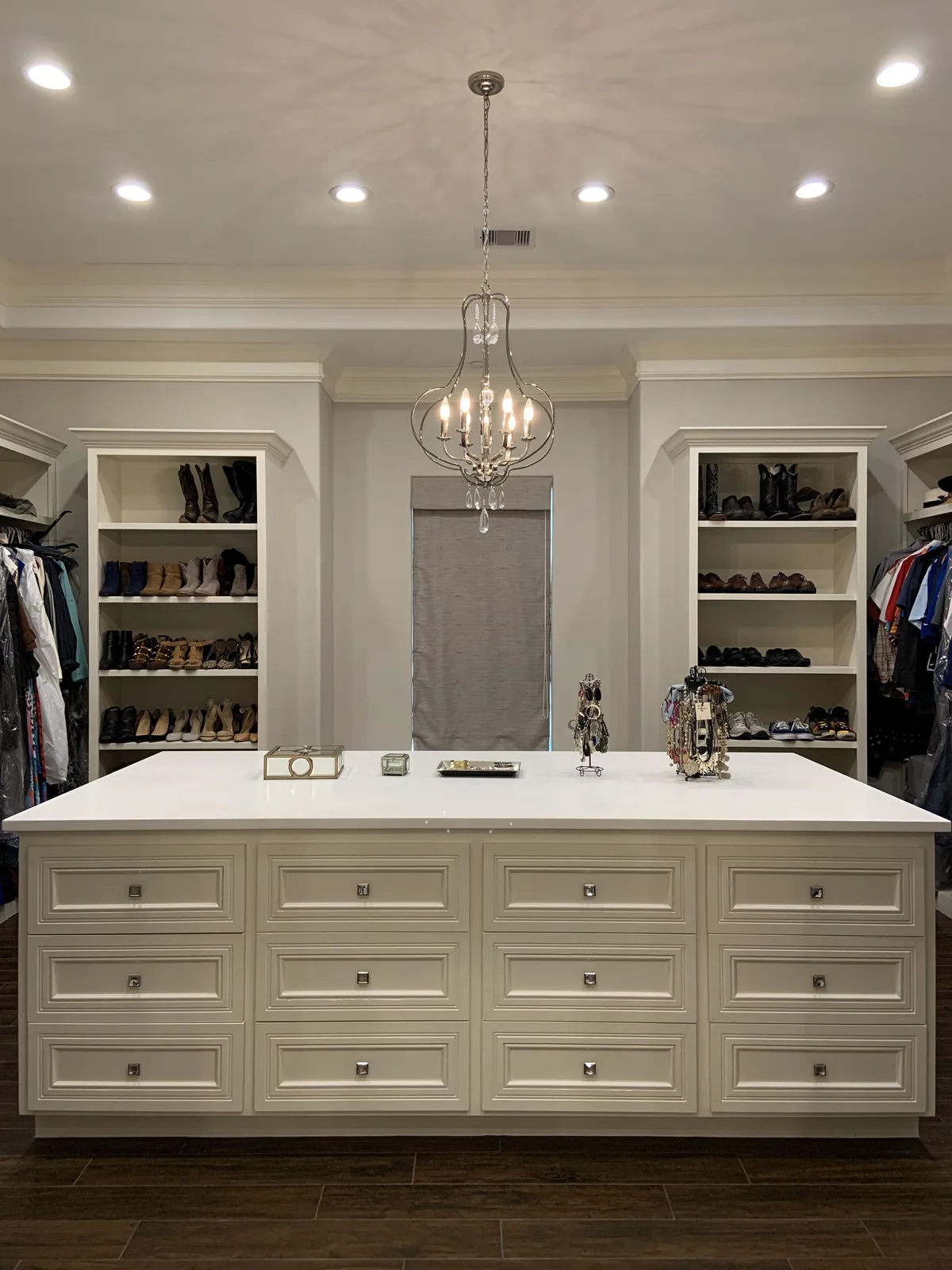
Image source: Bing (Web (fair-use with source credit))
Mistakes That Ruin a Closet Chandelier (and the Fix for Each)
Almost every closet chandelier regret traces back to one of four sizing mistakes. Catch them before you buy, not after you've paid an electrician.
Too Big, Too Small, Too Low, Too High
Oversized fixtures crowd narrow walk-ins and make ceilings feel lower than they are. Undersized ones vanish against the ceiling. If the fixture hangs below 7 feet, you'll duck under it every morning.
If it sits too close to the ceiling, it stops reading as a focal point. Match diameter to room size, then set drop so the bottom clears 7 feet.
Wrong Color Temperature Washing Out Clothes
Cool bulbs make navy look black and skin look gray. Stick to 2700K to 3000K so garments read the way they do in daylight. A CRI of 90 or higher keeps color accurate under the fixture itself.
Ignoring the Door Swing, Mirror Sightlines, and Heat Near Fabric
A chandelier that blocks a door swing is a daily annoyance. A fixture reflected directly in a mirror creates glare. Incandescent bulbs too close to hanging garments also warm the fabric over time.
Rental and No-Junction-Box Workarounds That Still Look Intentional
No ceiling box? A plug-in swag chandelier with a fabric cord hides the compromise well. Keep the swag hook centered so the cord drapes evenly.
Renters should double-check the lease before drilling anything.
Install, Maintain, and Keep It Looking Styled
Installation starts with the junction box, not the fixture. If there's no box or the weight rating is unclear, hire a licensed electrician. In most US and UK jurisdictions, new circuits and wiring require permits, and DIY shortcuts void insurance claims fast.
Once mounted, dimmer compatibility decides how the fixture actually behaves. Manufacturer specs confirm LED chandeliers need dimmers matched to their drivers. A mismatched switch produces flicker or buzz, no matter how much you spent.
Maintenance keeps the look intentional. Dust crystal piece by piece every few weeks in humid closets, since moisture traps grime. Drum shades need a soft brush, not a damp cloth.
Schedule bulb replacement in batches so color temperature stays consistent.
Finally, restyle the closet around the fixture. If the chandelier is the visual hero, let shelving stay clean and the island minimal. Bright clutter competes with a statement piece and flattens the whole effect.
Frequently Asked Questions
How big should a walk-in closet chandelier be?
Add your closet's length and width in feet, then convert that total to inches. A 6-by-8-foot walk-in points to roughly a 14-inch fixture. For larger walk-ins over 10 feet, step up to a 20- to 24-inch chandelier.
Adjust slightly for ceiling height.
What's the minimum hanging height for a closet chandelier?
Keep the bottom of the fixture at least 7 feet above the floor. On an 8-foot ceiling, aim for a 12- to 18-inch drop. Taller ceilings allow longer chains and a more dramatic hang.
Never drop it so low that you duck.
Can I install a chandelier without adding a new junction box?
Sometimes, but only if an existing ceiling box is properly braced and rated for the fixture's weight. Standard US boxes handle 35 to 50 pounds. Heavier crystal fixtures need additional support.
If there's no box, an electrician has to run one.
Do I need a chandelier in a small walk-in closet?
No, and often it's the wrong call. Under 8-foot ceilings, a semi-flush mount or flush fixture works better than a hanging chandelier. You'll get clean light without crowding the space.
Statement fixtures suit standard and taller ceilings best.
What color temperature works best for closet lighting?
Warm light between 2700K and 3000K with a CRI of 90 or higher is the sweet spot. It keeps clothing and skin tones accurate. Cooler 4000K bulbs make colors look flat and washed out.
Warm bulbs also flatter a boutique-style closet.
Are crystal chandeliers a bad idea in a walk-in closet?
Not bad, but high-maintenance. Crystal collects dust quickly, especially in humid closets. Cleaning individual pieces takes real patience.
If you love the sparkle and don't mind the upkeep, they're stunning. If you'd rather skip dusting, choose open-frame or drum styles.

Similar Posts