Quiet Luxury Entryway Ideas for a Timeless First Impression
There's a particular kind of hallway that stops you without shouting. Nothing matches a catalog. Nothing has a logo on it.
And yet the whole space feels expensive in a way that's hard to place. That's the quiet luxury entryway, and the look almost never comes from what people add. It comes from what they refuse to buy.
Here's the catch: this style is subtractive, not additive. A 3-foot-wide hall with a 30-inch console, two mismatched metals, and a cool-white bulb will fight itself no matter how good the pieces are. Get the foundation right, though, and even a $400 setup reads like a $4,000 one.
quiet luxury entryway
A quiet luxury entryway is an understated, logo-free entry space built on natural materials, warm neutrals, and a small number of well-scaled pieces. It favors negative space over decoration. Matte finishes beat high gloss.
Warm 2700K light matters more than any single object. The result reads calm, deliberate, and expensive without visible branding.
Start With Subtraction: The One Rule That Defines Quiet Luxury
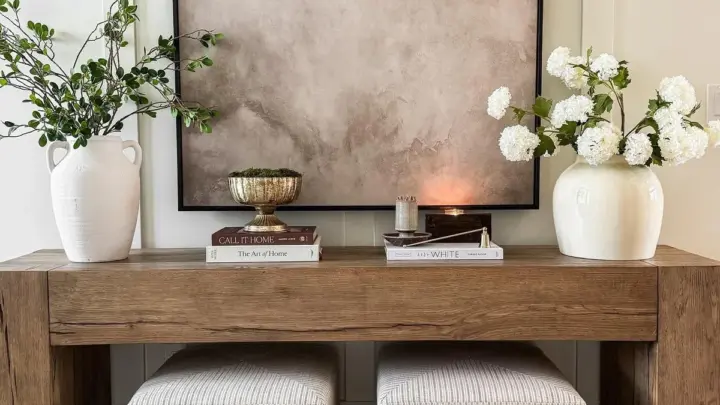
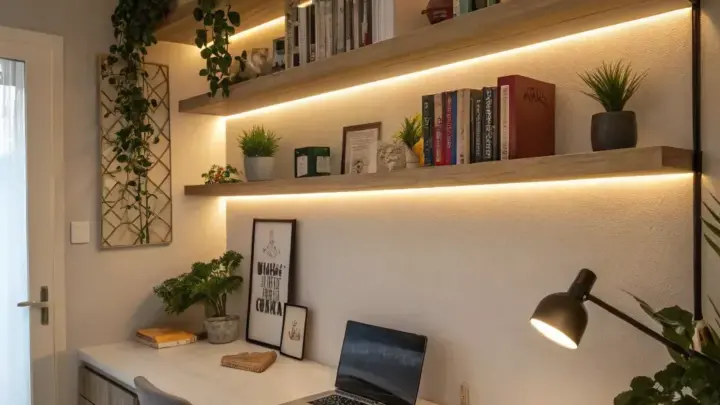
Subtraction is the whole game. Quiet luxury isn't curated chaos with better fabric. It's an edited room where every object earns its spot, and anything that doesn't gets cut.
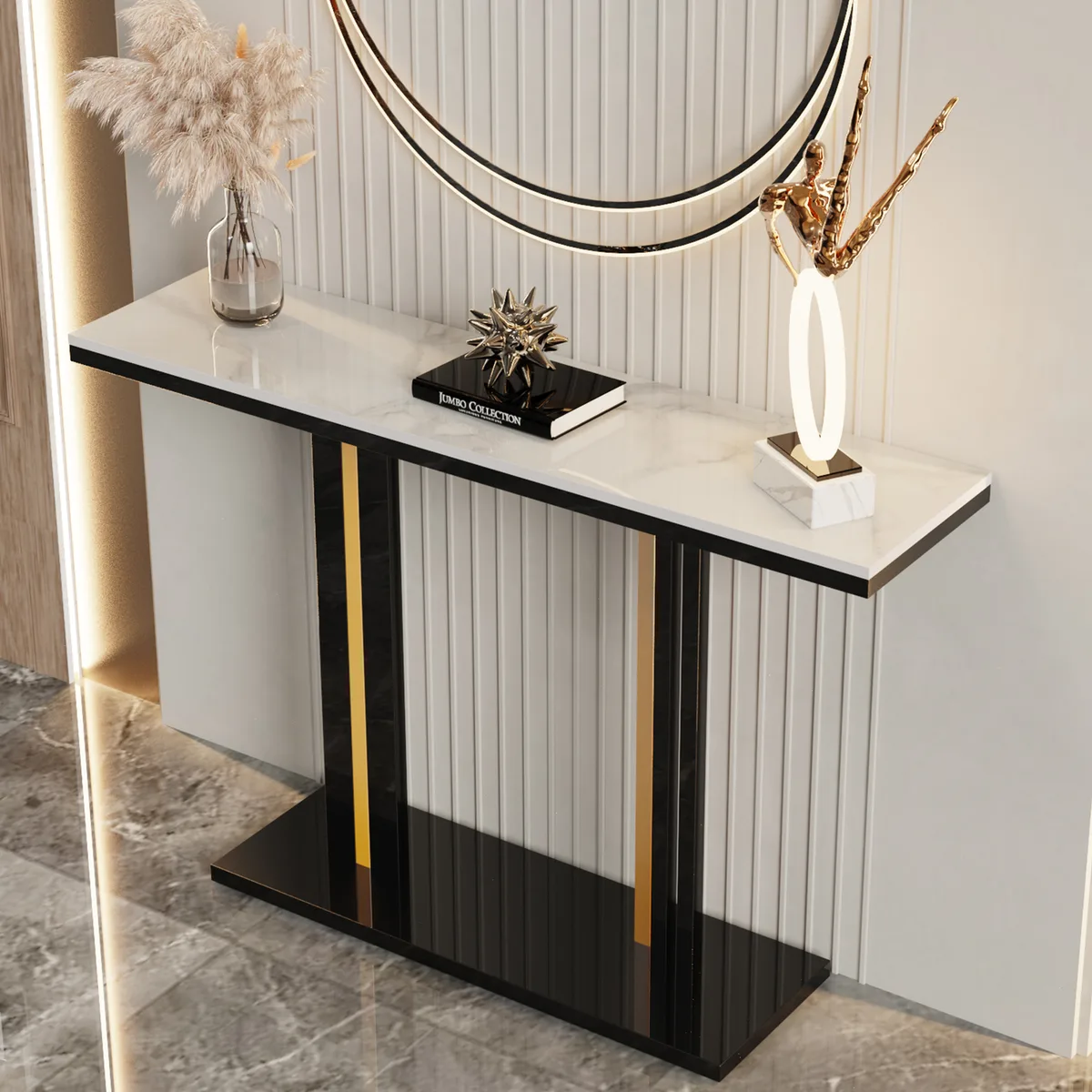
Image source: Bing (Web (fair-use with source credit))
If you're deciding whether something stays, run one question: does it compete with the anchor piece? If yes, remove it. That's the entire rule.
Here's what that looks like in practice:
- Remove anything with a visible logo, monogram, or brand plaque.
- Remove the second and third focal points. One mirror is enough. Skip the extra art, the leaning frame, the plant, the stack of books.
- Remove cool-toned bulbs. Anything 4000K and up will kill the warmth in one switch-flip.
- Remove one item from every surface. Then check if the surface still reads full. Sometimes it does.
In our research across design portfolios and trade documentation, quiet-luxury rooms average two to four objects per surface zone. Maximalist rooms run eight to fifteen. That gap isn't style preference.
It's method.
Designers associated with this look, including Vincent Van Duysen and Axel Vervoordt, work almost entirely by reduction. Fewer pieces, sturdier materials, more air between them. The restraint is the point.
Choosing Your Anchor Piece: Console vs. Bench vs. Built-In
Every entryway gets one anchor. Pick it before you buy anything else, because everything downstream responds to it.
When a Console Table Wins
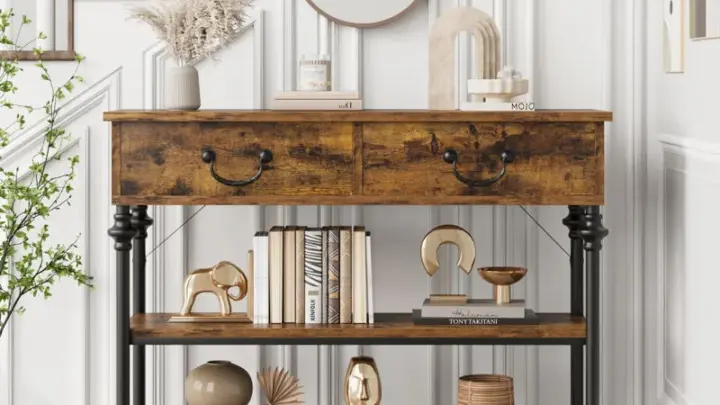
A console is your best anchor for a hallway with a wall to spare and no seating need. Standard console height runs 30 to 34 inches. Depth matters more than width in narrow halls: 12 to 14 inches reads clean, anything past 18 inches starts blocking the door swing.
Best for: narrow hallways, apartments, renters, and anyone who wants a surface for a tray and a lamp.
When a Bench or Settee Makes More Sense
If you sit to put shoes on, or your entry doubles as a drop zone, a bench wins. Standard seat height runs 17 to 19 inches. Look for solid wood or metal legs, not particleboard with veneer.
Best for: mudroom-style entries, families with kids, anyone who needs shoe storage underneath.
When Built-In Millwork Is Worth the Spend
Built-ins only pay off on one condition: you plan to stay in the house at least five years. Custom millwork runs 4 to 12 weeks in lead time and often $5,000 to $20,000 installed. It's the only option that hides coat clutter entirely behind a door.
Best for: settled homeowners, closets that never quite work, houses with dead hallway space.
If you're unsure, go console. It's the most forgiving anchor, the easiest to swap later, and the least likely to look dated.
Materials, Metals, and Color: What to Pick and What to Skip
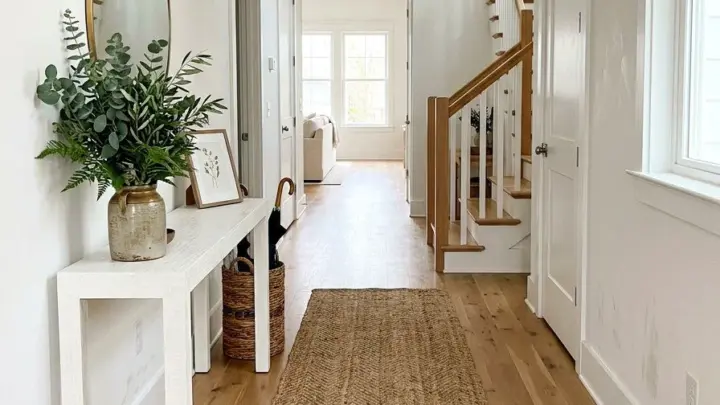
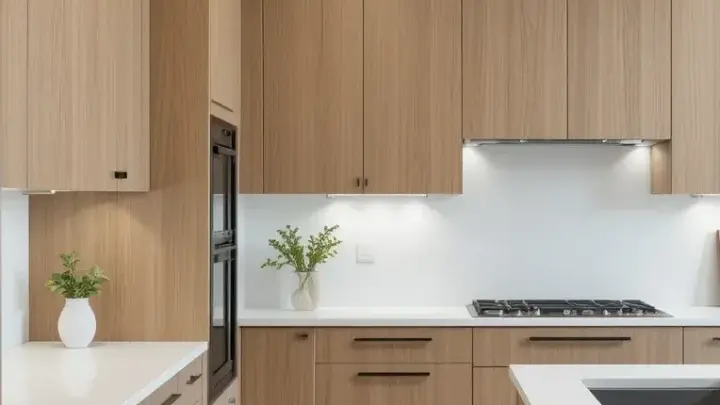
Materials carry this style harder than furniture does. A plain oak console on a limewash wall beats an ornate table on builder-beige drywall every time.

Image source: Bing (Web (fair-use with source credit))
Materials That Read Quiet Luxury
- Plaster and limewash in warm neutrals
- Travertine, limestone, honed marble, soapstone
- Unlacquered brass, aged bronze, blackened steel
- Solid oak or walnut, oiled rather than lacquered
- Full-grain or vegetable-tanned leather
- Linen, wool, bouclé, alpaca
- Rattan, cane, seagrass for texture
Materials That Instantly Kill the Look
- Foil or plated "brass" that reads orange under warm light
- Plastic faux marble with visible printed veining
- Vinyl "leather" with a uniform, plasticky sheen
- High-gloss lacquer and mirrored furniture
- Anything printed with a brand name
Mixing Metals Without Creating Chaos
Cap it at two metals per sightline. Unlacquered brass pairs naturally with aged bronze in warm palettes. Blackened steel pairs with either, but keep it to one blackened piece per zone.
Three metals in an entry this size reads accidental, not layered.
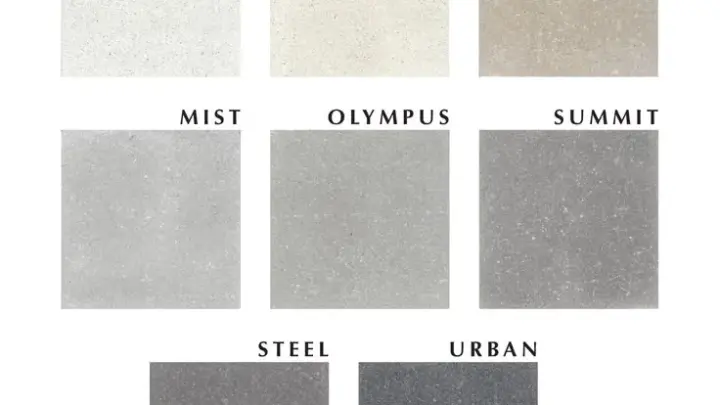
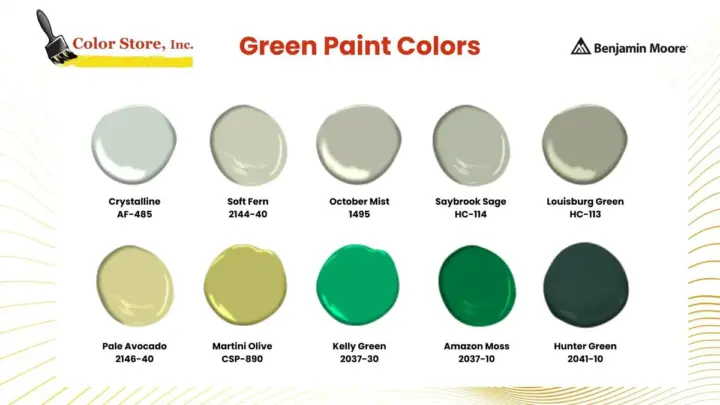
For paint, matte or eggshell on walls. A gallon of quality paint runs $60 to $110 as of 2026, and picking the color first makes every other decision easier.
Lighting and Layers: The Thing Most Entryways Get Wrong
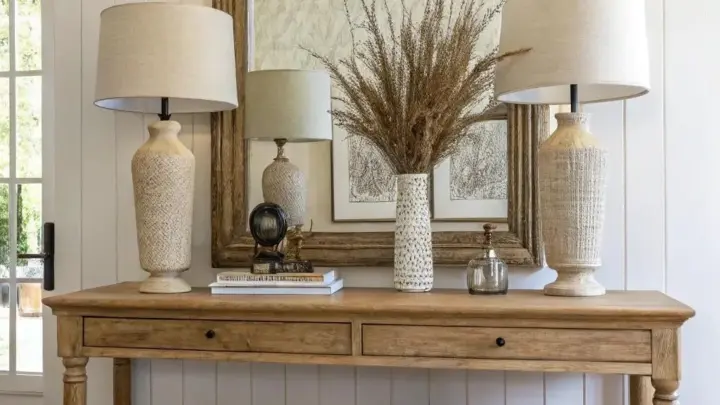
Lighting is where most entryways fall apart. The space gets one ceiling fixture on a cool-white bulb, and everything in it looks cold.
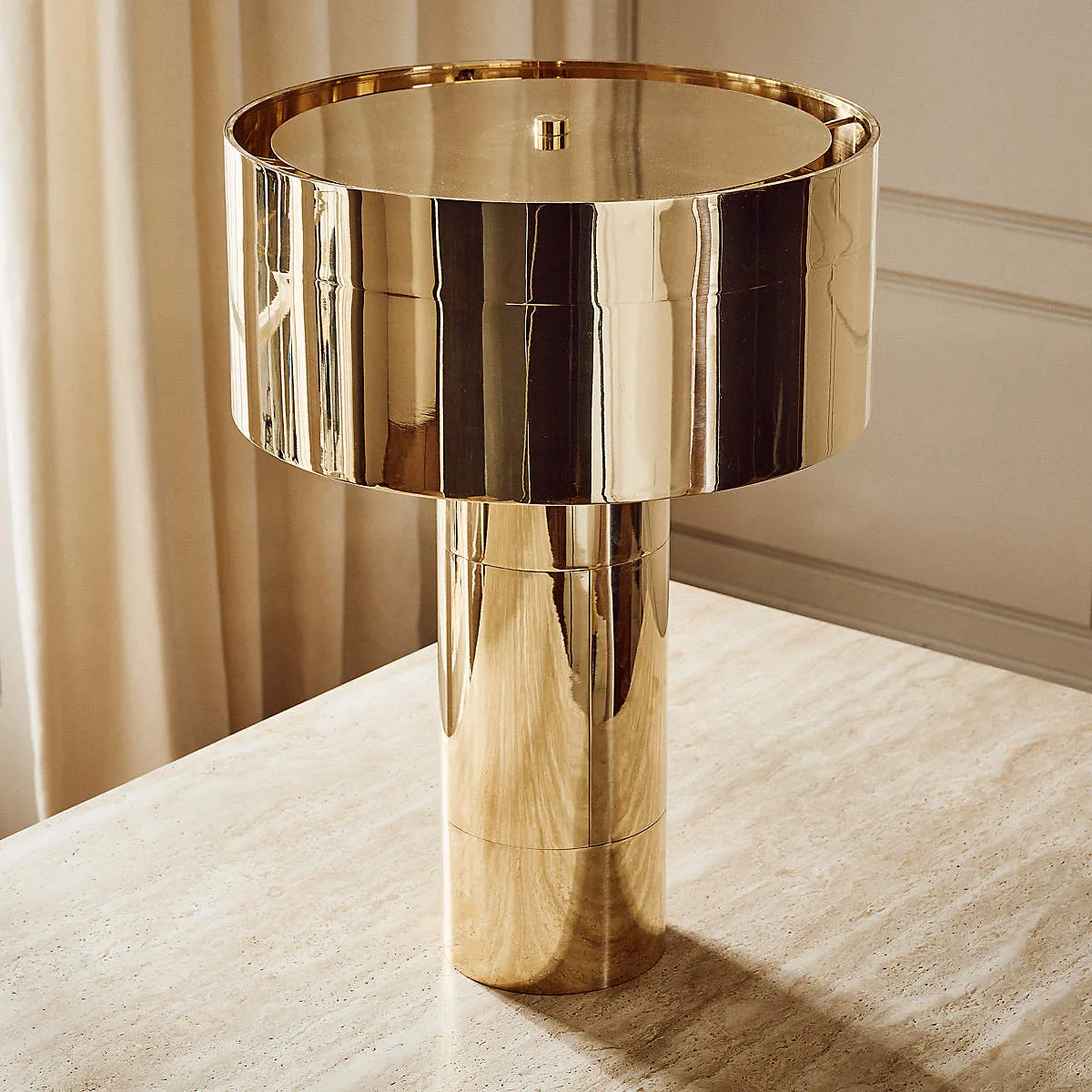
Image source: Bing (Web (fair-use with source credit))
Two layers is the target. One overhead plus one accent. Per Illuminating Engineering Society guidance, layered lighting at 2700K to 3000K with a CRI of 90 or higher renders warm woods and textiles accurately.
Bulbs below 90 CRI will make oak and travertine look muddy.
A quick rule if you're choosing fixtures:
| Space condition | What to install |
|---|---|
| Low ceiling, no outlet | Cordless rechargeable sconce |
| Standard ceiling, outlet present | Table lamp plus flush mount |
| High ceiling, hardwired possible | Pendant plus wall sconce |
Make everything dimmable. Sconces mount 60 to 66 inches center-to-floor. Pendants hang 78 to 84 inches at the bottom of the fixture.
If you can't hardwire, cordless sconces cost $40 to $180 and stick on with adhesive. Just check the weight rating, because most adhesives top out at 5 to 10 pounds.
Side-by-Side: Budget Edit vs. Mid-Tier Refresh vs. High-End Curated
Three versions of this room, three different budgets. All three can look right if the palette and lighting are honest.
| Element | Budget Edit | Mid-Tier Refresh | High-End Curated |
|---|---|---|---|
| Console | Vintage dresser, $0 to $150 | New solid wood, $400 to $900 | Designer or antique, $1,500+ |
| Bench | Already owned | Upholstered, $300 to $600 | Custom millwork, $2,500+ |
| Lighting | Reused lamp, warm bulb swap | New lamp plus cordless sconce | Hardwired sconces, $400+ per pair |
| Rug | Flatweave or sisal | Wool runner, $300 to $800 | Vintage Persian, $1,200+ |
| Total | $0 to $400 | $1,200 to $3,000 | $5,000 to $20,000+ |
The budget version wins on one condition: you edit hard. Reuse what you own, swap every bulb to 2700K, and remove one item per surface. That single move does more than any purchase.
The mid-tier refresh is the sweet spot for most people. Solid wood, one good lamp, one decent rug. Everything lasts a decade.
The high-end version only makes sense if you'll stay put. Custom millwork and hardwired lighting don't travel with you, and resale rarely recovers the full spend.
Whichever tier you pick, the palette stays the same. Warm neutrals, two metals max, no visible branding.
Styling It Without Overstyling It: The 7-Step Walkthrough
Styling is a sequence, not a shopping spree. Work through these steps in order and you'll avoid the pile-up that plagues most entries.
Step 1: Clear everything out. Empty the space completely. Yes, all of it. You can't edit what you can't see.
Step 2: Place the anchor first. Console, bench, or built-in goes in. Nothing else yet. Step back and check the proportions against the wall.
If the anchor feels too small, no amount of styling will fix it.
Step 3: Add the rug or runner. Standard runner widths run 2 to 3 feet for narrow halls. Leave 3 to 6 inches of visible floor on each side. A rug pressed wall-to-wall reads like carpet.
Step 4: Layer the two lights. The overhead goes on. The accent goes on. Both at 2700K, both dimmable.
If they're clashing, the color temperature is the culprit nine times out of ten.
Step 5: Add storage. Hooks, tray, basket. One of each, placed where you actually walk in. Hooks at 66 to 72 inches for adults, 48 inches for kids.
Step 6: Place one organic element. A single plant, a branch in a vase, or a stone object. One, not three. Organic textures break up hard surfaces and soften the room.
Step 7: Stop. This is the hardest step. Walk away for a day and come back. If something feels missing, it probably isn't.
The whole refresh usually takes one weekend for styling. Sourcing the right pieces is the longer game. Vintage and secondary market finds can take two weeks to six months to surface.
Mistakes That Turn Quiet Luxury Into Just Plain Empty
Empty and quiet are not the same thing. An empty entry reads unfinished. A quiet entry reads deliberate.
The difference is almost always warmth, scale, or texture.
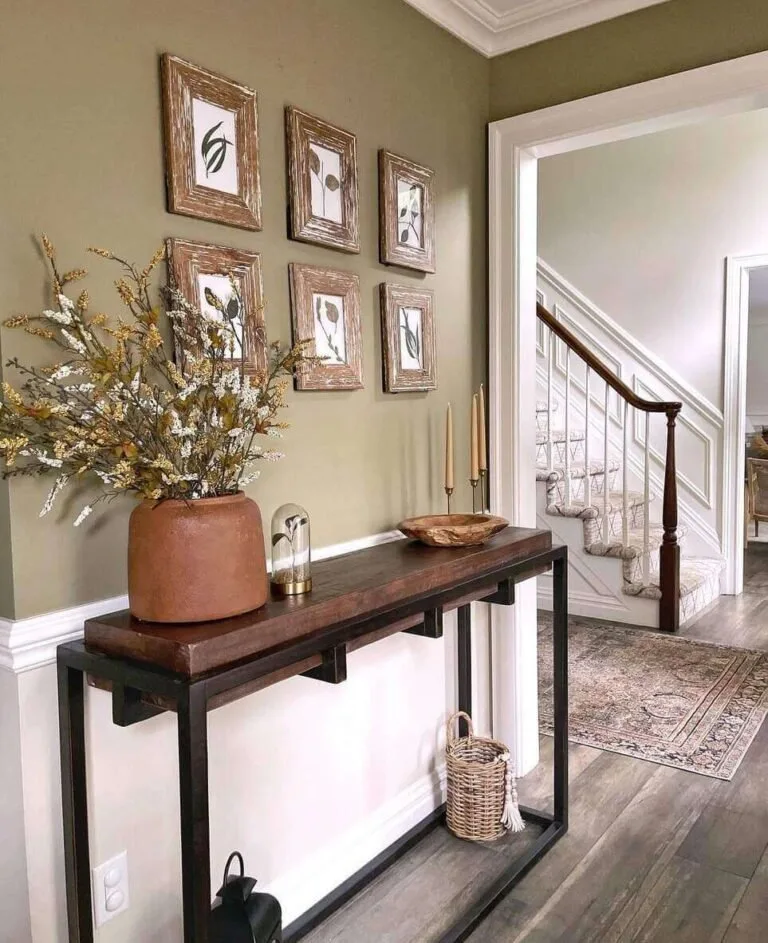
Image source: Bing (Web (fair-use with source credit))
Here are the recurring mistakes we see in aggregate user reviews and design critiques:
- Scale mismatch. A tiny console under a huge wall reads like a mistake. Anchor pieces should span roughly two-thirds of the wall width.
- Cool lighting. A single 4000K bulb undoes an entire warm palette in seconds.
- Three or more metals. Reads accidental. Cap it at two.
- Too many focal points. Mirror plus art plus lamp plus plant plus tray fights itself. Pick two focal points max per zone.
- Plastic pretending to be stone or metal. Verify materials before you buy. Foil brass and faux marble are visible from across the room.
- Runner too small for the space. Undersized rugs make a room look worse than no rug.
- Forgetting function. If you can't drop your keys, hang your coat, and sit to tie shoes, the room fails regardless of how it looks.
One more: over-lighting. Bright isn't the goal. Calm is.
Dim the setup at night and let the entry feel like a room, not a lobby.
Quiet Luxury Entryway FAQs
What exactly makes an entryway look quiet luxury?
Three things: restrained palette, natural materials, and warm layered lighting. Kill the logos, cap your metals at two, and swap every bulb to 2700K. Most entries transform with those three changes alone.
Can I do this on a small budget?
Yes. The budget route is $0 to $400 and works better than most people expect. Reuse what you own, edit hard, and swap the bulbs.
The look is subtractive, so removing things is free.
What color temperature bulb should I use?
Aim for 2700K to 3000K with a CRI of 90 or higher. Anything cooler fights warm woods and travertine. Anything below 90 CRI makes natural materials look muddy and dull.
How wide should the runner be?
Leave 3 to 6 inches of bare floor on each side. For a 3-foot hall, a 2 to 2.5 foot runner fits. Wider halls can take a 3 to 3.5 foot width.
Is this style just minimalism with better stuff?
No. Minimalism strips texture and warmth. Quiet luxury keeps both.
The point is fewer pieces that each feel substantial, not empty space for its own sake.
How long does a full refresh take?
Styling takes one weekend. Sourcing the right pieces takes longer. Vintage and secondary market finds can run two weeks to six months.
Custom millwork lead time runs 4 to 12 weeks.
Final Verdict: How to Choose Your Version of Quiet Luxury
Pick your tier before you buy a single thing. That's the decision that shapes everything else.
If money is tight, choose the budget edit. Reuse your existing console or dresser. Swap every bulb to 2700K.
Remove one item per surface. Total spend under $400, and the room will look twice its price.
If you're settled and want it done right, choose the mid-tier refresh at $1,200 to $3,000. Solid wood console, one good rug, one lamp, one cordless sconce if you can't hardwire. This is the version that lasts a decade without looking dated.
If you're committing to the house, the high-end curated route at $5,000 to $20,000+ unlocks built-ins and hardwired lighting. Just be honest about how long you'll stay, because that spend rarely recovers at resale.
Whichever tier you land on, the rules don't change: warm neutrals, two metals max, 2700K light, and negative space. Get those four right and the entry stops being a hallway. It becomes the room you actually walk into.

Similar Posts