Italian Modern Playroom Decor Ideas That Inspire
Kids' playrooms have a habit of drifting into two unhappy looks. Either they drown in plastic primary colors, or they go so beige that nobody wants to actually play in them. Italian modern playroom decor sits between those extremes.
It borrows the warm material honesty of mid-century Milanese design and applies it to a room built for small humans who wreck things.
So what does that mix actually look like in practice? In our research, the winning rooms share a tight palette of three tones, natural fibers, and child-height furniture that respects safety standards like ASTM F963 for toys and ASTM F2057 for tip-over prevention. That's the whole formula.
Everything below unpacks the visual cues, setup steps, and common visual mistakes.
italian modern playroom decor
Italian modern playroom decor blends mid-century Italian design with calm, child-friendly function. The look leans on warm neutrals, raw wood, wool, and terracotta accents. Silhouettes stay low, sculptural, and geometric.
Negative space matters as much as the furniture itself. Plastic primary colors and glossy finishes break the visual logic.
Why Your Playroom Looks "Off" (And Why Italian Modern Fixes It)
Your playroom probably looks off for one of two reasons. Either the palette is fighting itself, or the room has no breathing space. Italian modern fixes both, because its whole logic is restraint plus material quality.
Nothing shouts. Nothing matches too hard. Everything sits in a warm, low-contrast field.
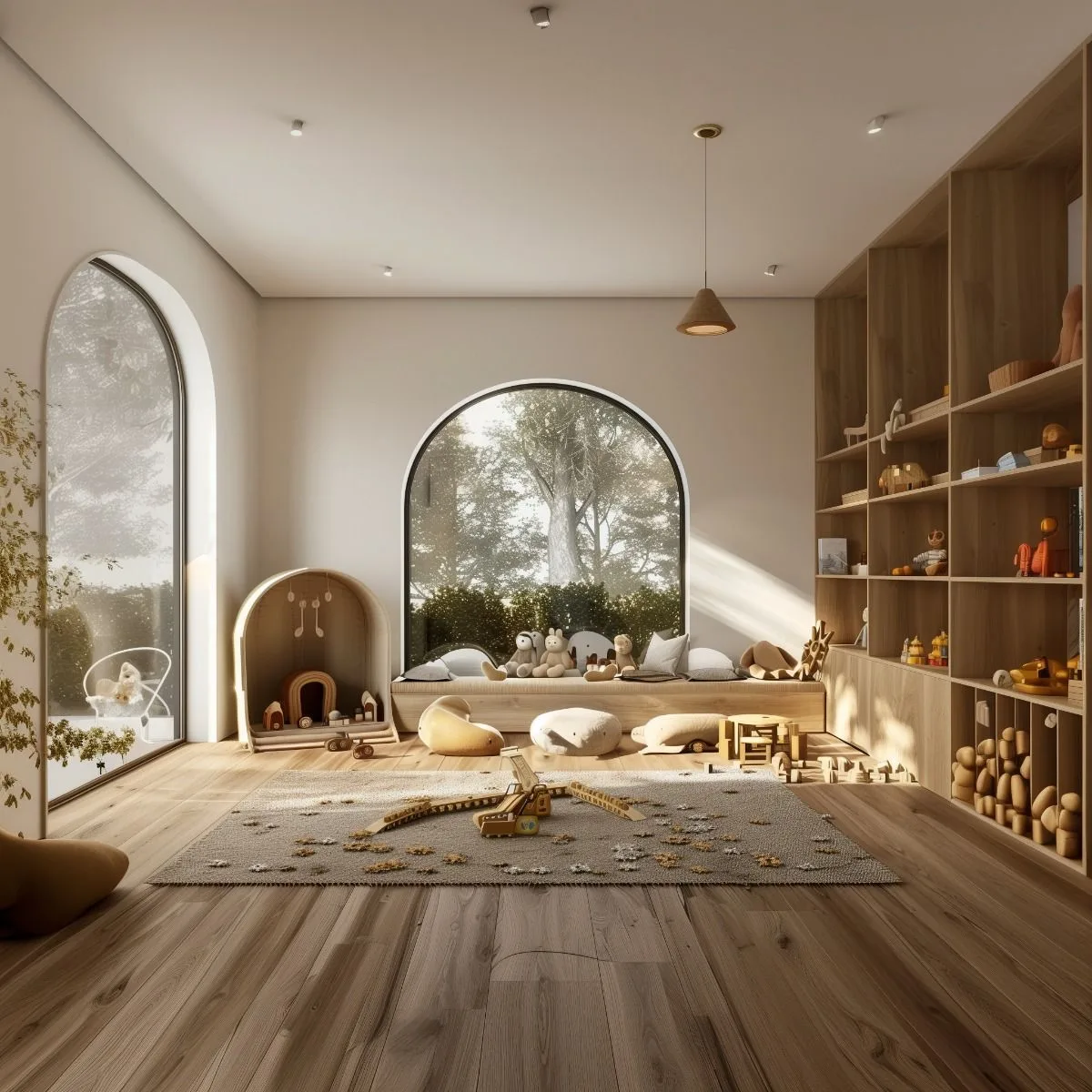
Image source: Bing (Web (fair-use with source credit))
The most common visual mistake we see in aggregate home-decor feedback is over-theming. Parents buy a "Tuscan" rug, a "Venetian" wall print, and a mini Leaning Tower, and the room turns into a souvenir shop. That's not Italian modern.
Italian modern is quiet. A single terracotta cushion does more work than a themed mural ever will.
Here's the practical test. Stand in the doorway and squint. If you can still name five separate colors, you have too many.
If you can't find one anchor piece, you have too few. The look needs both a floor and a ceiling.
What "Italian modern" actually means
Italian modern refers to the design lineage that grew out of postwar Italian rationalism and mid-century Milanese studios. Think low profiles, tapered legs, honest materials, matte finishes. The Memphis Group (Sottsass, 1981) added a playful graphic edge, but for a child's room you borrow Memphis's geometry, not its neon palette.
That matters because "Italian modern" often gets confused with Tuscan farmhouse or French vintage. Those are different worlds. If your room currently looks rustic-gold, you're in the wrong lane.
The three fixes that change the whole room
If the room feels cheap, fix the finish first. Swap one glossy surface for a matte or oiled-wood one. If it feels sterile, add one warm textile in natural wool or raw linen.
If it feels cluttered, remove two items per surface and leave the empty wall empty.
The Visual DNA of Italian Modern Playroom Decor
You can't get this look right without seeing it. The four visual pillars below are what any photo or mood board of an Italian modern playroom would show you, in order of importance.

Image source: Bing (Web (fair-use with source credit))
The palette: warm neutrals, muted earth, one quiet accent
Start with a warm neutral base: chalk white, greige, or sand. Layer in one muted earth tone like terracotta, ochre, or olive. Then add a single deeper accent, dusty blue or burgundy.
That's it. Three tones total, max.
Avoid cool grays and pure whites. They read Scandinavian, not Italian. Italian warm neutrals have a slight yellow or pink undertone, which is why they feel alive under a window rather than clinical.
The materials: wood, wool, terracotta, matte everything
The material list is short and honest. Solid or oiled wood (beech, oak, walnut). Wool for rugs and cushions.
Raw canvas for tents and canopies. Terracotta or matte ceramic for decor. Water-based, low-VOC finishes where kids will touch constantly.
Check for FSC-certified wood if sustainability matters to you. Check GREENGUARD Gold or equivalent low-emission certification on any painted piece. Manufacturer specs on these are usually listed right on the product page, and they're worth reading before you commit.
The shapes: low, sculptural, mid-century bones
Look for tapered legs, spindle details, curved edges, and low profiles. Child-height tables sit around 50 to 55 cm, with chairs at 45 to 55 cm. That's a design choice and a safety one, because low furniture is harder to tip.
Anything oversized kills the look. A giant plastic play castle in the corner will dominate every photo. If you have one, contain it, hide it, or rotate it out.
The negative space rule (the part everyone skips)
Negative space is the whole trick. Empty wall, empty surface, empty floor. Italian modern rooms breathe because they don't fill every corner.
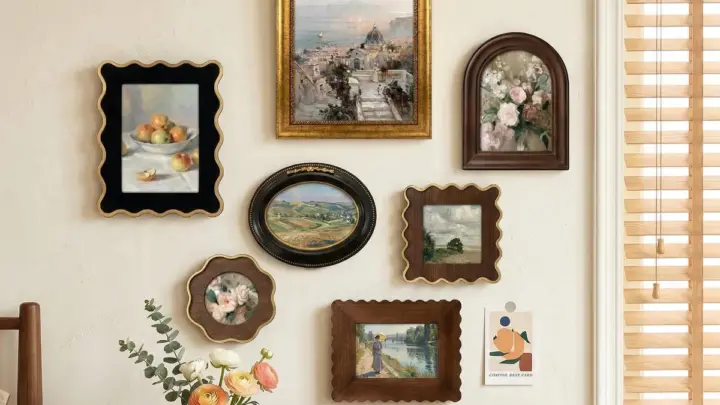
That means a wall of gallery frames is out. One art ledge, maybe two frames, and stop.
Setting Up the Room: A Visual Walkthrough
Setting up an Italian modern playroom follows a fixed sequence. Skip a step and the room fights you later. Do it in order and you'll feel the room click.
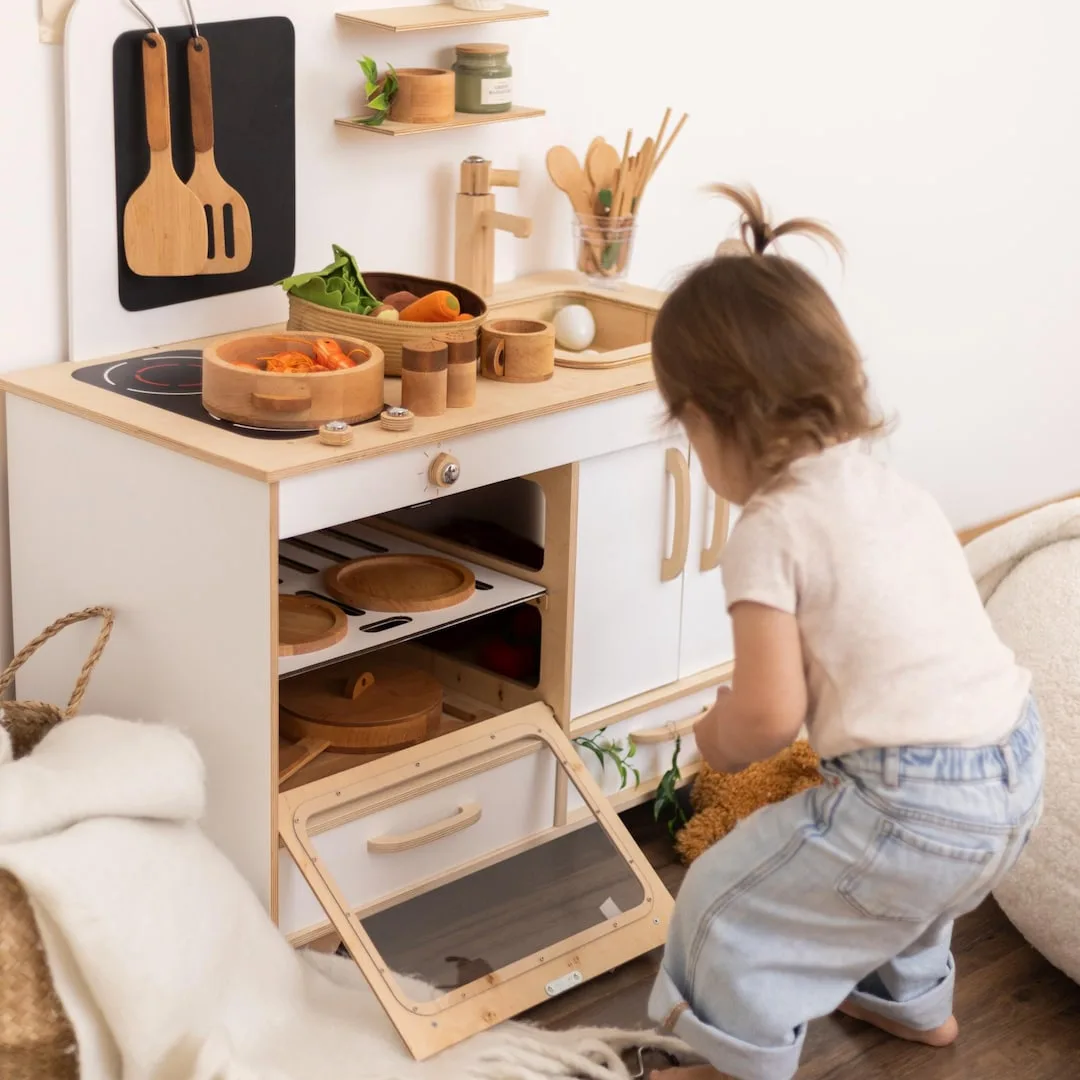
Image source: Bing (Web (fair-use with source credit))
Step 1: Anchor the space
Pick one anchor piece first. A rug, a low bookshelf, or a wooden play kitchen. The anchor sets the palette and scale for everything else.
Without it, you end up buying pieces in isolation and wondering why nothing works together.
Step 2: Zone without walls
Zones do the work walls would normally do. A rug defines the play area. A reading nook gets a small chair and a low shelf.
Build space gets a floor mat. Quiet space gets a corner and a soft light. No dividers needed.
Step 3: Layer child-height storage
Open, low shelving is the backbone of this style. Keep toddler-accessible items under 60 cm. Put supervised items between 60 and 120 cm.
Anything above 120 cm is decor-only, out of reach and anchored to the wall.
Step 4: Add textiles last
Add the rug, cushions, and curtains only after the furniture is placed. Textiles soften the geometry and warm the acoustics. Natural fibers only.
Wool, cotton, linen, jute. Synthetics dull the finish fast.
Step 5: Style the walls with restraint
One art ledge. One framed piece. One small wall hook for a hanging plant or canvas tent.
That's the wall budget. Anything more and negative space disappears.
Italian Modern vs. Scandi, Montessori, Boho, and Memphis
Italian modern is easily confused with three or four other styles. Knowing the difference protects you from buying the wrong piece at the wrong moment.
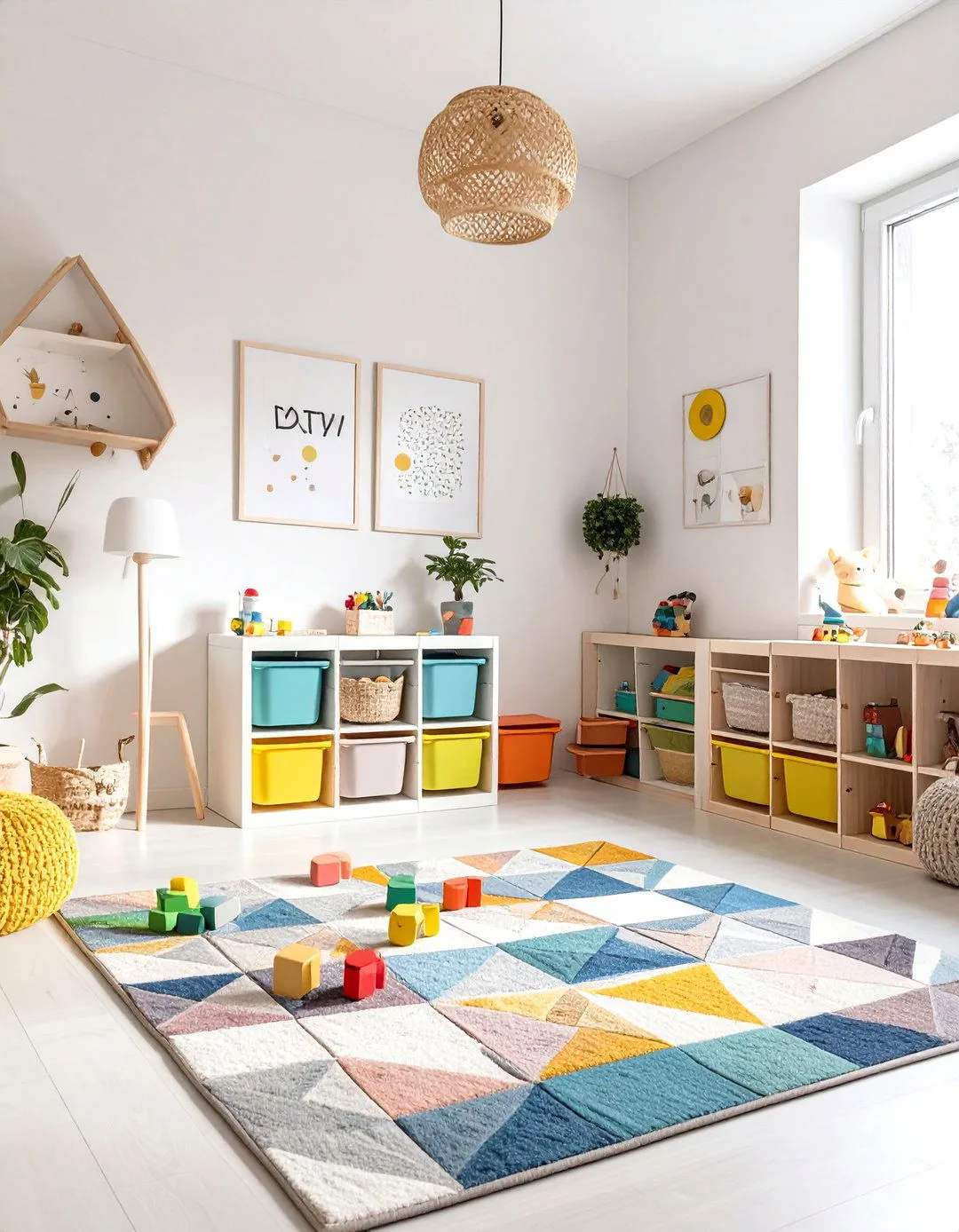
Image source: Bing (Web (fair-use with source credit))
Side-by-side comparison
| Style | Palette | Materials | Feel |
|---|---|---|---|
| Italian modern | Warm neutrals + one earth accent | Wood, wool, terracotta, matte ceramic | Warm, sculptural, restrained |
| Scandinavian | Cool whites, pale grays, light wood | Birch, cotton, pale wool | Bright, airy, cooler |
| Montessori | Neutral base, method-first | Natural wood, open shelving | Calm, functional, less styled |
| Boho | Layered warm tones | Macramé, rattan, plants, textiles | Textured, layered, casual |
| Memphis | Bold primary + black | Laminate, plastic, graphic print | Loud, graphic, playful |
Which one is right for your room
If your child needs a high-energy, colorful room, Memphis or boho fits better. If you're following Montessori as a method, keep the method and drop the aesthetic pressure. If you want a room that reads grown-up without feeling sterile, Italian modern wins.
The styles aren't enemies. A Montessori shelf styled with Italian palette rules is the sweet spot for many families, and it costs nothing extra to combine them.
What This Look Actually Costs
Budget is where most Italian modern playroom plans stall. The room itself doesn't have to be expensive, but material honesty costs money. Particleboard and veneer look fine for about a year, then chip and yellow.
Solid oak and beech hold up for 10 to 20 years and age into something better.
Budget bands in 2026
| Band | Typical Spend | What You Get |
|---|---|---|
| Entry | $400 to $900 | IKEA-hack pieces, mixed retailer basics, one real anchor |
| Mid | $1,200 to $3,000 | Independent Italian-inspired brands, solid wood anchors |
| Premium | $3,000 to $10,000+ | Authentic Italian design pieces, vintage finds, heirloom quality |
These numbers reflect retail pricing as of 2026, before customs and shipping on EU-sourced goods. Expect an extra 15 to 25 percent on imports from Italy itself.
Where to splurge and where to save
Splurge on anything a child physically climbs on or leans against. Chairs, tables, shelving, and the play kitchen. That's where quality shows and safety matters.
Save on textiles, wall art, and small decorative ceramics. A wool rug can be mid-priced. A terracotta vase doesn't need to be museum-grade.
Buy the look, not the pedigree.
You can also buy vintage Italian pieces from regional markets and skip the design markup entirely. Customs and shipping are the trade-off. Factor those in before you commit.
Visual Mistakes That Kill the Look (And How to Avoid Them)
The look usually dies from one of five visual failures. Each one is fixable, and none of them require new furniture.
- Too many colors. Anything past three tones reads busy. If you're in doubt, remove one.
- Gloss in the wrong places. Glossy plastic toys are unavoidable, but glossy furniture and glossy frames aren't. Keep the man-made surfaces matte.
- No negative space. An empty wall isn't wasted wall. It's structure.
- Oversized hero pieces. A giant play castle dominates every angle. Contain it or rotate it.
- Synthetic fibers in the foreground. Polyester throws, nylon mats, and plastic rugs undercut the tactile logic. Swap the one people touch most.
How to spot a fake Italian modern look
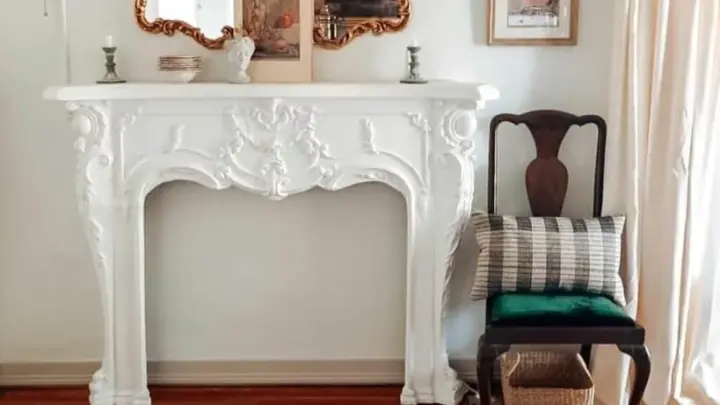
Fake Italian modern usually has three tells. Ornate scrollwork paired with "Tuscan" gold. Themed mural or wall decals of Venice or Rome.
Matching sets where every piece is identical material and color.
Real Italian modern varies material within a palette. A wood shelf next to a ceramic vase next to a wool cushion. Same tones, different textures.
If a retailer calls something "Italian modern" and it's bright orange laminate with cartoon graphics, that's Memphis-inspired, not Italian modern. Different lineage, different rules.
The squint test, in practice
Stand in the doorway. Squint until details blur. You should see three or four soft shapes and one anchor.
If the room turns into pixel noise, you have a visual clutter problem.
Try this before and after removing two items from every surface. The difference is usually immediate.
Safety, Materials, and What to Check Before You Buy
Italian modern playrooms are heavy on natural materials and low furniture, both of which are safety assets. But a few risks need attention before anything gets installed.
Tip-over and anchoring
Any shelving, cabinet, or wardrobe over 60 cm tall needs to be anchored to a wall stud or a rated drywall anchor. This isn't optional. ASTM F2057 is the US furniture tip-over standard, and CPSC recall data keeps finding that unanchored tall furniture is the leading cause of child furniture injuries.
If your room is a rental, use removable adhesive anchors rated for the load. They're not as strong as studs, but they beat nothing.
Lead paint and imported decor
Vintage ceramic pieces from Italian markets are gorgeous and occasionally risky. Lead was common in decorative glazes before modern regulation. The CDC and EPA both warn against unverified imported ceramics used around young children.
If you can't verify the finish, keep it out of reach. Display ceramics above 120 cm and wash hands after any restoration work.
Small parts, coatings, and finishes
No loose decor under 3 cm at child height. That's the choking threshold most pediatric guidance uses for under-threes.
Look for GREENGUARD Gold or equivalent low-emission certification on painted furniture. Water-based, low-VOC finishes are the default for this style anyway. VOC off-gassing typically reduces sharply after 7 to 30 days, but certified products start cleaner.
What to verify on the listing
- FSC certification on any solid wood
- GREENGUARD Gold or similar on painted surfaces
- ASTM F963 compliance on any toy components
- Load rating on wall anchors and mounting hardware
- Flame-retardant status on textiles (natural wool resists flame without treatment)
Manufacturer specs usually list all of this. If they don't, that's the answer.
Maintenance: Keeping the Room Italian Modern After the Honeymoon
Italian modern ages beautifully if you maintain the materials correctly. Neglect them and the warm palette turns tired within two years.
Monthly and seasonal tasks
Dust wood weekly with a dry cloth. Oil solid wood once or twice a year with a furniture-grade oil, not a glossy polish. Spot-clean wool with cool water and wool-safe soap.
Rotate the toy basket every month or two to reset visual clutter.
Seasonally, swap the lighter linens for heavier wool in cold months and back again in summer. Lighter textures and fabrics read Mediterranean in warm light. Deeper tones and textured wool carry the room through winter.
What to check every six months
Walk the room and look for three things. Loose wall anchors, cracked or chipped finishes on anything a child touches daily, and small decor items that have migrated below 60 cm. Tighten, repair, or relocate as needed.
If a ceramic piece chips, retire it immediately if the finish is unverified. If a solid wood piece chips, a light sand and re-oil fixes it.
Signs it's time to refresh
- The palette has quietly drifted to five or more colors
- Two or more surfaces are permanently covered
- Furniture is chipped at child eye level
- Anchor hardware has loosened twice in a year
None of these require replacing the whole room. Most fixes are one or two edits. The look is forgiving that way.
Frequently Asked Questions
What defines an Italian modern playroom?
Warm neutrals with one muted earth accent, natural materials like wood and wool, low sculptural furniture, and deliberate empty space. The style comes from postwar Italian design plus a touch of Memphis geometry. If your room has three tones, one anchor, and no clutter, you're on track.
Is Italian modern the same as Scandinavian?
No, though they share minimalism. Scandinavian leans cooler, with pale grays and light birch. Italian modern is warmer, with subtle yellow or pink undertones in neutrals, richer wood, and terracotta accents.
The palettes look similar on a mood board and very different in a room.
How much does an Italian modern playroom cost?
Entry setups run $400 to $900, mid-tier rooms $1,200 to $3,000, and premium or vintage-filled spaces $3,000 to $10,000+, based on 2026 retail pricing. The biggest quality jump happens around the $1,200 mark, where solid wood replaces particleboard on anything kids climb.
What colors work best?
Chalk white, greige, or sand as the base. One muted earth tone like terracotta, ochre, or olive. One deeper accent like dusty blue or burgundy.
Three tones total. Cool grays and pure whites push the room toward Scandinavian instead.
Do I need to anchor furniture to the wall?
Any furniture over 60 cm tall should be anchored to a wall stud or rated anchor. This aligns with ASTM F2057. Child furniture tip-overs remain a top cause of pediatric furniture injuries per CPSC data.
Rental-safe adhesive anchors work if studs aren't accessible.
Can I mix Italian modern with Montessori?
Absolutely, and many families do. Montessori contributes the open, low shelving and method. Italian modern contributes the palette, materials, and material restraint.
Keep the shelf layout Montessori-style and style the surrounding pieces with Italian palette rules.

Similar Posts