Small Bathroom Storage Ideas That Actually Work
A cramped bathroom isn't short on storage space. It's short on the right plan. Most people buy baskets and racks first, then fight with them later because nothing lines up with the door swing, the studs, or the gap above the toilet.
Small bathroom storage works best when you measure the room before you shop a single product.
Here's the good news: most tight bathrooms have far more usable volume than owners realize. In our research, wall height and door-back space go untouched in nearly every apartment bath we've reviewed. Manufacturer specifications also matter more than photos online, because an adhesive strip rated for 5 pounds behaves very differently on tile versus matte paint.
Let's look at the space first, then the storage.
small bathroom storage
Small bathroom storage means using vertical space, corners, door backs, and concealed areas instead of floor space. Measure clearance, door swing, and stud location before choosing anything. Match the mount type to your wall surface and rental rules.
Prioritize slim, wall-mounted, and over-toilet units. Keep daily items at eye level and store occasional items higher or hidden.
Why Small Bathrooms Need a Visual Plan First (Not a Shopping List)
Storage is a spatial problem before it's a shopping problem. A shelf that looks tidy in a photo can block your towel bar, catch the door, or leave you brushing your teeth over a basket. Sketch the room from above and from one side.
You'll spot dead zones fast.
Walk the room the way you actually use it. Open the door fully. Reach for the toothbrush.
Bend to grab a towel. Wherever your hands naturally land is where storage belongs. Wherever your body never goes is wasted unless you go vertical.
Photos and diagrams earn their keep here. A simple elevation sketch showing the toilet, vanity, and door on one plane tells you instantly where an over-toilet rack will crowd you. It also shows how shelf depth affects knee space near the sink.
If you can't draw, take three photos: standing in the doorway, looking straight at the toilet, and looking inside the vanity. Those three frames cover 90% of the decisions you'll make.
The 4 Measurements That Decide Everything
Four numbers rule this job. Get them right and the right product almost picks itself. Skip them and you're guessing.
Toilet-to-ceiling gap
Standard toilet tank heights run 27 to 32 inches, and ceilings in most bathrooms sit around 96 inches. That leaves roughly 48 to 60 inches of usable vertical space above the tank. Measure tank lid to ceiling on your actual toilet.
Over-the-toilet racks typically need 22 to 26 inches of width too, so check both.
Door swing radius
Measure the door width and the clearance from the hinge to the nearest fixture. If a rack sits inside that arc, it'll bang the door and eventually fall. Over-door organizers only work if the top of the door clears the frame.
Narrow baths often can't spare the inch a hook adds.
Stud placement and wall type
Per building code, studs sit 16 inches on center in most US homes, with 24 inches common in newer construction. A 16-inch stud finder sweep is your friend. Recessed medicine cabinets need a 3.5-to-4-inch cutout between studs.
On lath-and-plaster or tile, drilling needs different anchors than drywall.
Under-sink clearance and plumbing offset
Open the vanity and look at the drain and supply lines. Measure the usable depth behind them. Pull-out organizers need at least 12 inches of clear depth.
Tension rods fit under most sinks but bow if overloaded above roughly 15 pounds.
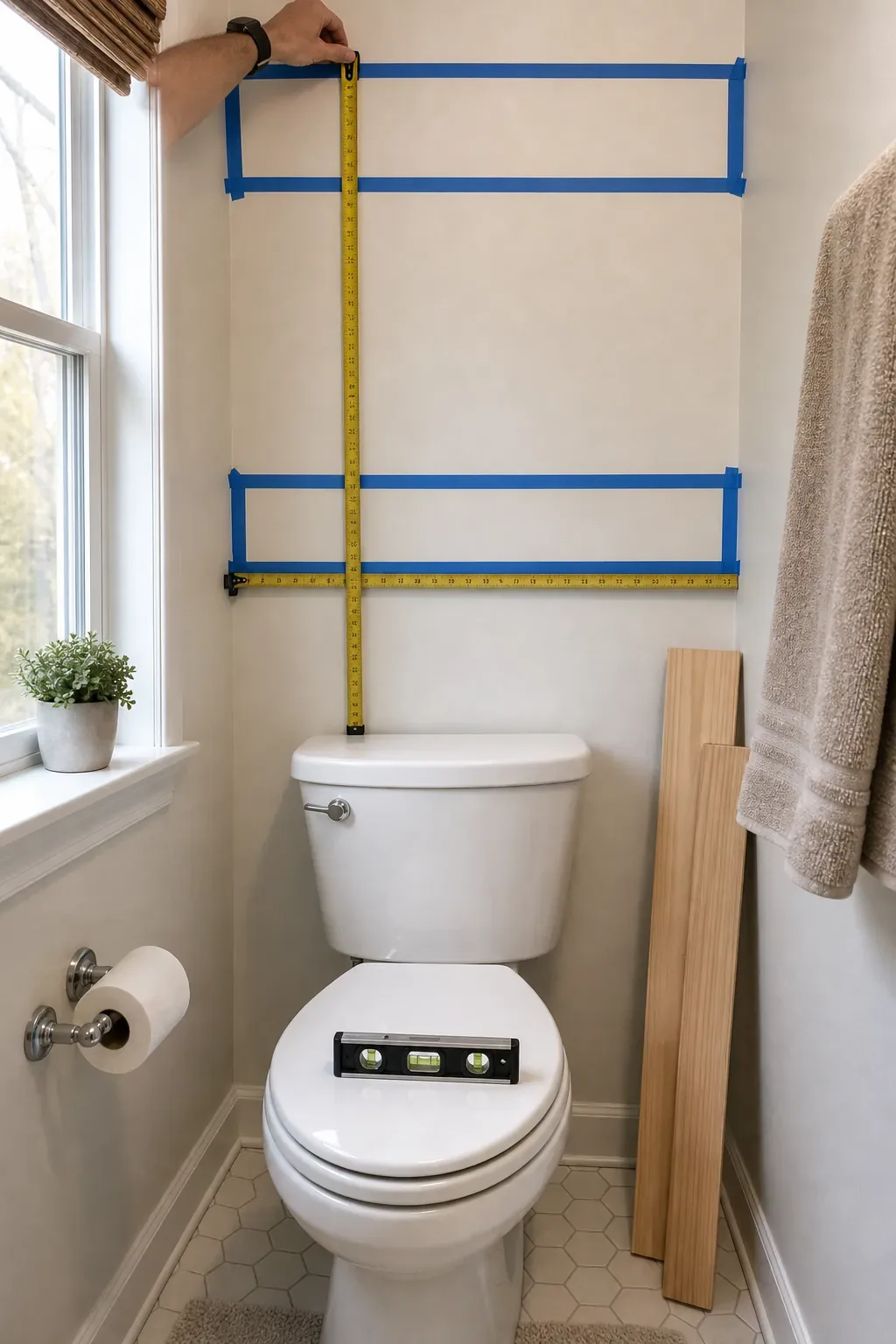
Image source: Bing (Web (fair-use with source credit))
The Five Storage Zones (and What Fits in Each)
Think in zones, not products. Each zone has its own rules for what holds up and what wastes money.
Zone 1: Over the toilet
This is the highest-value wall in most small baths. Freestanding racks, ladder shelves, and slim cabinets all fit here. Keep the bottom shelf clear of the tank lid by at least 2 inches.
Load the top with towels and the middle with daily items.
Zone 2: Walls and corners
Floating shelves, narrow ledge shelves, and corner tension caddies use space you already have. Keep shelf depth at 4 to 8 inches so nothing teeters. In our research, corner caddies shine in showers and beside vanities where a wall ends.
Zone 3: Inside the vanity and under the sink
This is where most people lose usable space. Stackable bins, lazy Susans, and pull-out drawers double the effective capacity. A lazy Susan for a deep cabinet is one of the cheapest upgrades you can make.
Zone 4: The back of the door
Pocket organizers, hook racks, and slim over-door shelves add usable inches without touching the floor. Just confirm the door swing first. A rack that hits the towel bar or vanity corner is a daily annoyance.
Zone 5: Inside the shower
Tension-pole caddies, hanging organizers, and adhesive corner shelves handle shampoo and razors. Rust-resistant coating and drainage gaps matter more here than anywhere else. Skip bamboo in the shower.
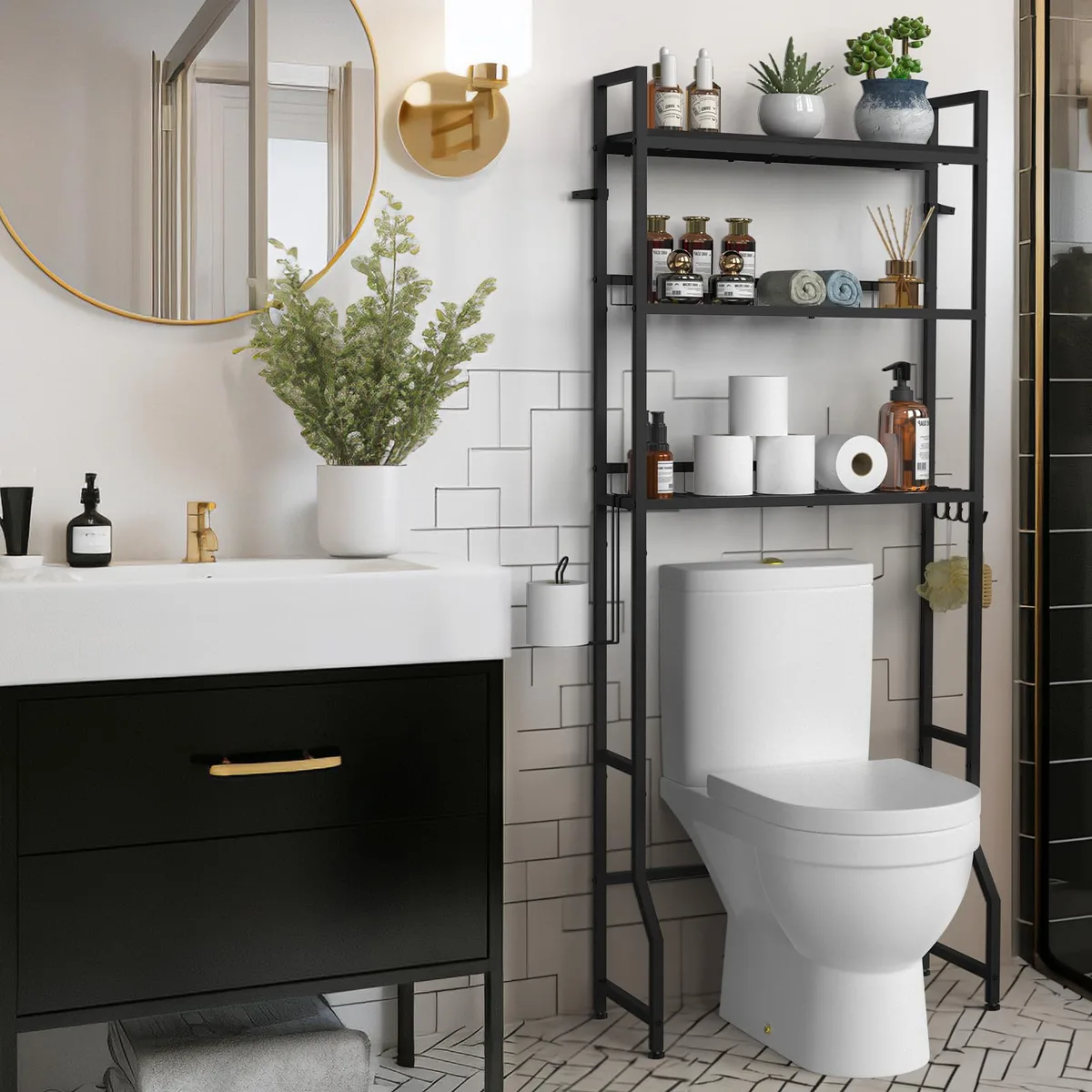
Image source: Bing (Web (fair-use with source credit))
Mount Type Visual Guide: Adhesive, Suction, Tension, or Screw
The mount type is where most storage fails. Surface prep and load rating decide whether a shelf survives six months of steam. Here's how the four options compare in real use.
| Mount Type | Best Surface | Realistic Load | Renter-Friendly? |
|---|---|---|---|
| Adhesive strip | Smooth, dry, clean tile or painted drywall | 1 to 20 pounds depending on size | Yes, if paint isn't fragile |
| Suction cup | Non-porous tile or glass | Under 5 pounds typical | Yes |
| Tension pole | Clean floor and ceiling, even surfaces | 15 to 30 pounds total | Yes |
| Screw and anchor | Drywall, studs, tile with proper anchors | 20 to 50+ pounds per shelf | Only with landlord approval |
Adhesive products follow a strict cure rule. Manufacturers like 3M specify a one-hour touch dry and 24-hour full load time. Skip the cure and the strip fails.
Clean the surface with rubbing alcohol and let it dry fully first.
Suction cups need smooth, non-porous surfaces. Textured tile and grout lines break the seal. Re-seat them monthly, especially in humid rooms.
Tension poles work best between two solid, flat surfaces. On a bowed ceiling or textured floor, the rubber foot slips. Check the grip seasonally.
Screws and anchors remain the most reliable option for anything heavy. Use toggle bolts for hollow drywall and a proper tile bit for porcelain. If you're renting, ask before drilling.
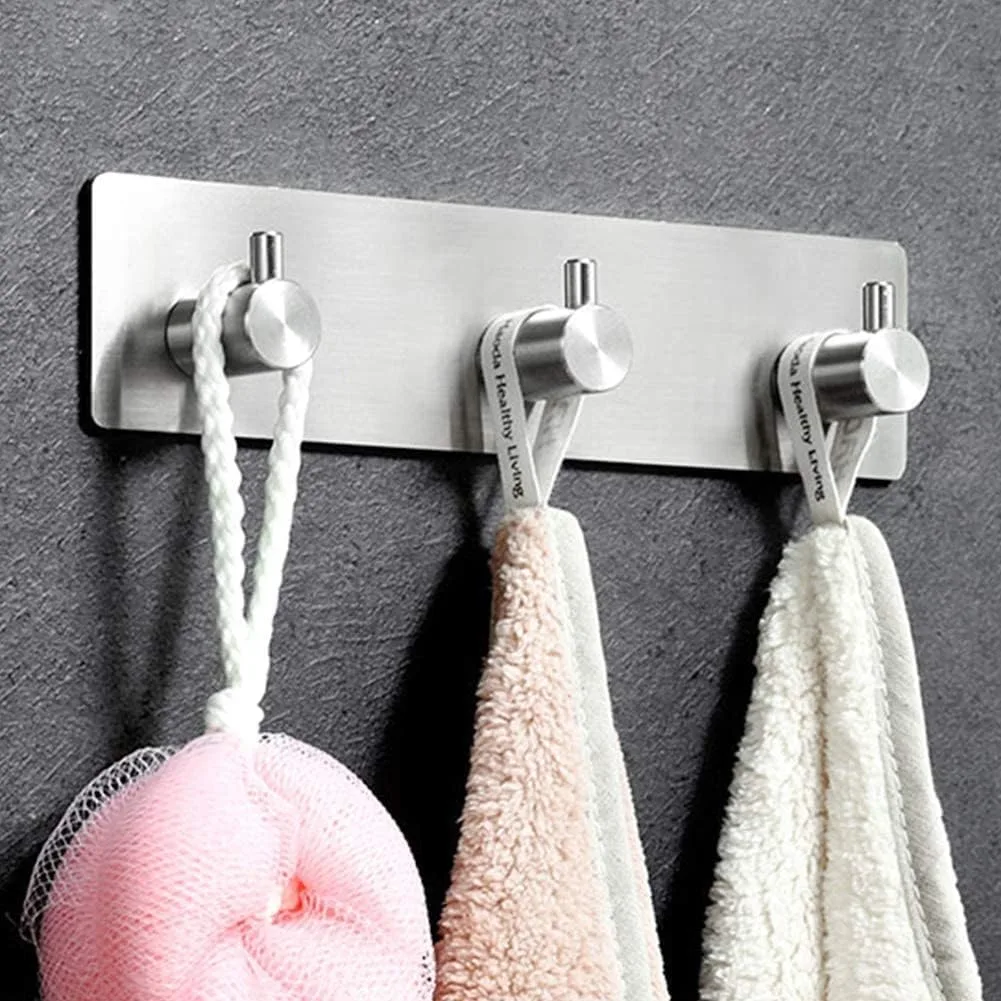
Image source: Bing (Web (fair-use with source credit))
Matching Storage to Your Exact Layout
The right storage depends on your bathroom's shape. A stack of shelves that's brilliant in a square powder room falls flat in a long, narrow galley. Here's how each common layout plays out.
Narrow galley bathroom
These baths usually run 4 to 5 feet wide with the vanity on one long wall and the toilet opposite. If your room looks like this, go vertical. Over-toilet racks and wall-mounted shelves beat freestanding carts.
Keep the walkway clear by limiting floor units to 8 inches deep. A slim rolling cart tucked between the vanity and wall can work if you measure the gap to the quarter inch.
Pedestal sink with no vanity
Pedestal sinks look clean but store nothing. If you have one, wrap storage around the sink itself. A narrow shelf behind the basin, a wall-mounted cabinet above, and a small caddy on the wall beside it cover daily needs.
Skip any shelf narrower than 4 inches deep. It won't hold a toothbrush cup without tipping.
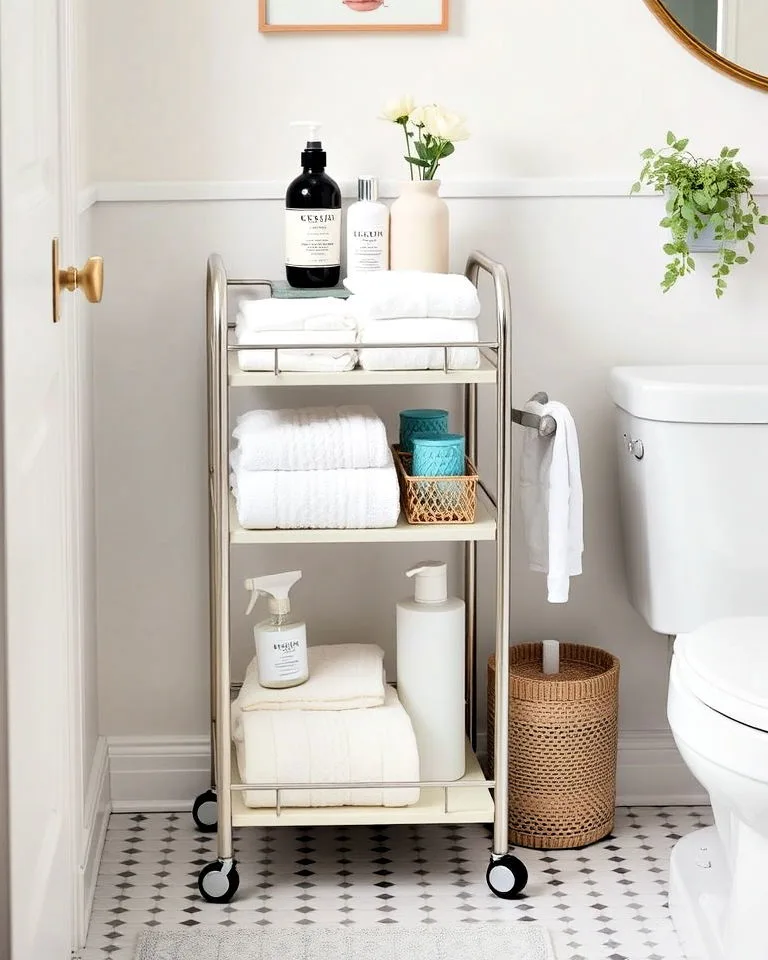
Image source: Bing (Web (fair-use with source credit))
Many owners of pedestal sinks eventually add a small wall cabinet instead of a full vanity. That's often the better call in a tight room. It buys at least 12 inches of depth of storage without taking floor space.
Just anchor it into studs.
Powder room / half-bath
Half-baths are the easiest to outfit. There's no shower steam, so you can use woven baskets and wood without rust worries. Use the wall above the toilet and the space beside the vanity.
Keep the room visually quiet. Open shelving looks tidy here because you're only storing guest items.
Shared bathroom with two users
Two people double the clutter fast. If this is your reality, divide the zones. Give each person a caddy, a drawer, or a designated shelf.
A shared over-toilet rack with labeled bins cuts tension. Stackable drawer units on a narrow shelf handle daily items. Keep overflow in a closed cabinet so the room looks calm, not contested.
Most storage fails for the same handful of reasons. In our review of buyer feedback, the complaints repeat: shelves that sag, racks that wobble, and organizers that made the room feel tighter instead of calmer. None of those are product flaws.
They're planning errors.
Mistakes That Make Small Bathrooms Feel Smaller
Blocking the door swing is the number one mistake. An over-door rack only works if the door clears the frame and the nearest fixture. If it doesn't, you'll hear a bang every morning and the hooks will loosen.
Measure the arc before you buy.
Choosing moisture-hungry materials is mistake two. Bamboo and particleboard swell and stain in a steamy room. Go stainless steel, powder-coated metal, or teak for anything inside the shower.
Save wood for half-baths without steam.
Overloading adhesive strips on textured walls is mistake three. Matte paint, grout lines, and rough plaster break the bond. Clean the surface with rubbing alcohol, let it dry completely, and respect the load rating on the package.
Skipping the cure time is mistake four. Manufacturers like 3M specify one hour touch-dry and 24 hours for full load. Hang a shelf early and it drops.
Weight the strip evenly and wait.
Stacking clutter instead of hiding it is mistake five. Open baskets look tidy only when the contents are uniform. Use closed bins, lazy Susans, and labeled containers for anything that looks messy.
Vertical storage beats horizontal piles every time.
Costs, Load Limits, and What You Get at Each Price Point
Budget matters, but load rating matters more. A $10 adhesive shelf that holds 5 pounds fails faster than a $25 anchored shelf rated for 20. Match the spend to the job.
| Price Band | Typical Products | Realistic Load |
|---|---|---|
| $10 to $30 | Adhesive hooks, suction caddies, tension rods, bins | 2 to 15 pounds |
| $25 to $80 | Over-toilet racks, corner shelves, rolling carts | 20 to 50 pounds per tier |
| $40 to $150 | Recessed medicine cabinets, floating shelf sets | 20 to 40 pounds each |
| $150 to $600+ | Vanity upgrades, wall cabinets, custom built-ins | 50+ pounds |
Adhesive and suction options suit renters and light loads. Tension poles cover shower and under-sink jobs. Anchored shelves and cabinets handle anything heavy or long-term.
Watch the depth as carefully as the price. A 14-inch-deep shelf in a 4-foot-wide bath eats your walkway. Keep freestanding units at 8 inches or less and wall shelves at 4 to 8 inches.
Slim beats spacious in tight rooms.
Maintenance That Keeps Storage Working in a Humid Room
Humidity is what kills bathroom storage over time. Moisture rusts metal, feeds mold, and weakens adhesive. A little routine upkeep prevents most failures.
- Wipe metal and plastic surfaces weekly.
- Check for rust and mildew monthly.
- Re-tighten tension poles seasonally.
- Re-seat suction cups after each cleaning.
- Air out closed cabinets so moisture can escape.
Mold needs moisture and still air. Per EPA guidance on indoor air quality, you can stop it by controlling damp and improving ventilation. Run the exhaust fan during showers and for 15 minutes after.
Leave cabinet doors open to dry.
Re-check your adhesive hangers every few months. Heat and steam slowly weaken the bond. If a strip lifts at the corner, remove it, clean the surface, and start fresh.
Open shelving shows dust fast in a humid room. A quick weekly wipe keeps it tidy. Closed cabinets hide clutter but trap damp, so crack them open for an hour now and then.
Both types need the same basic care: keep the room dry, keep things ventilated, and fix small problems before they spread.
Frequently Asked Questions
How much weight can adhesive bathroom shelves really hold?
Adhesive strips typically hold 1 to 5 pounds for small hooks, 5 to 10 for medium, and 10 to 20 for large strips. Always follow the manufacturer's rating, and allow 24 hours of cure time before loading. On textured or damp surfaces, expect less.
Can I install over-the-toilet storage without drilling?
Yes. Freestanding over-the-toilet racks need no drilling at all. Ladder-style and shelf-style units sit on the floor and lean or mount with tension.
Confirm the base clears the toilet tank and the top doesn't hit the ceiling or cabinet.
What's the best storage for a rental bathroom?
Adhesive hooks, suction caddies, tension poles, and freestanding racks are the safest rental picks. They leave no holes and remove cleanly. Check your lease first, since some agreements restrict adhesive on painted walls.
How do I stop mold inside closed bathroom cabinets?
Control moisture and airflow. Run the exhaust fan during and after showers, wipe surfaces dry, and leave doors slightly open to ventilate. Per EPA indoor air quality guidance, cutting damp and improving ventilation prevents most mold growth.
Is over-the-toilet storage safe above a toilet?
Yes, if it's anchored or sits level and you don't overload it. Keep heavy items on lower shelves and light ones up top. Secure freestanding units to the wall where tip-over is possible, following CPSC furniture anchoring guidance.

Similar Posts