Orange Oak Cabinet Styling Ideas That Transform Rooms
Oak cabinets from the 80s and 90s still look great in plenty of homes. The trick with orange oak cabinet styling is working with that warm undertone instead of trying to erase it. Get it right and the wood reads as character.
Get it wrong and you've spent money making a room feel more 2003 than it did before.
The cabinets aren't really the problem. In our research, most disappointing oak makeovers come down to one mismatch: a cool-toned choice sitting next to warm wood. The fix starts with reading your specific oak, then picking one fixed anchor, then layering changes in the right order.
Here's how to work through it without gutting the kitchen.
orange oak cabinet styling
Orange oak cabinet styling means working with the cabinet's warm undertone, not against it. Pick warm or neutral paint instead of cool gray. Choose brass or black hardware over shiny chrome.
Match your lighting to 2700K to 3000K bulbs. Change one layer at a time, starting with hardware. Keep grain visible where you can.
Reading Your Oak Before You Change Anything
Every oak kitchen looks roughly the same in a listing photo. In person, they're not. Before you buy a single pull or sample pot, figure out which orange you actually have.
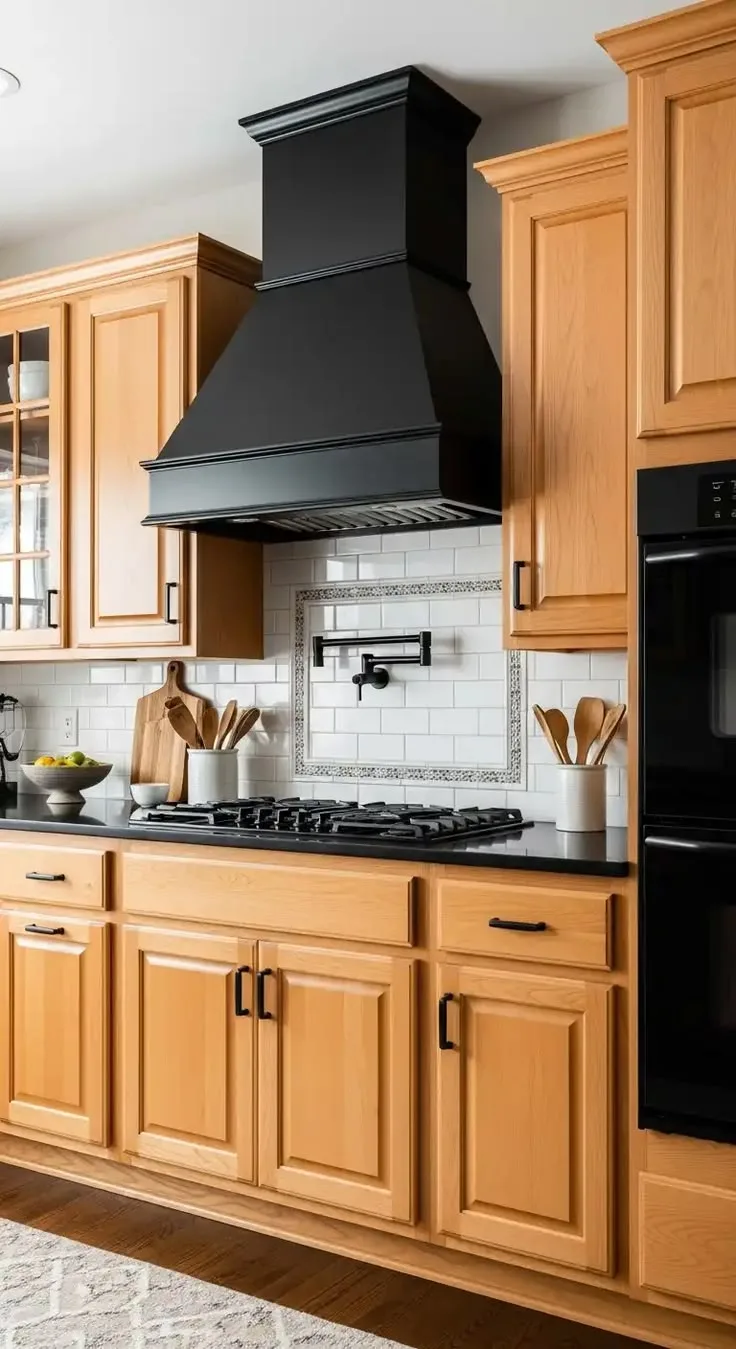
Image source: Bing (Web (fair-use with source credit))
The three common types are yellow-toned honey oak, red-toned golden oak, and the flat, saturated orange oak that defined builder-grade kitchens in the 90s. Yellow oak is forgiving and takes warm whites easily. Red oak is the hardest to cool down.
True orange oak sits in between, and it's the one people most often try to fight with gray.
The 5-Minute Undertone Test
Hold a plain white piece of printer paper against the cabinet door face. Then look again at the same spot after the sun moves. Yellow oak will read warm but calm next to white.
Red oak picks up a pinkish cast. Orange oak reads clearly amber.
Do this twice, once in daylight and once after dark with the room lights on. Halogen bulbs will lie to you. Manufacturer specifications for lighting list color temperature for a reason, and a 2700K bulb adds warm yellow to everything it touches.
Why Grain Pattern Changes What You Can Get Away With
Oak has an open, prominent grain with visible cathedral arches. That grain is what makes orange oak feel heavy, and it's also what makes it charming.
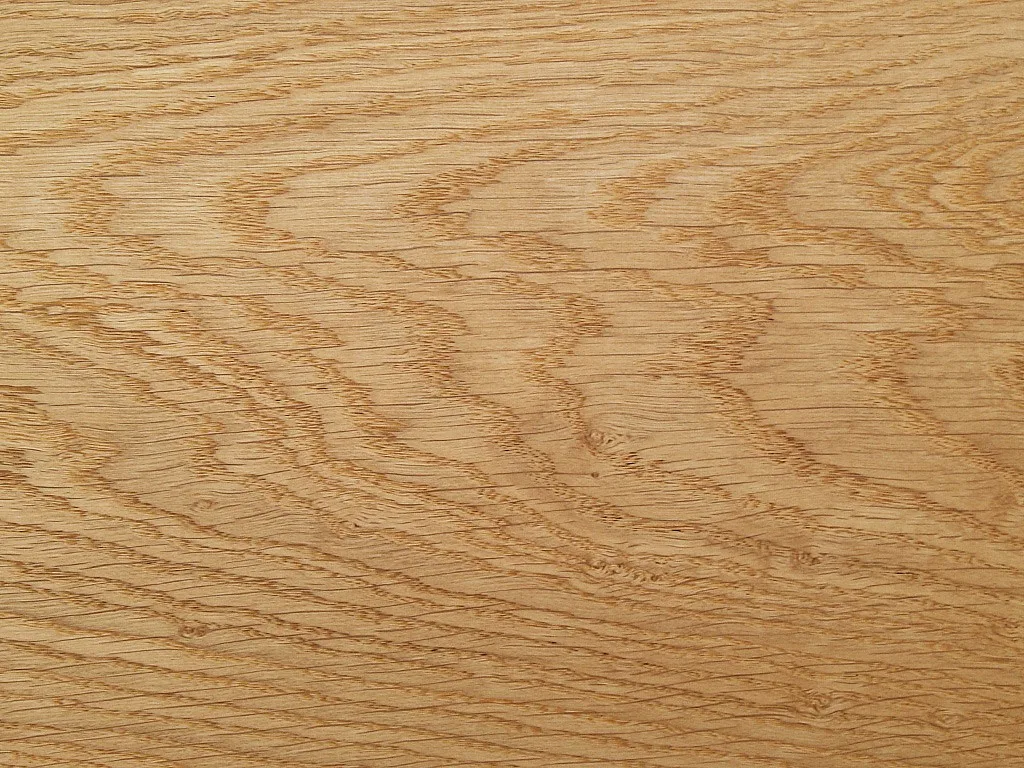
Image source: Bing (Web (fair-use with source credit))
Flat, quiet grain tolerates busy backsplashes and bold hardware. Strong grain doesn't. If your doors have broad cathedral arches, you'll want calmer backsplash choices, fewer competing patterns, and hardware that's simple in shape even if it's warm in finish.
The Styling Levers That Move the Needle Most
Four levers do most of the work. Hardware, paint or backsplash tone, lighting temperature, and texture. Rank them by cost and disruption, then pull them in that order.
Hardware: The Highest-Impact Swap for the Least Money
Hardware is the first thing to change and often the only thing you need. Aggregate buyer feedback puts cabinet pulls and knobs roughly in the $5 to $30 range each, which means a typical kitchen swap lands somewhere between $150 and $400 in parts.
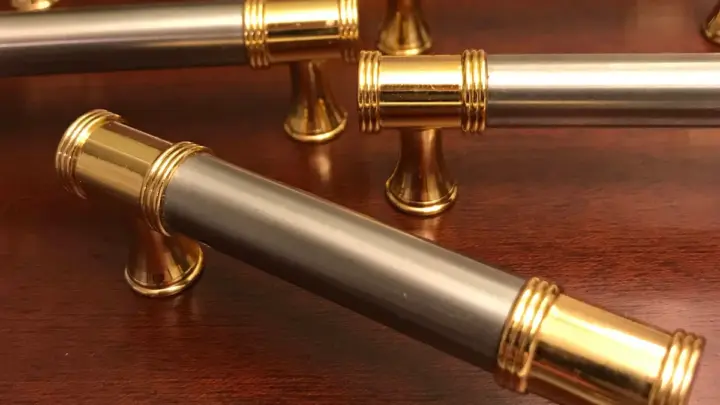
Finish matters more than shape. Shiny chrome and polished nickel throw cool blue light onto warm wood and make the orange pop harder. Unlacquered brass, oil-rubbed bronze, matte black, and brushed gold all sit comfortably against warm oak.
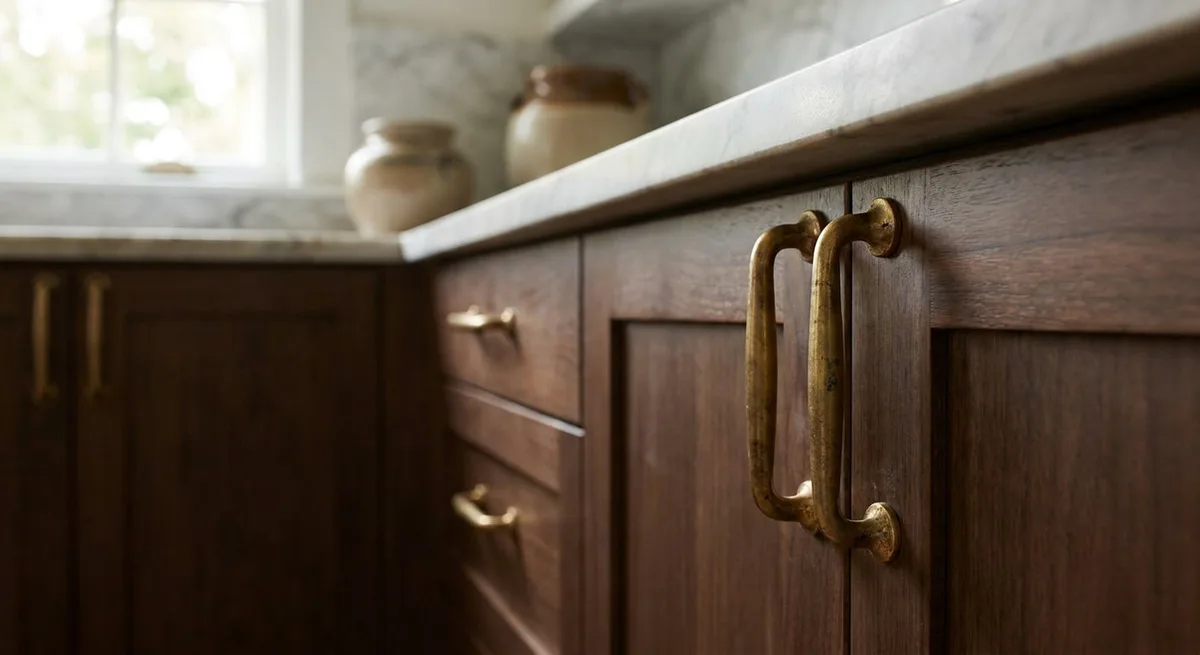
Image source: Bing (Web (fair-use with source credit))
Watch the spacing. Common center-to-center measurements run 3-inch, 4-inch, 5-inch, 96mm, and 128mm. Measure your existing holes before ordering.
If you're switching from knobs to pulls, expect to drill new holes and fill the old ones.
Wall Paint and Backsplash Tones That Calm Orange Without Fighting It
The right wall color reduces how orange the cabinets look without touching them. Warm whites, greige, muted green-gray, and soft taupe all sit in the same family as the wood. Cool gray and blue-gray fight it and lose.
For backsplash, match calm to strong. Subway tile in a warm white glaze, zellige with visible handmade texture, or a simple slab all let the cabinets lead. Highly patterned tile competing with cathedral oak grain creates visual noise that reads as dated.
Lighting Temperature: The Invisible Stylist
This one gets ignored and it shouldn't. A kitchen lit entirely with 4000K cool bulbs will flatten orange oak into something dull and slightly gray. A kitchen lit with 2700K bulbs will make the same cabinets glow.
Aim for 2700K to 3000K in the task layer and keep the room's ambient lighting in the same warm family. U.S. Department of Energy guidance on lighting color temperature explains the Kelvin scale clearly if you want to go deeper.
Texture, Rugs, and the Warm Neutral Layer
Wood needs softness around it. A vintage runner in muted reds or greens, linen roman shades, ceramic bowls, and a few unglazed pottery pieces all settle the room.
Layer texture in three places: the floor, the windows, and the counters. Skip the temptation to cover every surface. Two or three significant texture pieces do more than ten small ones.
Styling Without Painting: What to Do First
If you're not ready to paint, don't. A lot of orange oak kitchens only ever needed a hardware and lighting refresh.
Cabinet Hardware and Lighting Swaps
Start here. Pull one cabinet door, note the hole spacing, and swap hardware first. Then replace any cool-white bulbs with 2700K ones.
Total spend is usually under $500 and the job takes an afternoon.
Per our review of before-and-after kitchen photos, these two changes alone account for most of the "wow, something's different" reaction. The cabinets are unchanged. The framing around them isn't.
Renter-Friendly and Reversible Updates
If the cabinets aren't yours, stay reversible. Peel-and-stick backsplash, removable wallpaper, and hardware you can swap back before move-out all work. The EPA's Renovation, Repair and Painting rule doesn't apply to peel-and-stick, but it absolutely does apply to any sanding in pre-1978 housing.
Clean and degrease the cabinet surface thoroughly before applying anything adhesive. Oak picks up cooking grease in a way flat cabinet finishes don't, and adhesive fails on greasy wood.
When a Cosmetic Refresh Isn't Enough
If the cabinets have water damage, peeling veneer, or deep scratches, styling won't hide it. Same if the layout itself is the problem. At that point you're choosing between painting, gel staining, refacing, and replacing.
Paint, Gel Stain, Refacing, or Replace? Choosing Your Path
Four paths, four very different budgets and outcomes. Pick the one that matches your actual tolerance for disruption.
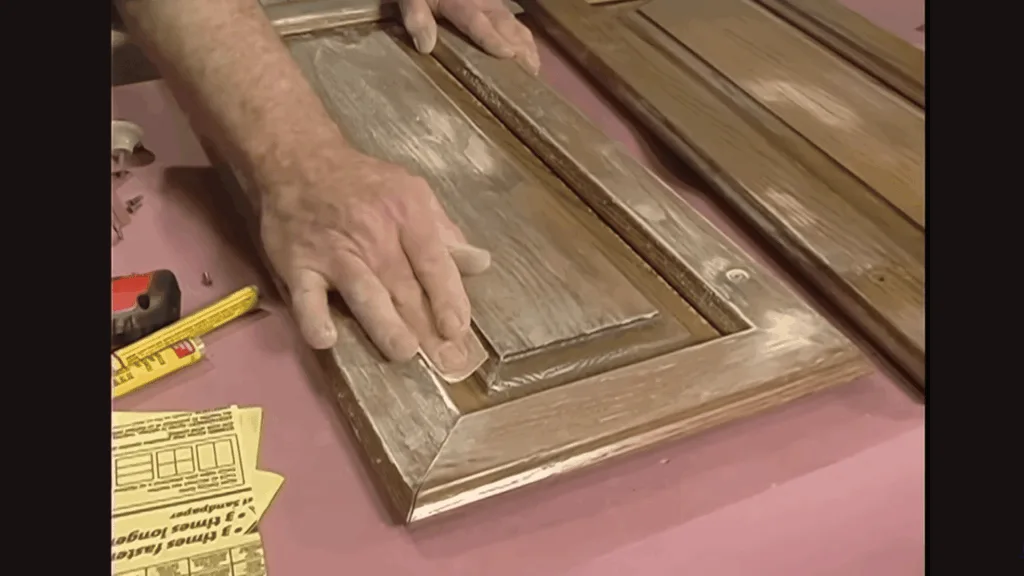
Image source: Bing (Web (fair-use with source credit))
Side-by-Side: Cost, Effort, Reversibility, and Result
| Option | Typical Cost | Effort | Reversible | Best For |
|---|---|---|---|---|
| Hardware + lighting refresh | $150 to $500 | Low | Yes | First step, renters |
| Full paint (DIY) | $1,000 to $4,000 | High | No | Committed DIYers |
| Full paint (pro) | $3,000 to $10,000 | Low for you | No | Busy households |
| Gel stain | $300 to $1,200 | Medium | No | Red-toned oak rescue |
| Refacing | $4,000 to $12,000 | Low for you | No | Good boxes, tired doors |
| Replacement | $10,000 to $30,000+ | Low for you | No | Damaged or wrong layout |
Oak Grain Filler and Prep: Why DIY Painting Goes Wrong
Oak grain is porous, and paint sinks into it. Manufacturer specs from paint and primer brands all say the same thing: fill the grain with a wood filler, sand flat, then prime with a stain-blocking primer.
Skip that step and you get a painted cabinet that still looks like oak underneath, just in a new color. That's often the "why does my painted cabinet still look dated" complaint. The grain telegraphs through.
What Each Option Does to the Orange Undertone
Painting removes the undertone entirely. Gel stain shifts it warmer or browner but keeps the wood visible. Refacing keeps the boxes and replaces the doors, which means you can choose a pale European oak finish if you want that look without replacing the entire kitchen.
If your goal is to keep wood but reduce orange, gel stain is the middle path. If your goal is to stop thinking about the wood, paint or reface.
Visual Mistakes That Make Orange Oak Look Dated
Cool gray next to warm oak is the number one offender. It sounds like a safe neutral. In a real kitchen, it turns the cabinets muddy and makes the room feel cold and unresolved.
Second is shiny chrome and polished nickel hardware on orange-toned wood. Both throw cool blue light onto the wood and amplify the orange. It reads as an accidental mismatch, not a design choice.
Third is cool-white bulbs at 4000K or higher. Verified buyer feedback on kitchen lighting reports this one repeatedly. Warm oak under cool light loses its glow and looks slightly gray.
Busy Backsplash, Strong Grain, and the Noise Problem
Oak's cathedral grain is already a pattern. Add a highly patterned backsplash and you get two competing patterns in one sightline. That's the look that dated most 90s kitchens.
If your grain is strong, choose calm. A warm white subway tile, a single-glaze zellige, or a plain slab keeps things quiet. Let the wood be the pattern.
Too Many Wood Tones in One View
Three wood tones in one line of sight creates visual clutter. Floor, cabinets, and dining table all fighting for attention reads as unfinished rather than layered.
Pick one warm wood to lead and one quiet supporting tone. If your floor is pale oak and your cabinets are orange oak, keep furniture painted or upholstered in that room. It gives the eye somewhere to rest.
Real Kitchens, Real Results
Three patterns keep showing up in the kitchens we've researched. Each one is a different budget and a different level of commitment.
The $400 Hardware-and-Lighting Refresh
This is the smallest intervention and the one with the highest satisfaction rate. Hardware swap on 30 cabinets runs $150 to $400 in parts. A full bulb replacement in a kitchen with 8 to 12 cans costs roughly $40 to $80 in LED bulbs.
Timeline: one weekend. Result: the room reads warmer and more intentional, but the cabinets themselves are visually unchanged. That's often exactly enough.
Per our review of before-and-after photos, this refresh alone resolves the "something feels off" feeling in most oak kitchens.
The Warm-Neutral Palette That Let the Oak Win
The second pattern commits to the wood. Greige walls, a zellige backsplash in warm white, unlacquered brass hardware, and a vintage runner. Total spend usually lands between $800 and $2,500 depending on tile and hardware choices.
Timeline: two to four weekends. Result: the cabinets stop reading orange and start reading golden. The wood becomes the protagonist instead of the problem.
This is the option most design-savvy homeowners land on after rejecting paint.
The Gel-Stain Rescue for Blotchy 90s Oak
Red-toned and blotchy oak is the hardest case. Gel stain can shift the undertone browner without hiding the grain. Cure times typically run 24 to 48 hours between coats, and a full kitchen usually takes three coats.
Budget: $300 to $1,200 in materials and tools. Timeline: two to three weeks, mostly waiting for cure. Result: the orange shifts toward a warm brown that pairs more easily with modern neutrals.
It's the middle path between painting and doing nothing.
Costs, Safety, and What Not to Skip
Budget matters, but there are a few things worth the spend and a few that should never be cut.
What the Different Approaches Actually Cost
Material and labor costs vary widely by region, kitchen size, and finish quality. The ranges below reflect what we see across US metro markets as of 2026.
| Approach | Parts Cost | Pro Labor | Total Range |
|---|---|---|---|
| Hardware and lighting swap | $200 to $500 | $0 to $200 | $200 to $700 |
| Gel stain (DIY) | $300 to $1,200 | N/A | $300 to $1,200 |
| Full paint (DIY) | $400 to $1,500 | N/A | $400 to $1,500 |
| Full paint (pro) | Included | $2,500 to $8,500 | $3,000 to $10,000 |
| Refacing | $2,500 to $7,000 | $1,500 to $5,000 | $4,000 to $12,000 |
| Replacement | $6,000 to $20,000 | $4,000 to $12,000 | $10,000 to $30,000+ |
Hardware count matters more than kitchen size. A typical 25-door kitchen needs 30 to 45 pieces of hardware. Add pulls to drawers and the number climbs fast.
Lead-Safe Prep, Ventilation, and Low-VOC
If your home was built before 1978, any sanding, scraping, or paint removal falls under the EPA's RRP rule. Certified renovators must follow specific containment and cleaning practices. It's not optional.
For gel stains and oil-based finishes, ventilation is non-negotiable. Open windows, run a fan, and wear a respirator rated for organic vapors. Low-VOC and zero-VOC paints exist for cabinet work and are worth the extra cost in a lived-in kitchen.
Renter Leases, Warranties, and Weight Limits
Renters should check the lease before drilling for new pulls. Most leases require written approval for hardware changes, and some require you to restore the original hardware at move-out.
Manufacturer warranties on cabinets often void if the finish is altered. Read the fine print before you paint or stain. And weight matters: a heavy glass-front door with a heavy pull can stress hinges designed for lighter loads.
If a hinge feels loose after swapping hardware, add a backplate or go lighter.
Frequently Asked Questions
How do I know if my oak is yellow, red, or orange?
Hold a plain white sheet of paper against the cabinet door face in daylight. Yellow oak reads calm next to white. Red oak picks up a pinkish or rust cast.
Orange oak sits in between and reads clearly amber. Repeat the test at night under your normal kitchen lighting.
Can I style orange oak without painting it?
Yes, and most people should start there. Swap hardware to unlacquered brass, matte black, or oil-rubbed bronze. Replace cool-white bulbs with 2700K to 3000K LEDs.
Add a runner and one or two textured pieces. Those four moves often resolve the problem entirely.
What paint color goes with orange oak cabinets?
Warm neutrals work best. Greige, warm white, muted green-gray, and soft taupe all sit in the same family as warm oak. Cool grays and blues fight the wood and make it look more orange.
Sample any color on a large board and hold it against a cabinet door before committing.
What hardware finish looks best on orange oak?
Warm metals are the safe answer. Unlacquered brass patinas over time and reads organic against oak. Matte black works if you want stronger contrast.
Oil-rubbed bronze and copper also pair well. Skip chrome and polished nickel, which pull the wood too warm.
Is gel stain or paint better for 90s orange oak?
Gel stain if you want to keep some wood character visible. Paint if you want the oak gone entirely. Gel stain is more forgiving on red-toned or blotchy oak and shifts the undertone without hiding grain.
Paint gives a flat, opaque finish that reads more modern if the door profile allows it.
What lighting temperature makes oak look less orange?
Slightly cooler bulbs reduce the orange. In practice, 3000K neutral is the sweet spot. It keeps the room warm without amplifying the wood's amber cast.
Going to 3500K or 4000K robs the wood of its warmth and makes the kitchen feel clinical.
Do I need a pro or can I DIY orange oak cabinet styling?
It depends which path you're on. Hardware, lighting, and rugs are pure DIY. Gel stain and paint are doable for patient DIYers with good prep habits.
Refacing and replacement are jobs for a pro. If you're sanding a pre-1978 kitchen, hire a certified renovator for the prep work.

Similar Posts