Tiny House Convertible Furniture: Maximize Every Inch
A tiny house with convertible furniture works because one piece does two jobs, and that math is what makes sub-400-square-foot living possible. A wall bed that vanishes by day gives you back a living room. A table that folds into a desk gives you back an office.
The trick isn't buying the most gadgets. It's picking the right conversions for how you actually live.
In our research across manufacturer specs and tiny house certification standards, the numbers matter more than the marketing. Murphy bed cabinets typically run 16 to 20 inches deep, and you need 30 to 36 inches of open floor in front just to drop the bed. Miss that clearance and the whole system fails.
So before you buy anything, you need to understand what each piece really demands.
tiny house with convertible furniture
Convertible furniture lets one tiny house room serve several daily functions. A Murphy bed, sofa bed, or fold-down desk swaps purpose in seconds. The right pick depends on your clearance, aisle width, and how often you convert.
Wall beds need 30 to 36 inches of open floor. Storage stairs and under-bed lifts handle the rest.
The Core Pieces: What "Convertible" Actually Means in a Tiny House
Convertible furniture is any piece designed to change function or disappear into the structure of the home. In a tiny house, that usually means a bed that folds into a wall, a table that drops to coffee-table height, or stairs that store your clothes inside each step.
The category splits into four main families. Beds are the biggest space hogs, so they get the most engineering. Tables and desks handle the second-largest footprint.
Storage systems capture what's left.
Murphy Beds (Wall Beds)
A Murphy bed, or wall bed, rotates up into a cabinet against the wall. Vertical models stand the mattress on its side, horizontal models fold it sideways. Quality units use gas-strut or spring-loaded mechanisms rated for 5,000 to 10,000 cycles.
Cabinet depth runs 16 to 20 inches closed. That's the whole pitch: you reclaim the bed's floor space every morning without losing a real mattress.
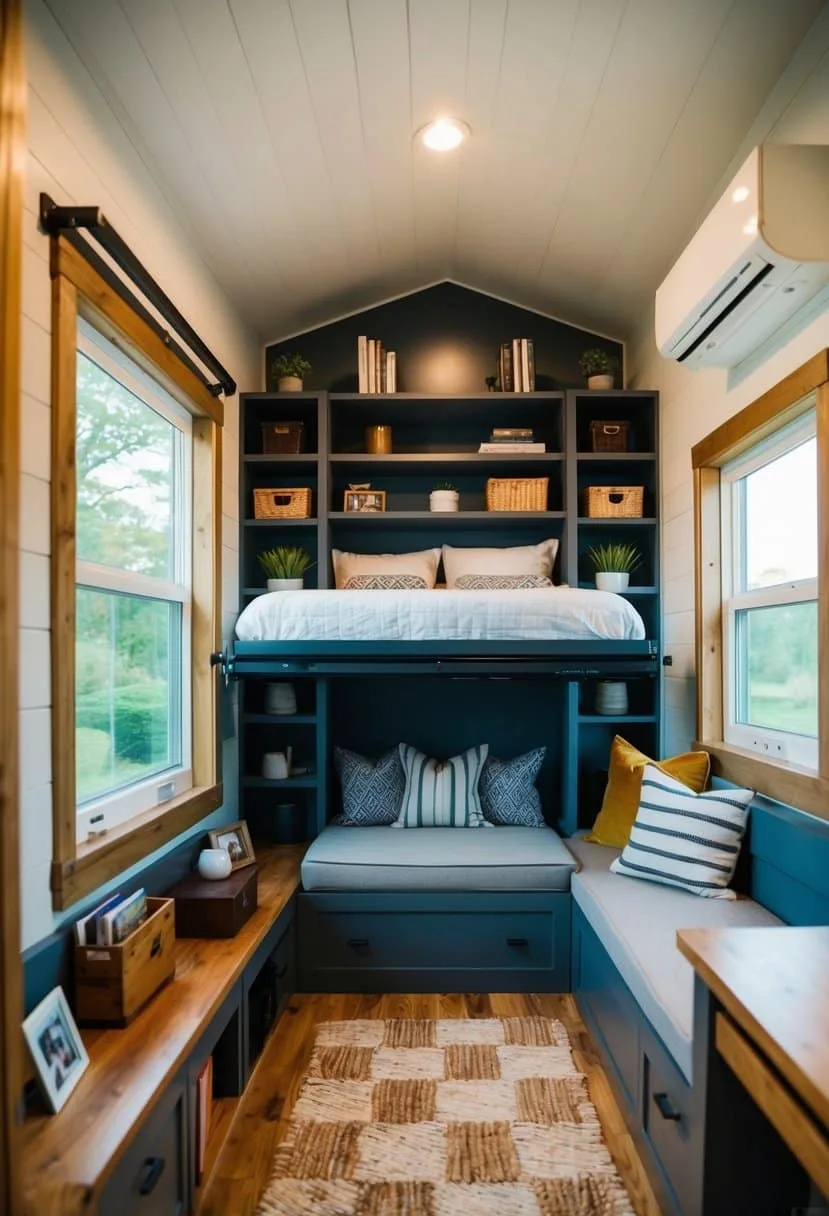
Image source: Bing (Web (fair-use with source credit))
Sofa Beds, Futons, and Sleeper Sectionals
A sofa bed hides a mattress inside the couch frame. Futons fold flat and skip the metal bar that ruins most sleeper sofas. Sleeper sectionals combine seating with a pull-out bed, which suits bigger tiny homes.
Aggregate user reviews consistently flag the same issue. Cheap sofa beds leave a support bar across your back. If you're sleeping on it nightly, buy a futon or a real wall bed instead.
Drop-Leaf Tables and Fold-Down Desks
A drop-leaf table has hinged sections that fold down when not in use. A fold-down desk mounts to the wall and flips up to become a workspace, then vanishes. Both are cheap, light, and easy to install.
Standard dining height sits at 28 to 30 inches. Coffee-table height runs 16 to 18 inches. Watch those numbers before you buy.
A table that's too tall for your chairs is useless.
Storage Stairs, Under-Bed Lifts, and Slide-Out Islands
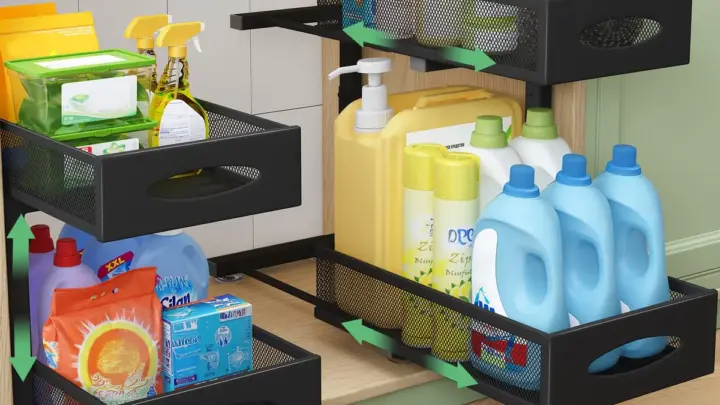
Alternating-tread stairs with drawers turn your climb into a dresser. Under-bed lifts use gas struts to raise the mattress platform, exposing storage beneath. Slide-out islands extend your kitchen counter when you're cooking, then tuck away.
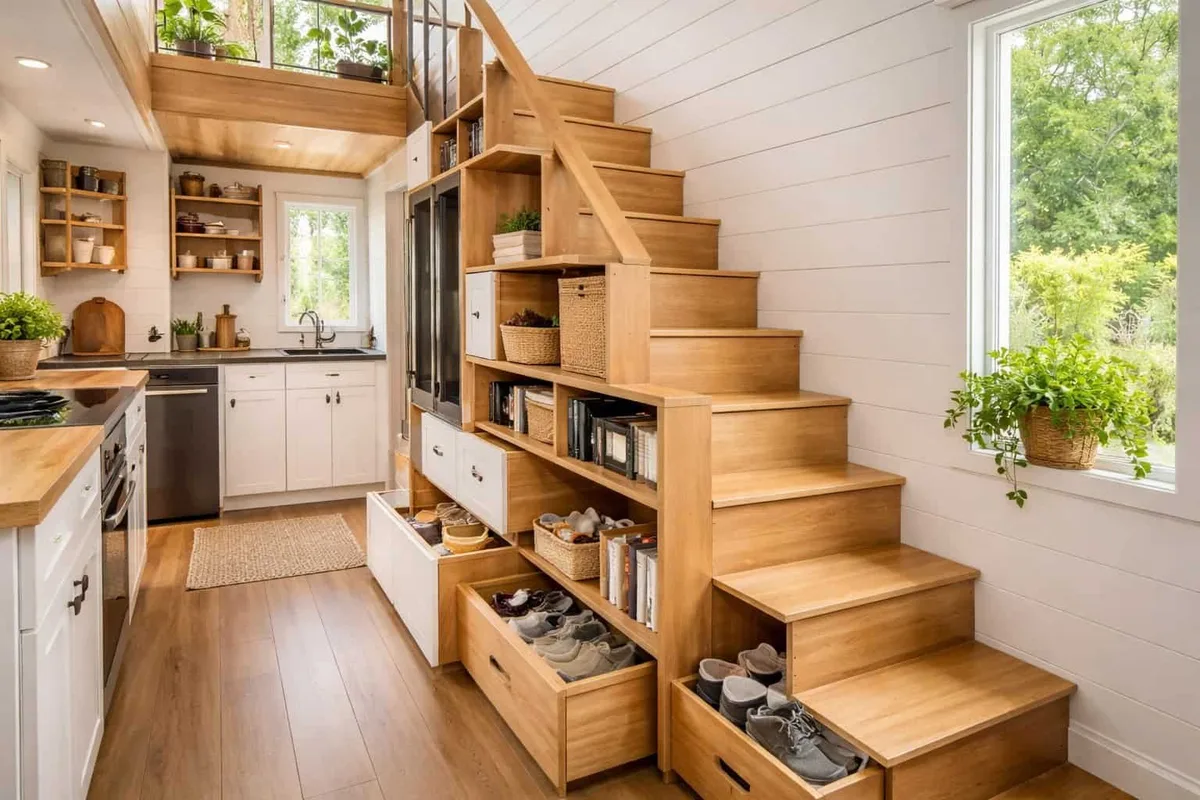
Image source: Bing (Web (fair-use with source credit))
These are the highest-value conversions in a small build. You're not just saving floor space. You're adding storage that a regular house keeps in a closet.
Day Mode vs. Night Mode: Seeing How the Space Converts
Every tiny house with convertible furniture runs on two layouts: day mode and night mode. Day mode is open floor, seating, and workspace. Night mode is bed down, table cleared, lights dimmed.
The whole design lives or dies on how fast you can switch between them.
The Clearance Rule That Decides What Fits
The clearance rule is simple. Every convertible piece needs open floor to deploy. That open floor is the same space you're trying to protect.
This is the tension at the heart of every tiny house layout.
A Murphy bed needs 30 to 36 inches in front of the cabinet. A drop-leaf table needs about 24 inches on the folding side. A pull-out sofa needs roughly 36 inches.
Stack those requirements in a 200-square-foot room and you run out of floor fast.
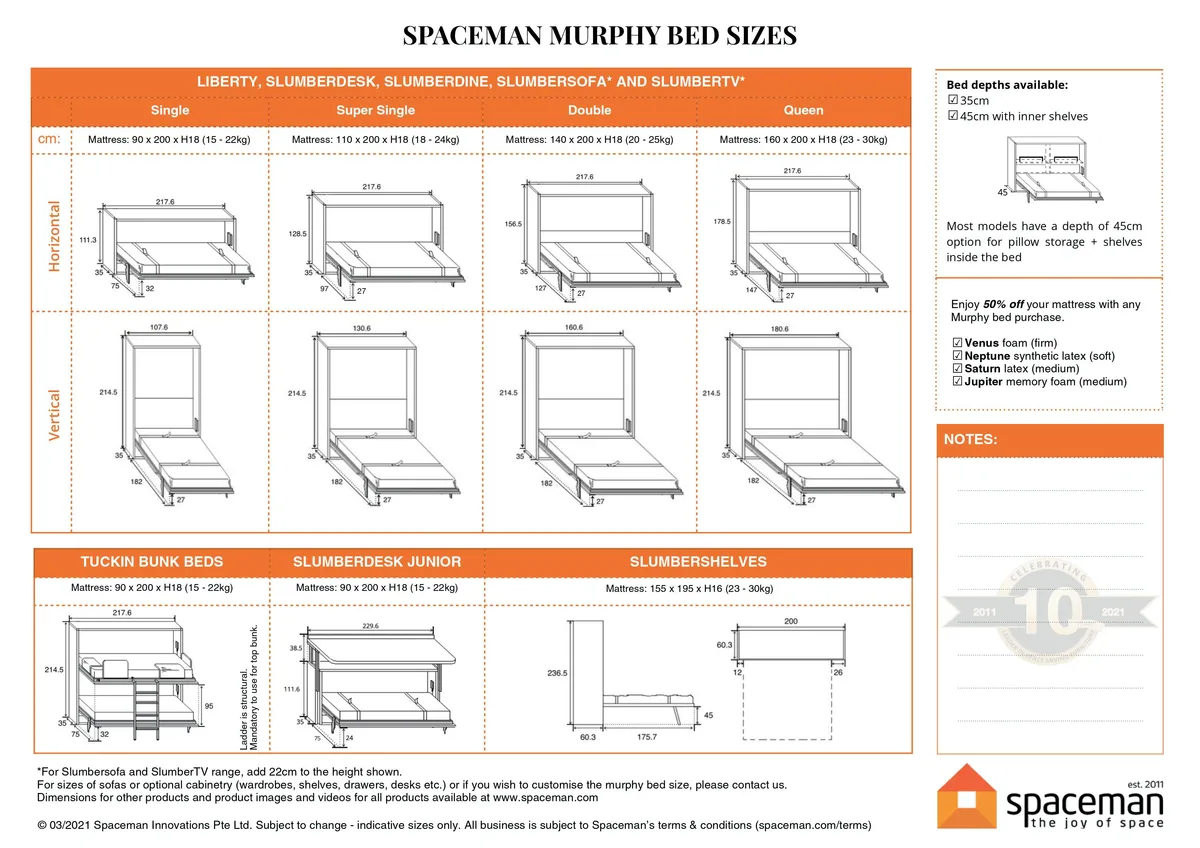
Image source: Bing (Web (fair-use with source credit))
A diagram of a typical 8-by-20-foot tiny house shows the problem clearly. You can't have two pieces deploying into the same aisle. So you pick one conversion per zone and let the others stay folded.
Aisle Width, Drop Zones, and Headroom
Aisle width is the walkway left open when everything's deployed. The comfortable minimum is 30 inches. Preferred is 32 to 36 inches.
Below 24 inches, you'll hate your house within a month.
Drop zone is the floor a piece claims while converting. Mark it with tape on your floor plan. If two drop zones overlap, you've got a conflict.
Headroom matters for lofts. Most tiny house lofts run 36 to 48 inches of clearance. You can sleep up there, but you can't stand.
If you want a loft bed plus a fold-down desk below, check both heights before committing.
How to Sketch Your Own Two-Mode Layout Before You Buy a Thing
- Measure every wall, corner, and ceiling height in your build.
- Draw the floor plan to scale on graph paper or in free software.
- Sketch day mode: seating, workspace, open floor.
- Sketch night mode: bed down, table out, aisle intact.
- Mark every drop zone with tape on the drawing.
- Check for overlaps. Fix them on paper, not in the house.
- Only then start shopping for pieces.
This step takes an afternoon. It saves you thousands in furniture you can't use.
What It Costs and What You Get: Convertible Furniture Pricing and Specs
Pricing varies widely by quality and mechanism. Cheap pieces fail within a year. Good pieces last a decade.
Here's what our research found for typical US pricing as of 2026.
| Piece | Typical Price | Space Reclaimed | Key Spec |
|---|---|---|---|
| Murphy bed kit (mechanism only) | $300 to $700 | 40 to 60 sq ft | 5,000+ cycle rating |
| Complete Murphy bed (cabinet + mechanism) | $1,500 to $4,000+ | 40 to 60 sq ft | 16 to 20 in cabinet depth |
| Quality sofa bed | $800 to $3,000 | 20 to 30 sq ft | 36 in pull-out clearance |
| Drop-leaf table | $150 to $1,200 | 20 to 30 sq ft | 28 to 30 in dining height |
| Fold-out desk | $200 to $1,500 | 10 to 20 sq ft | Wall-mounted, 30 to 36 in drop |
| Modular sectional | $1,200 to $4,000 | Variable | Configurable layout |
| Stair drawers (custom, per step) | $150 to $600 | 10 to 15 sq ft | Custom-fit to stair angle |
Installation labor for a wall bed runs $400 to $1,200 if you hire out. Most DIY owners install their own with a helper and a stud finder. Mattress weight matters for wall beds.
Keep it between 50 and 90 pounds, or the mechanism struggles.
Matching the Right Piece to Your Space, Body, and Daily Routine
The right piece depends on three things: your floor plan, your body, and your daily rhythm. A 130-pound person can flip a lift-up bed platform alone. A 90-pound person might need a gas-strut assist.
Someone working from home five days a week needs a dedicated desk, not a table they clear twice a day.
Best for Full-Time Sleeping vs. Occasional Guests
If you sleep on it every night, buy a real wall bed or a futon. Skip sofa beds entirely. The bar-across-your-back problem is well documented in aggregate buyer reviews.
If it's for guests only, a quality sofa bed or a sleeper sectional works fine. It'll see 20 to 40 nights a year, not 365. Cheaper mechanisms survive that load.
Best for Remote Work and Dining
If you work from home, invest in a fold-down desk mounted at the correct height. Ergonomic guidelines from OSHA put a seated workstation at roughly 28 to 30 inches. A drop-leaf dining table doubles as a desk if it hits that height.
If you eat at the same table you work at, pick one that converts between dining and coffee height. That's the single most valuable table feature in a tiny house.
Best for Small Builds (Under 200 Sq Ft) vs. Larger Tiny Homes
Under 200 square feet, you need vertical everything. Wall beds, mounted desks, and stair drawers beat freestanding pieces every time. There's no floor to spare.
In a 300-plus square foot tiny house, you have more options. A sleeper sectional plus a drop-leaf table plus a fixed bed might all fit. Match your ambition to your floor plan, not your Pinterest board.
Mistakes That Turn "Convertible" Into "Abandoned in a Month"
The biggest mistake is buying conversions you won't actually use daily. If flipping a bed takes 90 seconds and requires moving three pillows and a rug, you'll stop doing it by week two. Convenience wins over cleverness every time.
Over-furnishing is the close second. Every convertible piece competes for the same floor space. Load too many into a 200-square-foot room and you end up with zero open floor, which defeats the point.
- Ignoring drop-zone overlap. Two pieces can't deploy into the same aisle. Most builds fail here.
- Anchoring into thin walls. Tiny house framing is often 2×3 or metal studs, not standard 2×4 lumber.
- Skipping the test. Convert the piece 20 times before you commit. Any friction shows up fast.
- Buying cheap mechanisms. A $200 wall-bed kit fails inside a year. A $700 kit lasts a decade.
- Forgetting guests. Nobody knows how your bed folds but you. Write a one-page guide.
Floor slope is another silent killer. Tiny houses on wheels settle unevenly. Drawers bind, slides wear, and doors stop closing.
Level your base and recheck it after every move.
Anchoring, Egress, and the Safety Rules You Can't Skip
Wall beds and fold-down desks must anchor into studs or reinforced blocking. Drywall anchors fail under dynamic load. A charged wall-bed mechanism swings with real force, so a single bad anchor can turn the cabinet into a hazard.
The IRC (International Residential Code) requires clear egress from sleeping areas, including lofts. If a convertible bed blocks a window or door when deployed, you've created a code violation and a genuine fire risk. Check both day and night modes against your egress path.
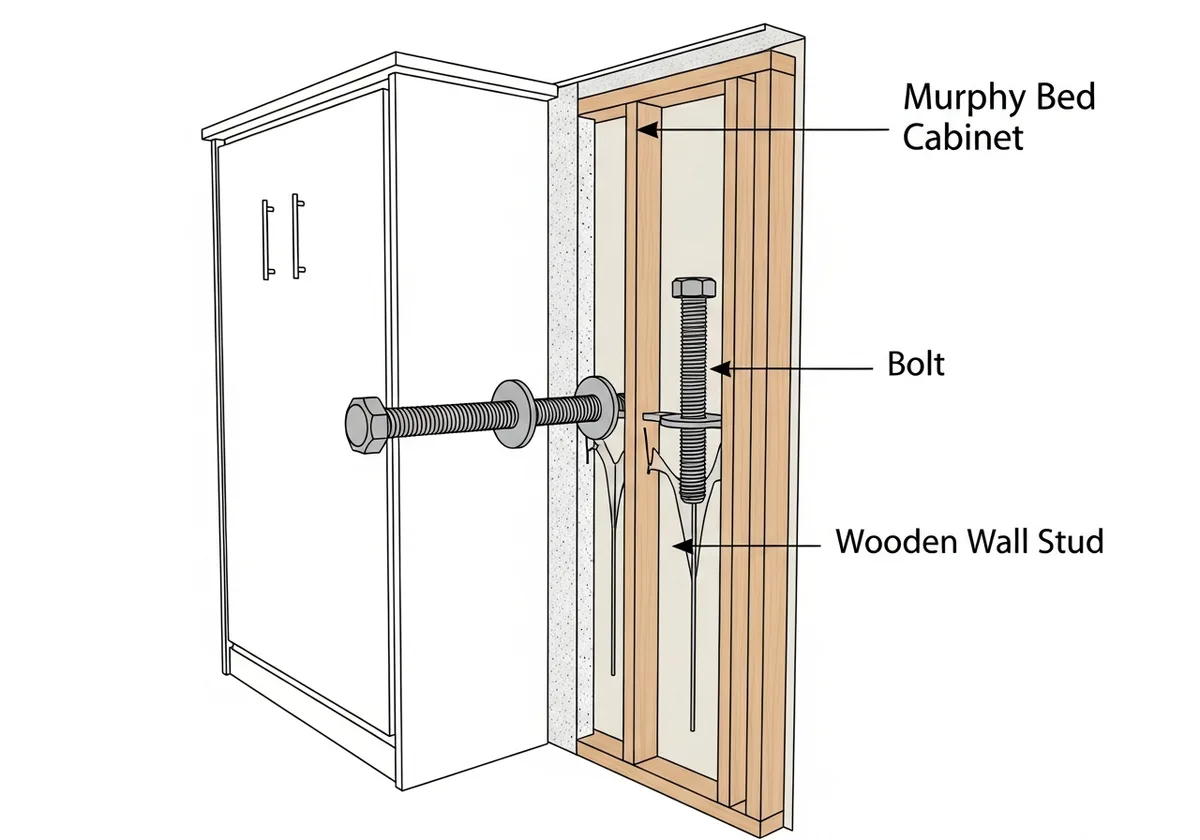
Image source: Bing (Web (fair-use with source credit))
Pinch points matter too. Gas-strut wall beds snap shut with enough force to catch fingers, pets, and small kids. Install a safety strap or latch on every piece that folds.
CPSC furniture tip-over guidance applies here as well.
If your tiny house is titled as an RV, NFPA 1192 governs parts of the build. If it's a HUD-code manufactured home, different rules apply. Talk to your local building department before you mount anything structural.
Maintenance, Long-Term Wear, and Keeping Mechanisms Alive
Convertible furniture takes more wear than fixed furniture because it moves. Every cycle stresses a hinge, a strut, or a slide. Regular maintenance is what keeps those mechanisms alive past year five.
Every three to six months, tighten every bolt on your wall bed and stair drawers. Lubricate gas struts with a silicone spray, never oil. Oil attracts dust, and dust kills struts.
Rotate or flip your mattress every three months if it lives in a wall bed. Compression builds faster in a folded position. A sagging mattress also throws off the mechanism balance.
Replace worn drawer slides before they fail completely. A $15 slide swap beats rebuilding a stair drawer. Watch for squeaks, wobble, and slow closings.
Those are the early warnings.
Label your storage compartments inside stair drawers and under-bed lifts. A labeled system stays organized. An unlabeled one becomes a junk drawer within a month.
FAQ: Tiny House Convertible Furniture Questions People Actually Ask
How much clearance does a Murphy bed need?
A Murphy bed needs 30 to 36 inches of open floor in front of the cabinet to deploy safely. Manufacturer specs usually cite 30 inches minimum. Under 30 inches, you'll fight the bed every night.
Measure your aisle before you buy anything.
Can you sleep on a sofa bed every night in a tiny house?
You can, but most people regret it. The support bar under cheap sofa beds causes back pain within weeks. If nightly sleeping is the plan, buy a futon or a real wall bed instead.
Save the sofa bed for guests.
Do tiny houses need special anchoring for wall beds?
Yes. Tiny house walls are often thinner than standard house framing. Anchor every wall bed and fold-down desk into studs or added blocking.
Drywall anchors will not hold a loaded wall bed. When in doubt, add a plywood backing plate behind the mounting surface.
What's the cheapest way to add convertible furniture to a tiny house?
Start with a drop-leaf table and a fold-down desk. Both cost under $500 combined and reclaim real floor space. Add a wall bed later if budget allows.
Storage stairs are the most expensive upgrade and usually need custom work.
How do you stop convertible furniture from squeaking?
Tighten every hinge and bolt first. Squeaks almost always come from loose hardware, not the wood. Lubricate metal-on-metal contact points with silicone spray.
If the noise persists, check whether the cabinet has shifted off level.
Is convertible furniture worth it in a tiny house?
Yes, if you actually convert it daily. The value comes from repeated use, not the idea of it. A wall bed you flip every morning pays for itself in reclaimed living space.
A fold-out desk you open twice a year does not.
The Decision Guide: Picking Your Convertible Setup in Five Steps
- Map your daily routine. List every function you need: sleep, work, eat, relax, host.
- Measure clearances. Mark drop zones on your floor plan. Kill any overlaps before shopping.
- Rank by frequency. The piece you use most deserves the best mechanism and the most floor.
- Match piece to user. Body weight, arm strength, and ceiling height all decide what works.
- Test before you commit. Convert 20 times. If it's annoying on day one, it'll be abandoned by day thirty.
The tiny house with convertible furniture that actually works is the one built around your habits, not around a catalog. Get the clearance right, anchor everything properly, and maintain the mechanisms. Do that, and a 200-square-foot home lives like one twice the size.

Similar Posts