Antique Quilt Above Sofa: Styling Tips That Work
Hanging an antique quilt above sofa space is one of those projects that looks simple until you're standing there with a measuring tape and a fragile textile older than your grandparents. Get it right and you've got warmth, history, and texture anchoring your whole living room. Get it wrong and you can fade, distort, or literally tear apart something irreplaceable.
The good news is that the rules aren't complicated once you know them. Bottom of the quilt sits 6 to 10 inches above the sofa back. Width runs 2/3 to 3/4 of the sofa.
And the quilt hangs from a sewn fabric sleeve, never a clip, pin, or staple. In our research, we found that most quilt damage happens in the first year of display, which means the prep work matters more than the hardware. Let's start with whether yours should even leave storage.
antique quilt above sofa
Hang your antique quilt 6 to 10 inches above the sofa back. The quilt should be 2/3 to 3/4 the sofa width. Sew a cotton sleeve along the top edge.
Use a smooth 1 to 1.5 inch rod on padded brackets. Keep it out of direct sunlight.
Is Your Quilt Actually Safe to Hang?
Not every antique quilt belongs on a wall. Some should stay flat in acid-free storage, and knowing the difference saves you from permanent damage.
Per American Institute for Conservation (AIC) textile guidance, any quilt with active deterioration should not be hung at all. Gravity pulls on old seams every single day. A piece that's stable in a box becomes a piece that's tearing in six months.
Run through this checklist before you buy a single bracket.
- Shattering silk: If the fabric crumbles when you touch it, it's gone. Store it, don't hang it.
- Dry rot: Brownish, brittle patches mean the cotton fibers have broken down. Hanging accelerates the collapse.
- Loose or frayed binding: The binding carries the whole quilt's weight on a wall. If it's failing, the quilt fails.
- Active pest damage: Moth holes, frass, or live larvae mean the quilt needs treatment first.
- Heavy soiling: Dirt attracts pests and traps moisture. Consult a textile conservator before display.
If your quilt passes all five, you're clear to hang. If it fails even one, the kind move is storage, not display.
Signs It Should Be Stored, Not Hung
A quilt should stay in storage if it's pre-1850, has any silk content, or carries an appraisal over $500. These pieces need museum-grade conditions, not a living room wall.
Your living room swings in temperature and humidity every day. Museums hold textiles at 68 to 72°F with 45 to 55% relative humidity. No home hits that reliably.
Fabric, Dye, and Stitching Red Flags
Natural dyes fade at different rates, and reds go first. If your quilt has strong madder or cochineal reds, direct light is the enemy.
Check the stitch density too. A quilt with 10 to 12 stitches per inch has more structural integrity than one with 5 to 6. Tight stitching spreads stress.
Measuring the Space: Sofa Width, Quilt Width, and Wall Height
This is where the visual judgment comes in. Numbers get you close. Your eye finishes the job.
You need three measurements before anything else: sofa width, sofa back height, and quilt dimensions. Write them down. Don't trust your memory in the hardware aisle.
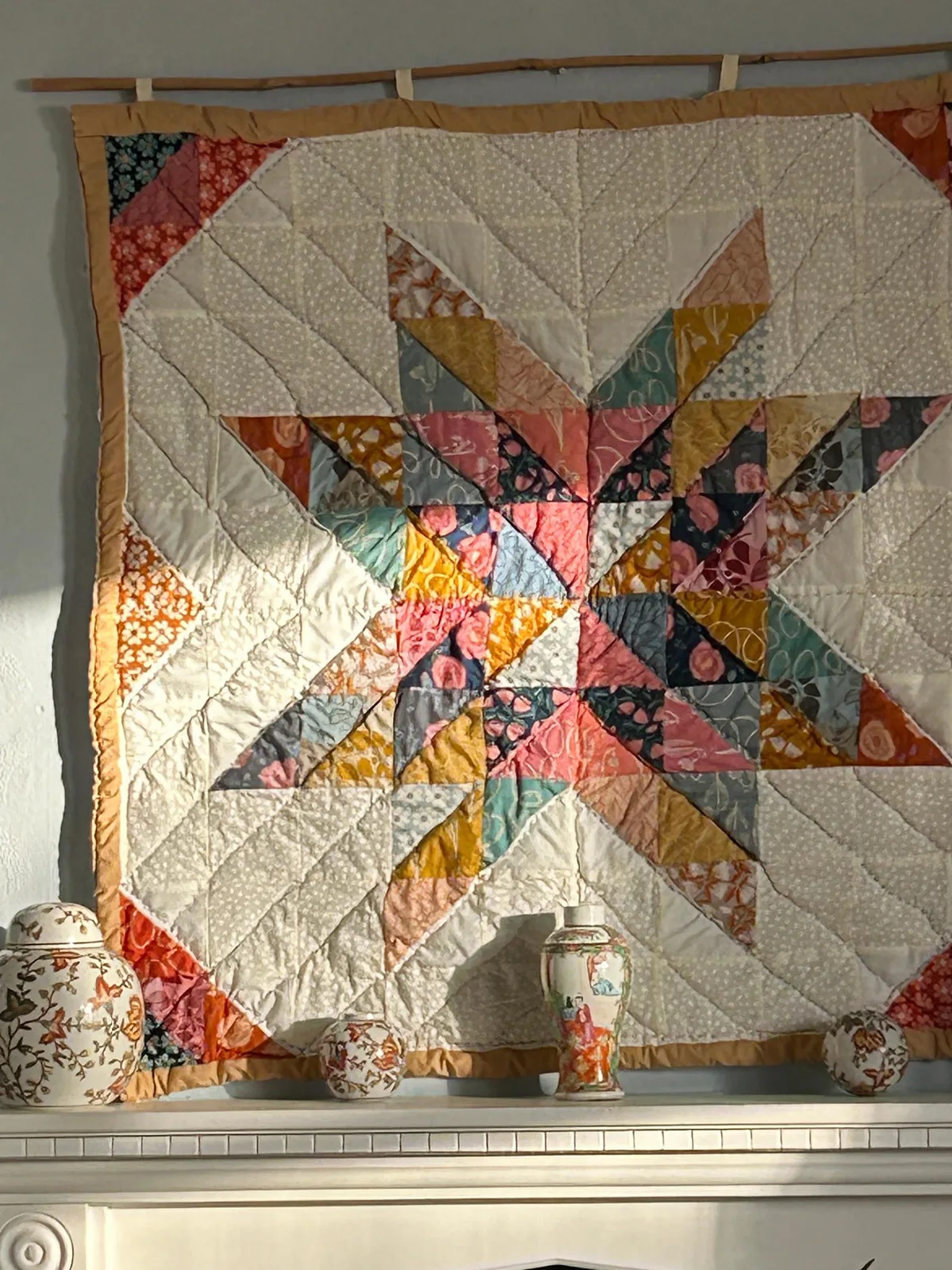
Image source: Bing (Web (fair-use with source credit))
The 6–10 Inch Rule Above Your Sofa Back
Six to 10 inches is the sweet spot between cramped and floating. Low-back sofas want 6 to 7 inches. High-back sofas want 8 to 10.
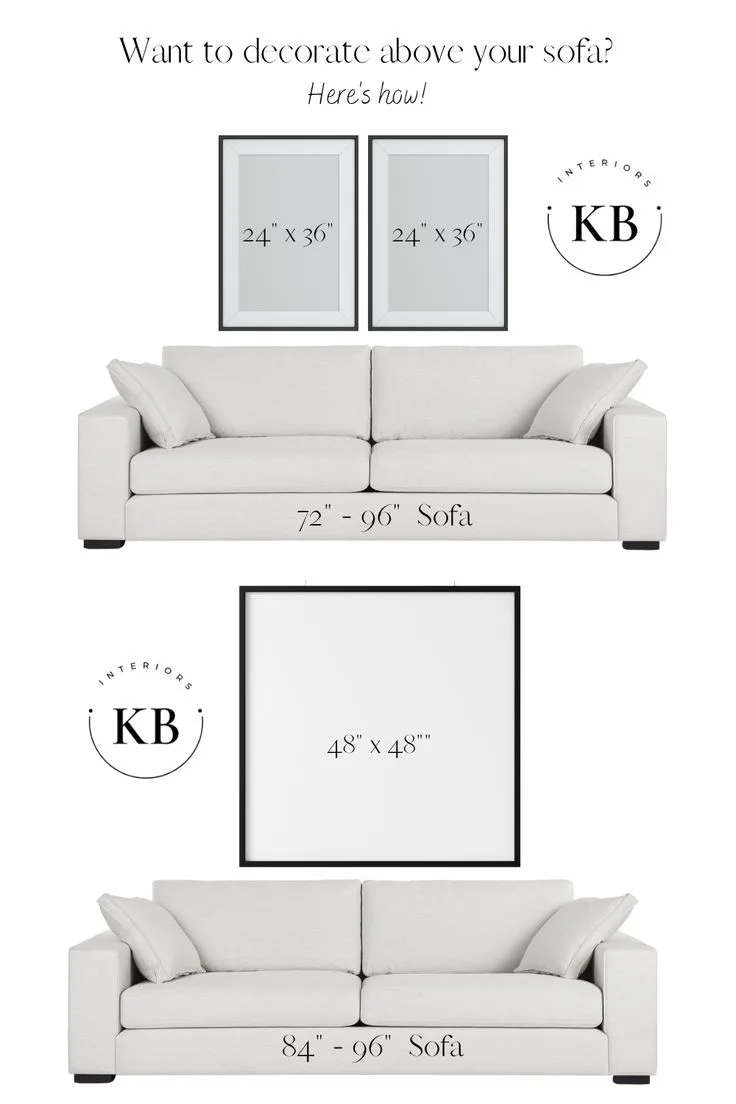
Image source: Bing (Web (fair-use with source credit))
Nine-foot ceilings let you push to the upper end. Standard 8-foot ceilings keep you low, close to the sofa. Otherwise the quilt fights the ceiling.
Width Ratios That Actually Look Right
The quilt should be 2/3 to 3/4 the sofa width. Same width looks like wallpaper. Half width looks lost.
The middle zone is where it works.
| Sofa Width | Ideal Quilt Width | Notes |
|---|---|---|
| 60 inches | 40 to 50 inches | Loveseats and smaller sofas |
| 72 inches | 50 to 60 inches | Standard sofa sweet spot |
| 84 inches | 60 to 72 inches | Full-size quilts work well |
| 96 inches and up | 72 to 84 inches plus | Consider two smaller quilts |
Reading Your Quilt: Condition, Age, and Weight Cues
Weight drives every hardware decision. A 3-pound crib quilt and a 9-pound wool quilt need completely different mounting.
Weigh your quilt on a bathroom scale if you can. Fold it neatly, step on the scale with it, subtract your weight. That number tells you what anchors you need.
Cottons run 3 to 6 pounds. Wools run 7 to 10. Silk quilts are light but fragile.
Weight distribution matters more than total weight.
Signs It Should Be Stored, Not Hung
A quilt with more than 10% surface loss shouldn't hang. Nor should one that's been repaired with modern synthetic thread, which ages differently than the original.
Fabric, Dye, and Stitching Red Flags
Silk quilts from the 1880s to 1920s are the riskiest category. Silk shattering is irreversible and accelerated by hanging stress.
Wool quilts invite moths. If yours has ever had an infestation, hang it only after professional treatment and regular inspection.
Wall Types and Hardware That Won't Wreck Your Quilt
Wall type decides your anchor, and your anchor decides whether the quilt stays up or lands on the sofa.
Drywall holds a heavy quilt only if you hit studs or use toggle bolts. Plastic anchors rated for 5 to 10 pounds are not enough for a 6-pound quilt with a rod and bracket load added.
Plaster walls in older homes are brittle. Use a masonry bit, go slow, and prefer a French cleat over individual brackets. The cleat spreads load across a longer span.
Brick and stone need a hammer drill and masonry anchors. No shortcuts here.
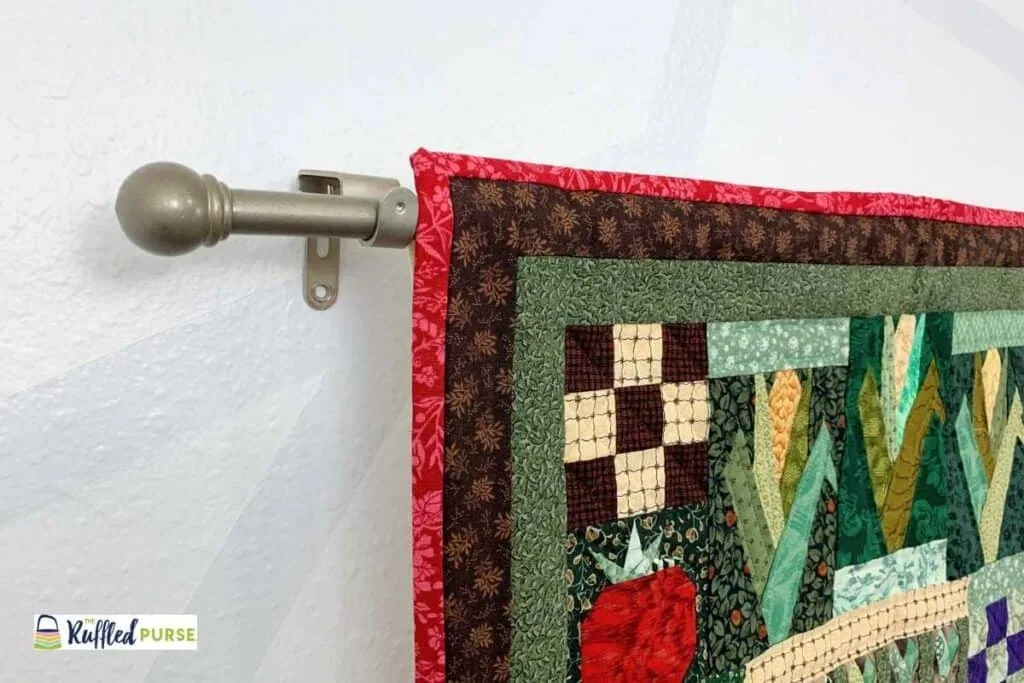
Image source: Bing (Web (fair-use with source credit))
Drywall, Plaster, Brick, and Paneling Breakdown
French cleats outperform single brackets on every wall type except solid masonry, where they're roughly equal. For renters, cleats patch cleanly with a little spackle.
Sleeve, Rod, and Mounting Combinations Compared
The sleeve-and-rod method is the preservation standard. Clips pinch. Staples tear.
Pins rust. None of them belong near an antique textile.
The Step-by-Step Hanging Method (Preservation-Safe)
Here's the process that conservators actually recommend. It's reversible, gentle, and takes about 90 minutes start to finish.
- Sew a hanging sleeve. A 4-inch-wide cotton strip, hand-stitched along the top back edge. Leave a half-inch ease so the sleeve doesn't pull the quilt tight.
- Choose a smooth rod. Wood or metal, 1 to 1.5 inches in diameter. Sand any rough spots. Pad the ends with batting.
- Mark bracket positions. Center on the quilt's width. Level with a real level, not your eye.
- Mount the brackets. Into studs if possible. Toggle bolts if not.
- Slide the rod through the sleeve. Even distribution, no bunching.
- Set the rod on the brackets. Check for gaps. The quilt should hang freely with air behind it.
- Step back and check proportions. Bottom clearance, width ratio, and center line.
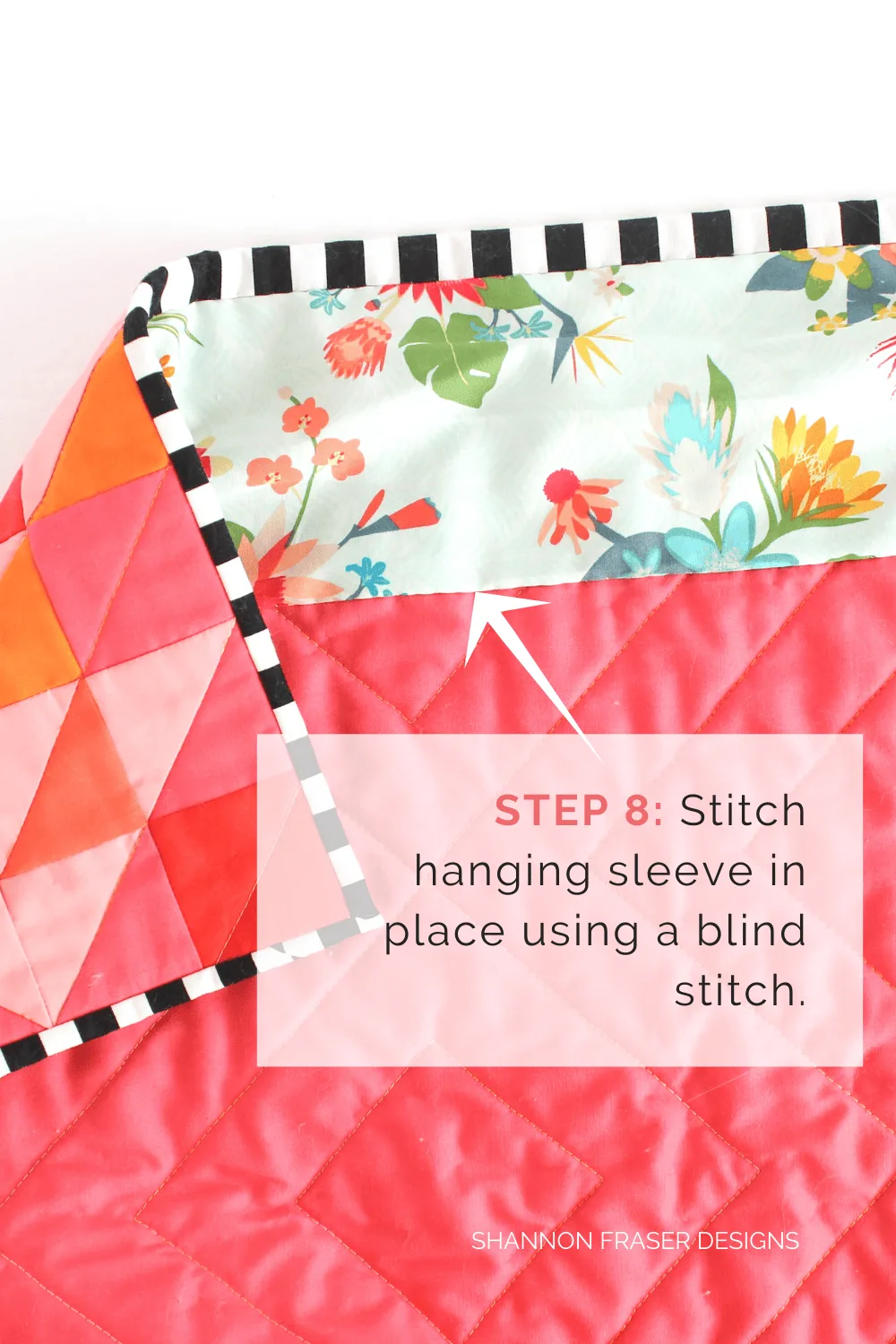
Image source: Bing (Web (fair-use with source credit))
Sewing the Hanging Sleeve
The sleeve is the secret to every safe quilt display. It distributes weight across the entire top edge instead of concentrating it at clip points.
Mounting the Rod and Brackets
Brackets need to be level within 1/8 inch. A tilted rod distorts the quilt's top edge over time.
Airflow, Clearance, and Rotation
Leave a finger-width gap between quilt back and wall. Trapped moisture breeds mildew. Rotate the quilt every six months to spread gravity stress.
What Ruins Antique Quilts on Walls: Sun, Heat, and Humidity
Fading is the damage people notice first. It's also the one that can't be undone, which makes it the most important to prevent.
Per Smithsonian Museum Conservation Institute (MCI) textile guidance, ultraviolet light breaks down cellulose fibers and destroys dye molecules at the molecular level. Reds fade first, then greens, then blues and browns last. A quilt in direct sun can lose noticeable color in a single season.
You don't need a sun-drenched room for this to happen. Indirect daylight still carries UV. It just takes longer to show.
- Direct sun: Real risk. Use UV-filtering window film or sheer curtains.
- Indirect light: Slow damage, but still damage. Rotate more often.
- Fluorescent bulbs: Emit some UV. Swap to LED if the quilt sits close.
- LED bulbs: Minimal UV. This is your safest artificial light.
Heat and humidity compound the problem. A quilt hanging over a radiator dries out and cracks. One over a kitchen doorway soaks up grease and cooking moisture.
Fireplaces are the worst combo: heat, soot, and carbon deposits all at once. Keep any antique quilt at least 6 feet from an active hearth.
UV Fade, HVAC Blast, and Fireplace Proximity
If your only sofa wall sits under a vent, angle the diffuser away from the quilt. Trapped air doesn't damage the fabric directly. It just speeds up drying and dust buildup.
Climate and Home Layout Adjustments
Coastal homes deal with salt air and high humidity. Mid-century utility quilts handle this better than 1800s cotton. Desert homes run dry, which is friendlier to cotton but brutal on wool.
In humid climates, leave a full inch of airflow behind the quilt. A tight wall gap traps moisture and invites mildew.
Hanging vs. Framing vs. Racks: Which Display Method Fits Your Quilt
Sleeve and rod wins for most antique quilts above a sofa. It's reversible, even, and easy to rotate. Framing beats it only for small fragile pieces or museum-grade preservation.
Here's your decision in one line: if the quilt is stable, hang it. If it's fragile, frame it. If it's casual, rack it.
Framing traps moisture behind glass unless you use spacers and acid-free matting. It's also expensive, running $200 to $800 for a custom setup. And you can't rotate what's sealed behind glass.
Quilt rack display is fine for sturdy utility quilts. It's casual, dust-exposed, and never goes above a sofa.
| Method | Best For | Pros | Cons |
|---|---|---|---|
| Sleeve + rod | Most antique quilts | Reversible, rotates easily, proper weight distribution | Visible hardware |
| Framed behind glass | Small or very fragile pieces | Full dust protection, museum look | Traps moisture, costly, no rotation |
| Quilt hanger clamp | Sturdy utility quilts | No sewing required | Pressure points stress binding |
| Quilt rack | Casual display | Zero wall damage | Dust exposure, not for above sofa |
Side-by-Side Comparison
For everyday display over a sofa, the sleeve-and-rod method is the clear recommendation. Framing is the preservation-first fallback for pieces worth more than $1,000.
Best Method for Each Quilt Type and Room
Amish quilts, Depression-era utility quilts, and 1930s feed sack quilts are sturdy enough for hanging. Silk quilts, pre-1850 pieces, and anything with shattering fabric belong behind glass or in storage.
FAQs: Sun Exposure, Weight Limits, Renters, and Rotation
Can I hang an antique quilt in a sunny room?
Yes, but only with UV-filtering window film or sheer curtains. Direct sun fades antique dyes permanently. Rotate the quilt every 3 to 6 months so no single panel takes the hit.
What's the weight limit for a drywall anchor?
A standard plastic anchor holds 5 to 10 pounds if everything is perfect. That's not enough for a 6-pound wool quilt plus rod and bracket load. Use toggle bolts or hit a stud instead.
How do I hang a quilt above a sofa if I rent?
Use a French cleat mounted into studs. It spreads the load, holds heavy quilts, and patches cleanly with a little spackle on move-out.
How often should I rotate a hanging quilt?
Every 6 months is the practical standard. Heavy wool quilts benefit from quarterly rotation. Rotation spreads gravity stress and evens out any light exposure.
Can I machine-wash an antique quilt before hanging it?
No. Hand-washing or dry cleaning an antique quilt without knowing its dye and fiber stability can destroy it. Consult a textile conservator if it needs cleaning at all.
Final Verdict: A Decision Guide for Hanging Your Antique Quilt
Here's the whole decision in one flow.
If the quilt passes the condition checklist, hang it with a sleeve and rod. If it fails any check, store it flat in acid-free tissue.
If the wall is drywall, use toggle bolts or studs. If it's plaster, go slow with a masonry bit. If it's brick, break out the hammer drill.
If the room gets direct sun, add UV film or move the quilt elsewhere. If it sits near a vent or fireplace, relocate it or fit a diffuser.
Measure 6 to 10 inches above the sofa back. Match 2/3 to 3/4 of the sofa width. Leave airflow behind the quilt.
Rotate twice a year.
Do that, and the quilt stays beautiful for decades. Skip a step, and you'll watch a piece of history fade or tear on your wall. The difference is twenty minutes of prep and a few dollars of cotton fabric.

Similar Posts