Hunter Green Front Porch Ideas for a Bold Curb Appeal
You've nailed a hunter green front porch's biggest problem before you've even opened a paint can: the color looks nothing like the swatch once it's on a shaded door at dusk. Hunter green is a deep, cool-leaning forest green that sits between black and emerald on the color wheel, and it's one of the trickiest exterior shades to get right. Undertones, lighting, trim contrast, and hardware finish all pull it in different directions.
Choose well and it reads timeless and expensive. Miss the details and it goes flat, muddy, or almost black.
The numbers matter here. Hunter greens typically land between 5 and 12 on the Light Reflectance Value (LRV) scale, which measures how much light a color bounces back. Compare that to a typical white trim at 80 to 90 LRV, and you can see why a green door swallows light instead of reflecting it.
That single spec explains almost every hunter green porch complaint we've seen in aggregate reviews and manufacturer color data. So let's walk through what actually works, starting with how the color behaves on a real porch.
hunter green front porch ideas
Hunter green front porch ideas center on pairing deep forest green with white or cream trim, warm wood accents, and brass or oiled bronze hardware. Use it on the front door for the safest high-impact look, or extend it to shutters and siding for a bolder statement. Warm porch lighting around 2700K to 3000K keeps the green rich instead of muddy.
What Hunter Green Actually Looks Like on a Porch (And Why Photos Lie)
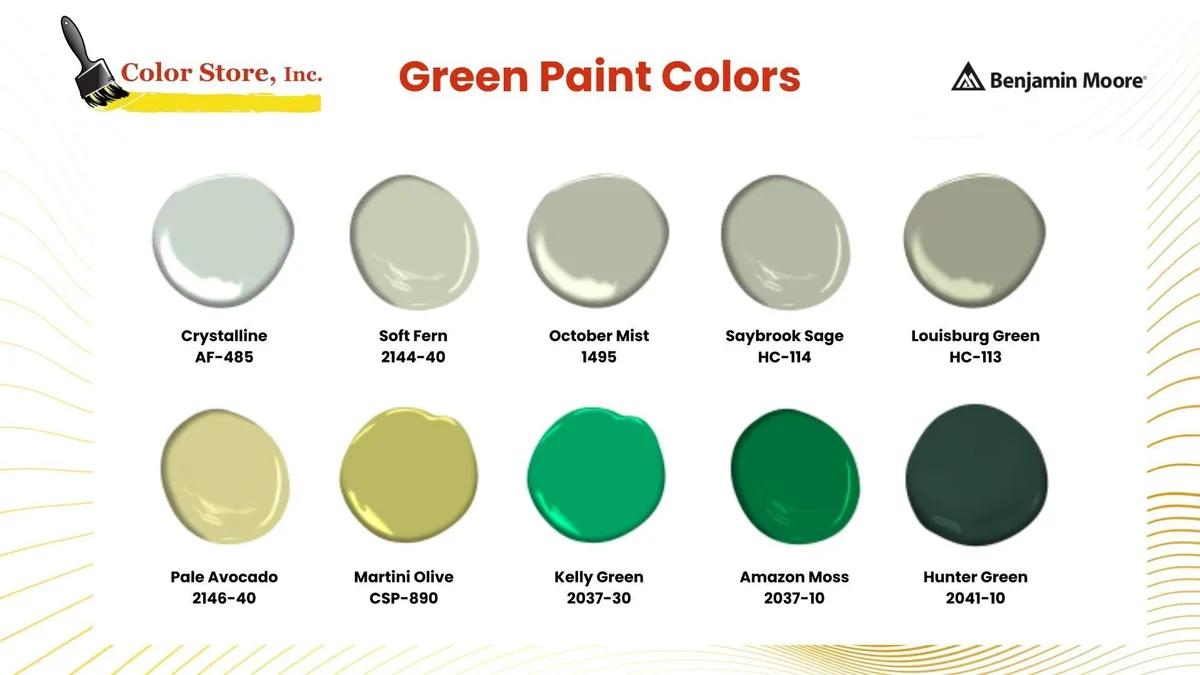
Image source: Bing (Web (fair-use with source credit))
Your phone camera lies about hunter green. So does Pinterest. The same door photographed at noon in direct sun can look lush and emerald, then read as near-black on a north-facing porch by late afternoon.
It's not a rendering trick. It's how the color physically behaves.
The Undertone Question Nobody Warns You About
Hunter green splits into two camps, and it decides everything. Yellow-based greens have a warmer, olive-tinged cast. Blue-based greens lean cool and gray.
Manufacturer specification sheets usually call this out in the formula notes, and it's the single biggest reason two "hunter green" doors look nothing alike.
Under warm porch lighting, a yellow-based green can shift olive or even khaki. Under cool daylight, a blue-based green can go gray and flat. If your porch faces north, that cool cast gets amplified all day.
If it faces south, warm light pushes yellow-based greens toward a mossy tone that's actually quite handsome.
Here's the simple rule: match the undertone to your lighting. If your porch gets warm afternoon sun, a blue-based green stays balanced. If it's shaded and cool, a slightly yellow-based green holds its depth better.
How Porch Orientation Changes the Color
Aggregate homeowner reports and paint manufacturer guidance both point the same way. The physical direction your porch faces does more to the final color than the swatch ever will.
- North-facing porch: hunter green reads darker and cooler. Bump up trim contrast and add porch lighting to compensate.
- South-facing porch: warm sun pulls the green warmer. Blue-based greens look richest here.
- East-facing porch: harsh morning light, softer afternoons. Test at both times.
- West-facing porch: intense late-day sun. Dark greens can chalk faster, so pick a UV-stable exterior formula.
Sheen, Shadow, and the Three Things That Decide Everything
Three variables control how hunter green lands: undertone, lighting temperature, and sheen. Get all three right and the color looks curated. Miss one and it looks like a mistake.
Shadow is the sneaky one. A covered porch drops the effective light hitting your door by half or more. That's why a green that looked perfect in the paint store looks black on the porch.
Testing on the actual surface, not a swatch card, is non-negotiable.
Per EPA guidance on exterior coatings, surface prep and product selection both affect how a finish performs long-term. That applies to color stability too. A cheap green fades toward chalky within a couple of years.
A quality exterior acrylic holds its depth for five to ten.
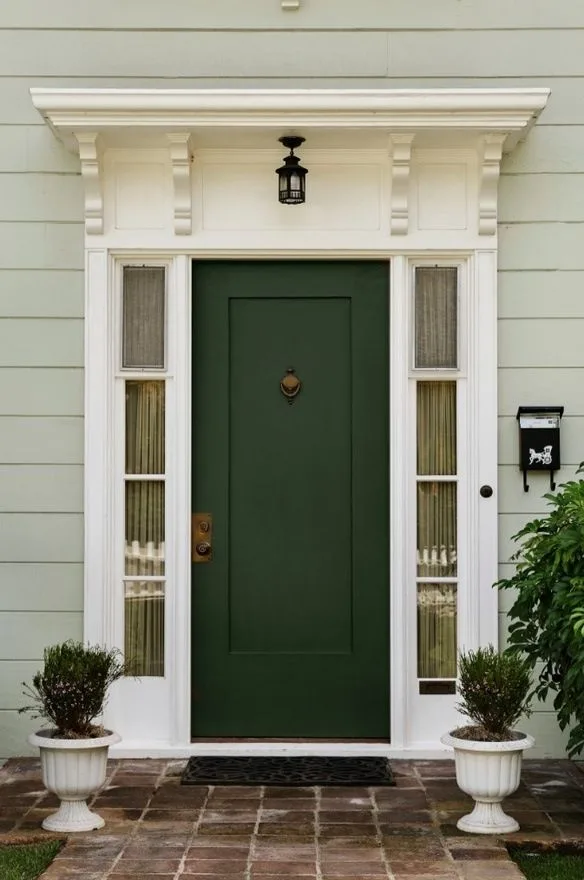
Image source: Bing (Web (fair-use with source credit))
Color Pairings That Work: Door, Trim, Siding, and Roof
Hunter green rarely works alone. It's a supporting color that makes its neighbors look better, which means the trim and siding you pair with it matter as much as the green itself.
Hunter Green + White vs Cream vs Warm Wood Trim
White trim gives you the sharpest contrast. Think classic Colonial or farmhouse: a deep green door, crisp white casing, and black or brass hardware. It's clean and high-impact.
Cream or off-white trim softens the whole scheme. It reads a touch older and warmer, and it plays nicely with brick and beige siding. The trade-off is lower contrast, so the green feels calmer and less dramatic.
Warm wood trim, whether stained oak, cedar, or teak, is the move for Craftsman and Tudor homes. Natural wood grain next to deep green is a genuinely rich combination, and it hides the green's cool edge.
| Trim Choice | Best For | Contrast Level | Mood |
|---|---|---|---|
| Bright white | Colonial, farmhouse | High | Crisp, classic |
| Cream or off-white | Brick, beige siding | Medium | Warm, traditional |
| Warm stained wood | Craftsman, Tudor | Low | Rich, earthy |
| Matte black | Modern farmhouse | High | Bold, graphic |
Reading Your Roof and Siding Before You Pick a Green
Your roof is a huge fixed element, so it sets the tone. Charcoal and architectural shingles are neutral and let hunter green shine. Brown shingles push the green toward olive, which can work, but it needs the right siding.
Brick siding is a gift for hunter green. Red brick and deep green are a time-tested pairing, especially with cream trim and brass hardware.
Yellow or beige siding is the trap. A yellow-toned green against yellow siding goes muddy fast. Here's the fix: shift to a blue-based hunter green so the two don't blend into each other.
If your siding is gray or blue-gray, any hunter green works, because cool tones reinforce each other.
Hardware Finishes and the Mood Each One Sets
- Aged brass and antique gold: warm and classic. Best against cool greens and white trim.
- Oiled bronze: earthy and traditional. Pairs with wood trim and Craftsman homes.
- Matte black: sharp and modern. High contrast, great with white siding.
- Polished nickel: cool and reflective. Speaks louder on a shaded porch.
If you're choosing just one, oiled bronze is the safest hunter green partner for traditional homes. Brass is the upgrade if you want the door to feel like a statement.
Where to Use Hunter Green on a Porch
The big question isn't which green. It's how much of it. Hunter green is powerful, and the amount you use changes the entire personality of your entry.
Front Door Only: The Safe, High-Impact Move
A hunter green front door is the single best starting point. It's low risk, low cost, and it makes the entry feel intentional without repainting anything else. If you're testing the color on your home, this is where to test it.
You get a focal point, you keep the rest of the palette neutral, and you can swap the door color later if you change your mind. That flexibility is why this is the most common hunter green front porch idea in aggregate homeowner data.
Door Plus Shutters: How Much Green Is Too Much?
If you add shutters in the same green, the color repeats and starts to dominate. That can look fantastic on a traditional home with white siding, where the green plays against a clean neutral.
It goes wrong when you add green shutters, green siding, and a green door all at once. The porch turns into a solid wall of green with nowhere for the eye to rest. The fix is simple: if the door and shutters are green, keep the siding white, cream, or light gray.
If you want shutters but not more green, try natural wood or black shutters against the green door. The contrast does the work without cramming the color.
Siding, Columns, and Bold Choices
Painting full siding hunter green is a committed choice. It works best on smaller homes where the dark color feels cozy rather than heavy. On a large facade, dark green siding can feel like a cave, especially on a shaded street.
White or cream trim becomes mandatory here to break it up.
Porch columns and railings in hunter green are underrated. They tie the door into the rest of the porch and create a pulled-together look. Just keep the ceiling and flooring lighter so the space doesn't close in.
A Quick Decision Guide by Home Style
- Colonial: green door, white trim, black or brass hardware, optional black shutters.
- Craftsman: green door, warm wood trim, oiled bronze hardware, natural wood columns.
- Farmhouse: green door, white siding, matte black hardware, wood porch swing.
- Tudor: green door, warm wood accents, aged brass hardware, stone entry.
- Historic district: verify the palette first, since many districts have approved color lists.
Porch Flooring, Ceilings, and Furniture in a Hunter Green Scheme
Once the door and trim are set, the floor, ceiling, and furniture decide whether the porch feels finished or half-done. Hunter green is a strong anchor, so everything below and above it needs to pull its weight.
Painted Deck Boards vs Natural Wood vs Bluestone
Natural wood flooring, whether stained cedar or a warm brown deck stain, is the easiest partner for hunter green. Wood adds warmth and keeps the green from feeling cold. It's the default for a reason.
Painted deck boards work if you go light: soft gray, cream, or whitewash. Avoid painting the floor dark, because a dark door over a dark floor makes the whole porch feel low.
Bluestone and natural stone bring a cool, formal feel. They suit a blue-based hunter green best, and they're practical in wet climates because they don't rot or need staining.
Haint Blue vs White vs Hunter Green Porch Ceilings
The porch ceiling is where traditions collide. Haint blue, a soft blue-green long used on Southern porches, is a natural companion for hunter green because the two share a cool undertone.
White ceilings keep things bright and simple. They reflect light back down onto your green door, which helps on a shaded porch.
A hunter green ceiling is a bold move. Do it only when the floor and walls are light, or the porch turns into a dark box. Most homeowners are happier keeping the ceiling light and letting the door carry the green.
Furniture and Cushions That Support the Green
Stick to warm neutrals for furniture: natural wood, cream, tan, or weathered gray. Cushions in muted greens, terracotta, or soft navy echo the porch without fighting the door.
Avoid bright primary colors next to hunter green. Hot reds and oranges clash hard with a cool green. If you want a pop, use mustard, rust, or blush, which sit at a friendlier distance on the color wheel.
Styling: Lighting, Plants, Hardware, and Seasonal Décor
Styling is where a hunter green porch goes from "nice door" to "I want that." The green is your backdrop. The styling decides the mood.
Porch Lighting That Flatters Deep Green
Lighting temperature is the make-or-break detail. Bulbs around 2700K to 3000K render greens warmly and keep them from going muddy or gray. Cooler bulbs at 4000K and above wash the green out and make it look clinical.
Lantern-style sconces in oiled bronze or aged brass are the classic pick. Place them on both sides of the door at roughly eye level for even light. A pendant or hanging fixture over a porch swing softens the space and adds warmth at night.
Plants and Greenery That Echo Rather Than Compete
Ferns, boxwood, and trailing ivy all share hunter green's family, so they reinforce the color instead of fighting it. Keep planters neutral: terracotta, aged stone, or black.
Flowers are where you get to play. White blooms, soft pink, and yellow work beautifully against deep green. Skip bright orange and hot pink, which clash with the cool base.
Wreaths and Seasonal Décor Without the Clash
For fall, lean on pumpkins in muted orange and cream, plus dried grasses in tan and rust. Skip the neon orange inflatables.
For winter, evergreens, pinecones, magnolia leaves, and red berries are a natural fit against hunter green. A simple fresh wreath with a plaid or velvet ribbon does more than a cluttered display.
House Numbers, Kickplates, and Knockers
These small details are where a porch feels considered. Match the finish across all of them, so a brass knocker pairs with a brass kickplate and brass house numbers. Consistency reads as intentional.
Aging brass develops a patina over time that suits a traditional green door. If you prefer a sharp look, matte black stays crisp and needs no upkeep.
Now, one word of caution before you buy paint. A neighbor's "perfect hunter green" will not look the same on your porch unless your lighting, siding, and roof match theirs. Deal with the light first.
Then match the green.

Similar Posts