Small Pet Station Organization: Tidy Setup Guide
You've got hay in the hallway. The water bottle's dripping into fresh bedding. And every scoop of pellets means moving three things out of the way first.
Small pet station organization is really about solving those three problems at once: mess, access, and safety.
Per the RSPCA, rabbits need an enclosure at least 3m x 2m x 1m, and guinea pig setups follow similar welfare-floor-space rules. That means station organization isn't a luxury for big cages. It's how you keep a properly sized cage actually functional.
small pet station organization
Small pet station organization means arranging hay, water, food, litter, storage, and cords into fixed zones that keep the cage clean, safe, and easy to reset daily. A good station groups high-mess items near the cleanup point. It keeps cords out of chew range.
And it fits under or beside your actual cage footprint.
Start With the Space: Zone Planning Before You Buy a Single Bin
Measure first. Buy second. It sounds obvious, but it's the step most people skip.
Bins bought before measuring end up too tall for under-cage clearance, and carts bought without a tape measure block the cage door.
Start with three numbers: cage footprint, wall clearance on each side, and height from floor to cage bottom. Standard under-cage clearance on most Midwest and C&C setups sits between 4 and 6 inches. That rules out most deep storage bins.
Measure it properly before you shop.
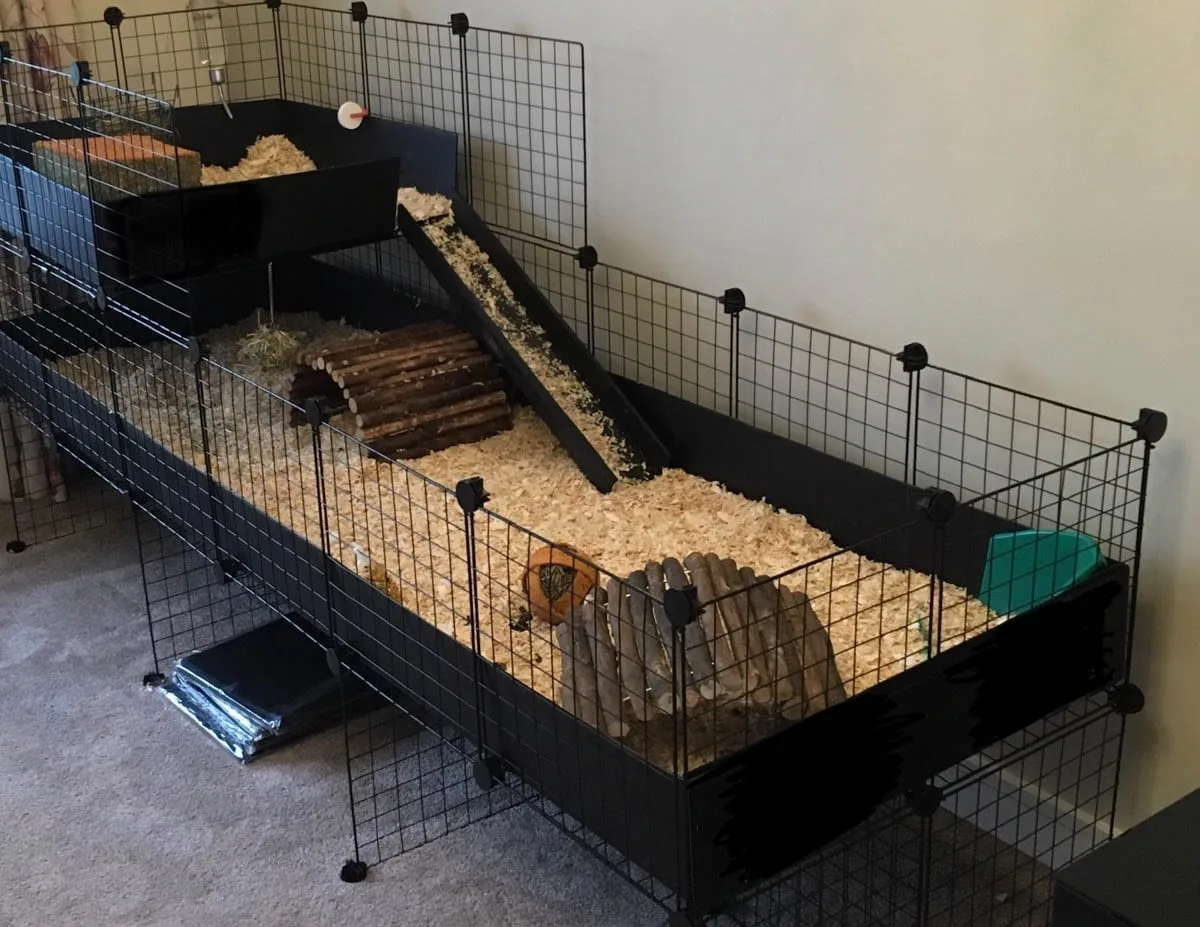
Image source: Bing (Web (fair-use with source credit))
The Six Zones Every Small Pet Station Needs
A working station has six zones. Hay, water, litter, food, play, and sleep. They don't need equal space, but they each need a fixed spot.
When a zone drifts, that's when the cage starts feeling chaotic.
Where you put each zone depends on your species and setup. If your pet is a rabbit who free-roams, the hay zone goes where the litter box lives. If you've got a hamster in a tank, the wheel zone replaces the play zone entirely.
The core rule: place the messiest zones closest to where you clean. Hay and litter should never be buried behind hides or under shelves.
How to Measure Your Cage Footprint and Wall Clearance
Get a tape measure and note these four things:
- Cage length, width, and height in inches
- Floor-to-cage-bottom clearance
- Distance from cage sides to the nearest wall
- Nearest outlet location and distance from the cage
Write those numbers on your phone. Every storage decision you make for the next hour should run through them.
If your clearance is under 5 inches, plan for slim rolling carts or wall-mounted systems. If you've got 8 inches or more, standard storage bins will fit.
The Core Setup: Hay, Water, Litter, and Food Zones
These four zones do 90 percent of the daily work. Get them right and the station runs itself.
Hay Zone: Rack Placement That Stops the Mess
Hay is the messiest part of any small pet station. A rack mounted outside the cage, with the opening facing in, drops hay inside instead of across the floor. Racks placed inside the cage tend to spread hay through bedding and onto your carpet.
For guinea pigs, hay belongs at floor level. They eat hay while standing in it, and a rack mounted too high leads to neck strain and dropped hay. For rabbits, a wall-mounted rack at nose height works well.
Refill hay daily. Rabbits and guinea pigs need unlimited hay, and stale hay loses the smell and texture they actually want. Manufacturer guidance from Oxbow and Small Pet Select both recommend daily hay refreshes for optimum intake.
Water Zone: Bottle vs. Bowl and Where It Belongs
Water bottles win for most setups because they don't spill bedding into the water source. Bowls are fine for rabbits and ferrets who drink heavily, but they need to be weighted or mounted to prevent tipping.
Mount bottles at a height where your pet can reach without stretching. For guinea pigs, that's usually 4 to 6 inches from the cage floor. For rabbits, 6 to 8 inches.
Check the nozzle daily for drips.
A leaking bottle soaks bedding and creates a bacteria-friendly spot fast. Some people wipe the nozzle tip every morning. That little habit stretches bedding swaps by a day or two.
Litter Zone: Low-Entry Pans, High Sides, and Corner Placement
Corner placement is standard for a reason. Most small pets back into corners naturally, so a corner litter box catches more than a pan sitting in the open.
For guinea pigs, use a low-entry pan with a shallow front. They often nap in litter boxes, and a high-walled pan turns into a bed. For rabbits, a high-sided corner box with a hay rack above works best, because they eat and toilet in the same spot.
Clean litter daily. Spot-scooping takes under a minute and stops odor before it starts.
Food Zone: Airtight Storage and Daily-Access Bowls
Pellets go stale. Once you open a bag, the fats in pellets start oxidizing within about 6 to 8 weeks. An airtight bin preserves freshness and keeps pests out.
Keep the pellet bin near the cage, not across the room. You want refills to take seconds, not a walk to the kitchen. A heavy ceramic bowl stays put.
Plastic bowls get flipped.
Measure portions with a scoop. Most small pet pellets come with feeding guidelines on the bag. A 1/4-cup scoop works for guinea pigs, and rabbits typically get 1/4 cup per 5 pounds of body weight.
Under-Cage Storage, Carts, and Cord Management
Under-cage storage is where most small pet station organization succeeds or fails. Get this zone right and daily cleaning stops requiring a physical warm-up.
What Actually Fits Under a Standard Cage
If you've got 4 to 6 inches of clearance, your options are slim. Flat bins, shallow rolling carts, or slide-out trays work. Stackable bins do not.
With 8 inches or more, you can run two-tier systems. A top drawer for daily items, a bottom bin for bulk bedding.
Bins vs. Rolling Carts vs. Wall-Mounted Systems
Here's the honest comparison:
| System | Best for | Watch out for |
|---|---|---|
| Stackable bins | 8+ inch clearance | Hard to pull out when full |
| Rolling carts | Daily-access items, tight spaces | Wheels clog with hay |
| Wall-mounted | Small rooms, no floor space | Needs landlord approval |
| Under-cage drawers | Clean look, built-in units | Limits what fits inside |
If you rent and can't drill, rolling carts win. If you own and have wall space, wall-mounted pegboard frees up the floor entirely.
Pet-Safe Cord Routing for Rabbits, Rats, and Ferrets
Cords near any small pet cage are a real hazard. Rabbits, rats, and ferrets chew cables relentlessly. A chewed cord means electrocution risk for the animal and a fire risk for your home.
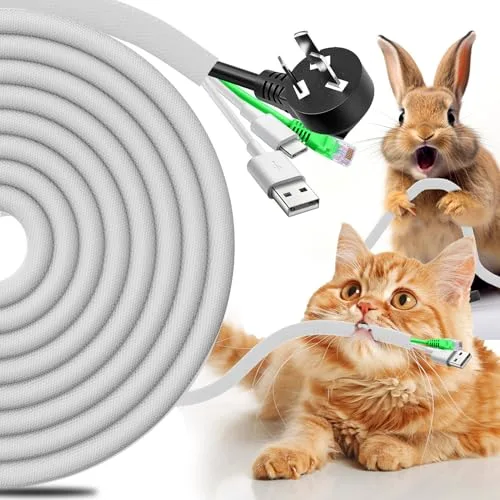
Image source: Bing (Web (fair-use with source credit))
Run cords through rigid cord channels, not soft sleeves. Soft sleeves slow chewing, they don't stop it. Rigid PVC raceway is the only reliable barrier.
If you can't route cords out of reach, unplug them when you're not using them.
Species-by-Species Layout Adjustments
The general zones stay the same. The placement changes by species. Here's how.
Guinea Pigs: Floor-Level Hay and Fleece Liner Stations
Guinea pigs eat hay where they stand. Floor-level hay racks or a pile in the litter box both work. Fleece liners need a washable bin nearby, because you'll swap them every 3 to 5 days.
Rabbits: Free-Roam Stations and Chew-Proofing
Free-roam rabbits need their station on the floor, not in the cage. Hay, litter, water, and pellets all get placed in one corner of their territory. Every cord in that room needs rigid protection.
Hamsters, Gerbils, and Mice: Small-Footprint Stacked Setups
For tank setups, everything lives on top. A lid-mounted shelf holds food, water, and a small bin of bedding. The station footprint stays under 2 square feet.
Rats and Ferrets: Vertical Cages and Multi-Level Stations
Vertical cages need a station per level. A bin on the top shelf for daily items, a deeper bin under the cage for bedding and cleaning supplies. Rats will drag anything loose into their hide, so anchor bins with clips.
Daily, Weekly, and Monthly Reset Routines
A station only works if the routine sticks. These three cycles cover everything.
The 5-Minute Daily Reset
Five minutes, every morning:
- Spot-clean the litter zone
- Top off hay
- Check water level and nozzle
- Remove fresh food scraps
- Straighten the cart or bins
That's it. Five minutes prevents the 45-minute weekend deep clean.
Weekly Deep Clean Without Dismantling the Station
You don't need to rebuild the station to deep clean it. Work in place.
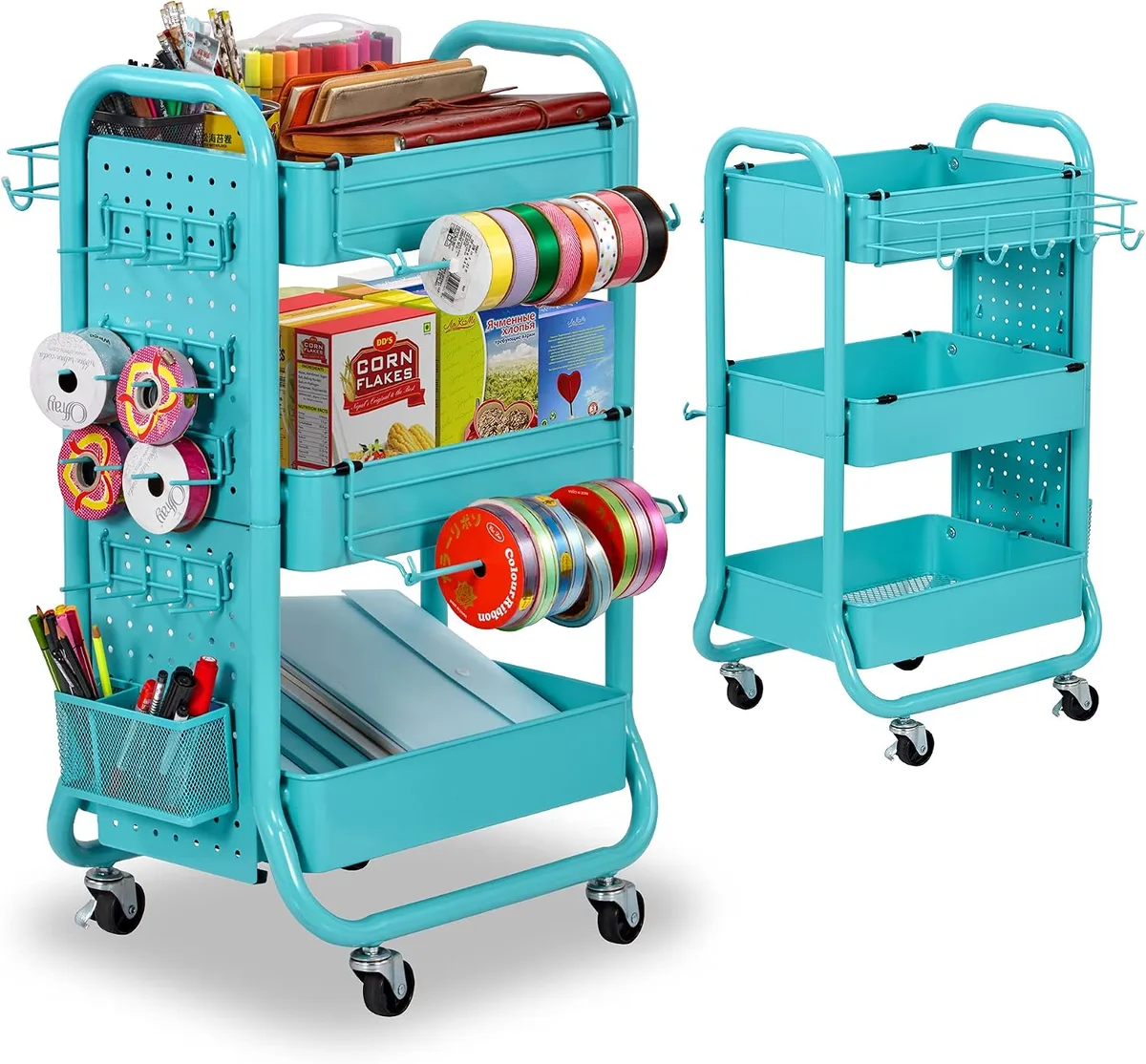
Image source: Bing (Web (fair-use with source credit))
Pull bedding, wipe the base, swap fleece or liner, scrub the water bottle, and wipe the cart top. Rotate any chews or hides that are worn. The station itself stays put.
Monthly Checks: Chews, Hides, Food Dates, and Cord Wear
Once a month, do a slower pass:
- Replace worn chews
- Inspect cord channels for bite marks
- Check pellet bin date
- Confirm hay is still dry and fresh-smelling
- Tighten any anchor clips or zip ties
If you find bite marks on a cord channel, replace it. Don't tape over it.
Mistakes That Wreck a Good Station (And How to Fix Them)
The problems are predictable. Once you know the pattern, you can head them off before they start.
Hay Spills, Leaking Bottles, and Buried Litter Boxes
Hay spills trace back to rack placement every time. A rack inside the cage drops hay into bedding. A rack outside the cage, opening facing in, drops hay where you can sweep it.
If you're still sweeping the room daily, move the rack.
Leaking bottles usually come down to three things: a worn O-ring, a loose cap, or a nozzle that's been chewed. Check the O-ring first. It's a two-dollar fix that solves most drips.
Chewed nozzles need replacement, not adjustment.
Buried litter boxes happen when hides or shelves land in front of them. If your pet has stopped using the box, look at the access path first. Rabbits and guinea pigs want a clear route in and out.
Move the hide six inches and the problem often disappears.
Bedding Choices That Trigger Respiratory Issues
Cedar shavings are a hard no. The aromatic oils irritate the respiratory tract, and the ASPCA flags them as unsuitable for small pets. Pine must be kiln-dried, never fresh.
Fresh pine carries the same oil problem.
Paper bedding and fleece liners are the safest defaults. Hemp and aspen are solid middle-ground options with lower dust than softwood shavings. If your pet sneezes or has crusty eyes after a bedding change, the bedding is the first suspect.
Dust matters as much as the material. A dusty paper bedding still triggers issues. Shake a handful over a sink.
If you see a cloud, look for a lower-dust brand.
Outlet Overload and Cord Chewing
Count your plugs. A heating pad, a lamp, a small fan, and a water bottle warmer on one strip is asking for trouble. Small pet stations don't usually need more than one outlet, and that outlet should feed a single surge protector.
Cord chewing is the bigger risk. Rigid PVC raceway stops it. Soft sleeves don't.
Route every cord either through rigid channel or out of reach. If your rabbit has already chewed one cord, assume they'll chew the next one.
Costs, Safety, and What to Skip
You can build a working station for well under $100, or spend $300 on a pre-built setup. Knowing what actually matters saves both money and mistakes.
Realistic Setup Budgets: DIY vs. Retail
Here's the honest spread:
| Setup type | Typical cost | What you get |
|---|---|---|
| DIY basics | $40 to $70 | Shallow bins, cord channel, airtight pellet bin |
| Mid-range retail | $100 to $180 | Rolling cart, wall pegboard, washable liners |
| Full pre-built station | $200 to $300+ | Under-cage drawers, integrated storage, matching bins |
The DIY route wins on cost and fit. Retail wins on looks and setup time. Most setups land somewhere in the middle, and that's fine.
Cage Sizing Standards You Shouldn't Ignore
Station organization doesn't fix an undersized cage. Per RSPCA guidance, rabbits need a main enclosure of at least 3m x 2m x 1m with constant access to a run. Guinea pigs need a floor area of at least 120cm x 60cm for a single pig, more for pairs.
Hamsters need a minimum of 100cm x 50cm of unbroken floor space. Rats need vertical room, not just floor room. If your cage is under the minimum, no amount of clever storage fixes the welfare problem.
Upgrade the cage first.
Materials to Avoid (Cedar, Fresh Pine, Scented Sprays)
Avoid these outright:
- Cedar shavings and cedar bedding
- Fresh or non-kiln-dried pine
- Scented cage sprays and deodorizers
- Plug-in air fresheners and essential oil diffusers near the cage
- Scented laundry detergent on fleece liners
Rabbits and guinea pigs have sensitive respiratory systems. What smells fresh to you is an irritant to them. Use unscented, pet-safe cleaners instead.
A 50/50 mix of white vinegar and water handles most cage cleaning at a fraction of the cost.
Frequently Asked Questions
How often should I fully swap out bedding?
Full swaps depend on the bedding type. Loose paper or aspen bedding typically needs a full swap every 3 to 7 days. Fleece liners need washing every 3 to 5 days.
Spot-clean daily either way. If you can smell ammonia, you're already overdue.
Can I keep hay and food in the same bin?
No. Hay pulls moisture from the air, and pellets absorb that moisture in a shared bin. Keep hay in a breathable bag or rack, and pellets in an airtight container.
Two separate bins, two separate locations.
Is a water bottle or bowl better for guinea pigs?
A weighted bowl is often better for guinea pigs. They drink more from bowls than bottles, which supports urinary health. A bottle works fine too.
Just check the nozzle daily and scrub both weekly.
Where should I put the litter box in a rabbit setup?
Corner placement is standard. Push it into the corner your rabbit already toilets in. Add a hay rack directly above it.
Rabbits eat and toilet in the same spot, so pairing the two works with their instincts, not against them.
Do I need a surge protector near the cage?
Only if you're running powered equipment like a heating pad or lamp. If you are, use one surge protector, not multiple strips. Keep it off the floor and away from bedding.
Bedding plus a spark is a fire risk.
How do I stop my rabbit from chewing the cart cords?
Rigid PVC raceway is the only reliable fix. Soft sleeves slow chewing but don't stop it. If you can't route cords through rigid channel, unplug them when they're not in use.
Tape is never a solution. Rabbits chew through tape in minutes.

Similar Posts