Coastal Grandmother Pantry: The Ultimate Guide
The coastal grandmother inspired pantry is really just a pantry that looks like it belongs in a bright, breezy summer house. You're going for cream ceramics, weathered wood, woven baskets, and a whisper of soft blue. No anchors, no rope, no starfish.
That's the whole game.
The look traces back to the 2022 TikTok trend built around Nancy Meyers films and Diane Keaton's character in Something's Gotta Give. As of 2026, it's still one of the most searched kitchen aesthetics. Pantry staples keep best between 50°F and 70°F per USDA Food Safety and Inspection Service guidance.
That matters, because a pretty pantry that spoils your flour isn't a win.
coastal grandmother inspired pantry
A coastal grandmother inspired pantry is a light, airy storage space styled with cream ceramics, weathered wood, woven baskets, glass jars, and soft blue accents. It reads as collected over time rather than bought as a set. The look stays functional, not themed.
Real food, real linens, real texture, no nautical props.
What "Coastal Grandmother" Actually Means for a Pantry (And What It Doesn't)
Coastal grandmother is a design language, not a color scheme. It borrows from New England and Hamptons summer homes, where things get inherited rather than purchased. The pantry version of that idea leans on restraint.
Fewer objects, better objects, spaced out so the eye can rest.
The easiest way to get it wrong is to overshoot. Coastal grandmother sits between two extremes, and both are traps.
Here's the quick version:
- Coastal grandmother is warm, muted, and textural.
- Nautical is literal: anchors, rope, navy stripes, starfish.
- Modern farmhouse is high contrast: galvanized metal, buffalo check, chalkboard labels.
- Coastal grandmother feels inherited. The other two feel decorated.
If your shelf looks like a themed Airbnb, you've drifted. If it looks like your grandmother's kitchen after she cleaned out a drawer and left only what she loved, you're close.
Where It Comes From
The aesthetic blew up on TikTok in 2022. It referenced Nancy Meyers films, especially Something's Gotta Give and It's Complicated. Those kitchens were never cluttered.
They were bright, lived-in, and full of objects with history.
That's the entire brief. Bright, lived-in, historic.
The Test
Look at your shelf and ask one question: could this have been collected slowly over twenty years at estate sales? If yes, you're on track. If it looks like a single Target run, back up and mix in vintage.
The Visual Cues That Make or Break the Look
Everything here is about how the space reads to the eye. The palette, the texture mix, and the light all do the heavy lifting. Get those three right and almost anything looks good on the shelf.
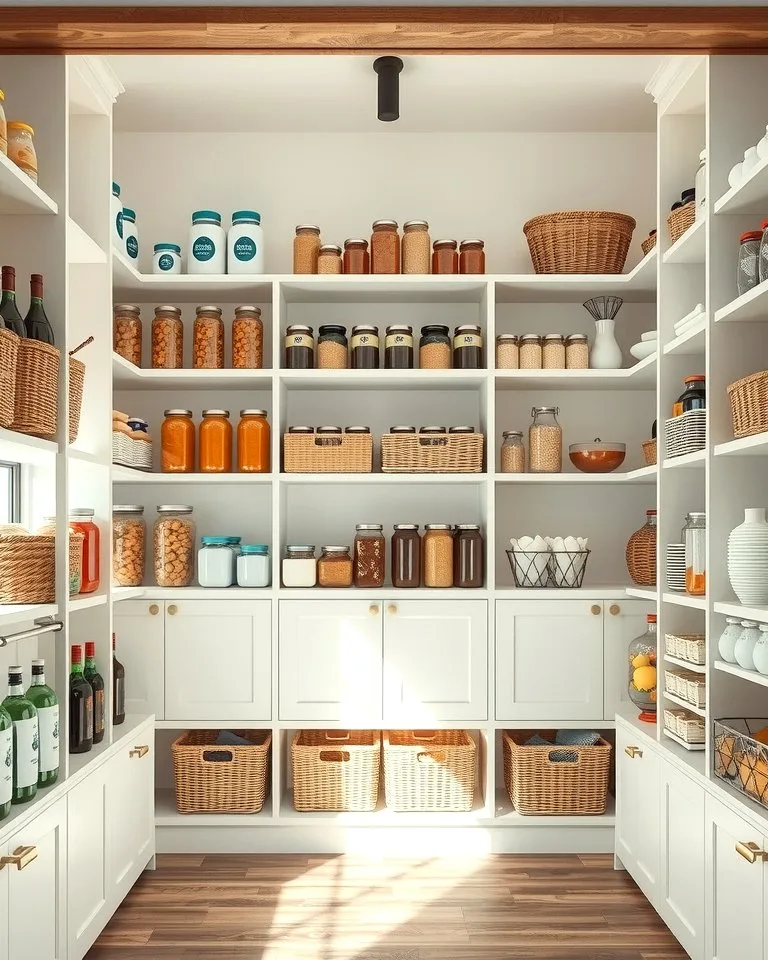
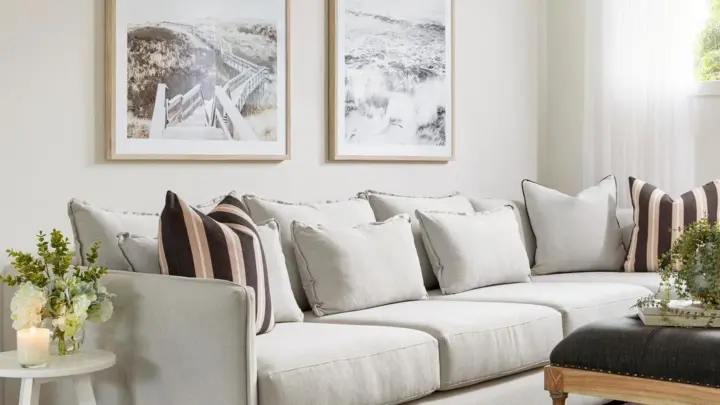
Image source: Bing (Web (fair-use with source credit))
The Color Palette: Cream, Sand, and a Whisper of Blue
Cream and off-white carry the whole look. Sand, oatmeal, and muted sage sit next to them. Blue only shows up in small doses, usually sea glass, faded transferware, or a linen stripe.
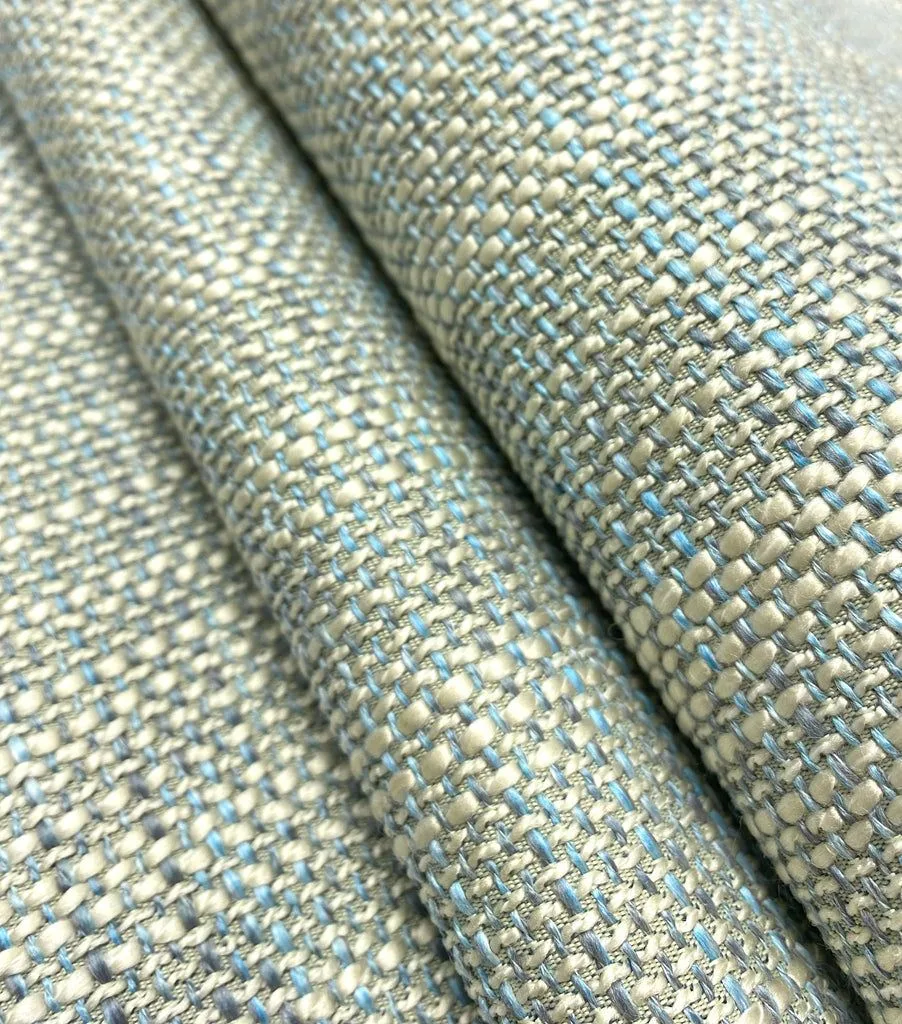
Image source: Bing (Web (fair-use with source credit))
Designers keep referencing Benjamin Moore White Dove, Farrow & Ball Skimming Stone, and Sherwin-Williams Sea Salt. Any of those three reads correctly against natural wood. Pick two neutrals and one accent.
That's it.
If your palette runs past three colors, the space starts looking themed instead of calm.
The Texture Stack: Linen, Rattan, Weathered Wood, Matte Ceramic
This is the part people miss. Coastal grandmother is a texture look as much as a color look. You want four materials working together:
- Weathered or whitewashed wood for shelving and boards
- Woven baskets in seagrass, rattan, or jute
- Matte ceramic and cream stoneware
- Real linen for liners, labels, and bread bags
One glossy surface is fine. A whole shelf of gloss kills the vibe. Matte reads as aged, and aged reads as inherited.
The Light Factor: Why Bright and Diffused Beats Moody and Dark
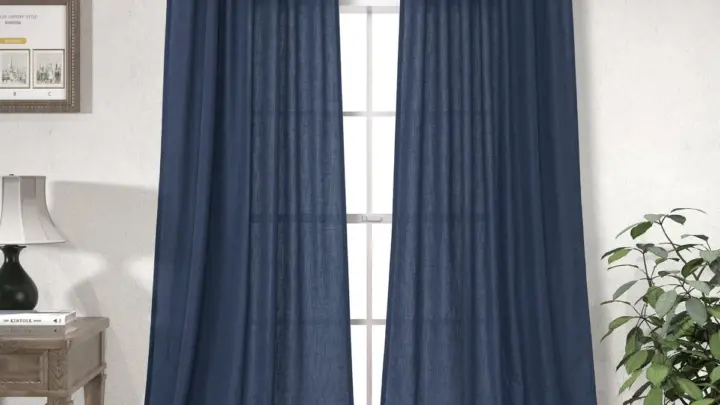
Coastal grandmother needs bright, diffused light. Filtered through gauzy curtains is ideal. Manufacturer specs for warm-white LED lighting typically land between 2700K and 3000K, and that range flatters cream palettes without yellowing them.
Moody, dark shelving with a single spotlight is the opposite look. If you're stuck with a dark pantry, add a warm-white strip light under the top shelf and call it done.
What Goes on the Shelves: Containers, Staples, and Hero Pieces
Container choice is where most people spend too much money in the wrong direction. Matching jar sets are tempting, and they're also the fastest way to make the space look catalog-bought. Mix your containers the same way you'd mix your furniture.

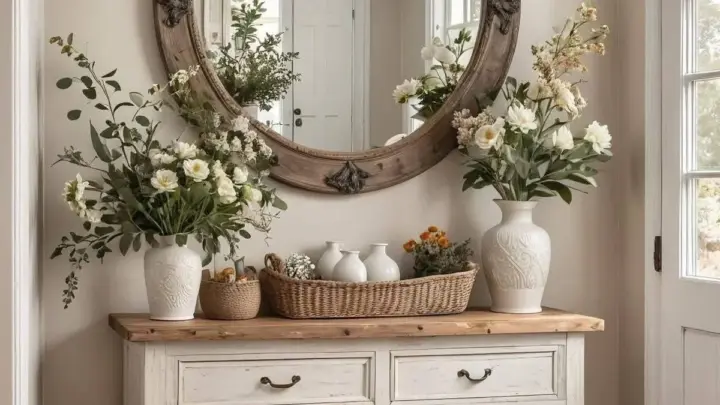
Image source: Bing (Web (fair-use with source credit))
Glass Jars, Ceramic Crocks, and Linen Bags (What to Decant and What to Leave Alone)
Decant the things you use often and the things that look good out of the box. Leave the rest alone.
| Item | Container | Why |
|---|---|---|
| Flour, grains, nuts | Airtight glass jar | Seals out weevils and pantry moths |
| Olive oil, vinegar | Amber glass bottle | Protects from light |
| Bread, pastries | Linen bread bag | Breathes, stays fresh 2–3 days |
| Tea, dried herbs | Small glass jar | Easy to see quantity |
| Utensils, wooden spoons | Ceramic crock | Functional and styled |
The rule is simple. If the packaging is ugly, decant it. If it's beautiful and seals well, leave it.
The Staples That Earn Their Spot: Oils, Tins, Tea, and Good Salt
The pantry should look stocked with things you actually cook with. Good olive oil. Tinned fish.
Crackers. Tea. Flaky salt like Maldon.
A jar of honey.
Nothing here is random. Every item reads as intentional, and every item gets used.
The One or Two Hero Pieces That Anchor the Whole Shelf
Hero pieces are the vintage items that make the shelf feel personal. A tarnished silver tray. A blue-and-white transferware platter.
An enamelware pitcher. A weathered olive wood board.
Pick one or two. Not five. Hero pieces work because they stand out against a calm background.
If you're using vintage transferware, enamelware, or pottery for actual food, test for lead first. The CDC and EPA both publish guidance on lead in older household items, and vintage glazes are a known risk.
Styling the Shelves Step by Step
Styling is the part that takes an afternoon and gets photographed for the next five years. Do it in order and you'll avoid the two most common mistakes: buying before measuring, and filling every inch.
Measure First, Buy Second: Sizing Shelves and Containers Before You Spend a Dime
Pantry shelving is usually 12 to 16 inches deep. Shelf spacing runs 12 to 15 inches for canisters and 8 to 10 inches for jars.
Measure everything before you buy anything. Bring a tape measure to the store. A 20-inch basket will not fit on a 16-inch shelf, and you will find this out the hard way.
Standard glass jar capacities cluster around 16 oz, 32 oz, and 64 oz. Common canister diameters run 4, 5, and 6 inches. Stick to two sizes per category and the shelf stays visually consistent.
The Layer Order: Tall at Back, Small at Front, Breathing Room Everywhere
Here's the sequence:
- Tallest items at the back of the shelf.
- Medium items in the middle.
- Small items and hero pieces at the front.
- Leave 20 to 30 percent of each shelf empty.
That last step is the one people skip. Negative space is what makes the look work. A full shelf reads as storage.
A half-full shelf reads as style.
Group by category, not by color. Baking together, oils together, tea together. It looks tidier and it works better day to day.
Labeling Without Killing the Vibe: Handwritten Tags, Linen Ties, Kraft Paper
Labels should look like they were added by a person, not a printer. Handwritten kraft paper tags. Linen ribbon ties.
Small chalk labels on jars. No vinyl cutouts in a script font.
The label does one job: tell you what's in the jar. Keep it short.
Styling a Rental Pantry Without Losing Your Deposit
Renters have a real advantage here. Baskets, liners, and jars are all reversible. Nothing has to be drilled, painted, or mounted.
Image source: Bing (Web (fair-use with source credit))
Use tension rods for hanging items. Freestanding shelf inserts for extra layers. Peel-and-stick shelf liner in a linen texture under everything.
When you move out, it all comes with you.
If you want to paint or mount anything, check your lease first. Landlord approval beats a security deposit fight every time.
Common Visual Mistakes That Make It Read Wrong
Most bad coastal grandmother pantries aren't badly decorated. They're decorated one notch too far. Here are the shifts that break the look.
When Coastal Grandmother Drifts Into Nautical
Nautical is coastal grandmother with the volume turned up. Anchors, rope-wrapped lamps, navy-and-white stripes, and giant starfish all push you straight into theme-park territory.
The fix is subtraction. Take out the literal ocean props and add a muted, faded element instead. Sea glass, a chipped transferware plate, or a single stem of dried eucalyptus will pull you back.
When It Drifts Into Modern Farmhouse
Farmhouse and coastal grandmother share a love of rustic texture, but they split on contrast. Farmhouse runs on dark metal, high contrast, and printed labels in a bold font.
If your shelf has galvanized buckets and buffalo check, you're not in coastal grandmother. Swap the metal for woven baskets. Swap the check for solid linen.
Swap the printed labels for handwritten ones.
Over-Matching, Over-Filling, and Other Ways to Kill the "Inherited Over Time" Feel
Three specific moves flatten the look fast:
- Buying a matching set of fourteen jars and using all of them
- Filling every shelf to the edge
- Buying all vintage-looking reproductions at once
Mix eras, mix sizes, mix materials. Leave gaps. Skip a jar size on purpose.
The imperfection is the point.
For pest prevention, seal anything flour- or grain-based in airtight glass. Bay leaves in open jars help as a deterrent, though USDA guidance puts the real emphasis on sealed containers and regular rotation.
What This Look Costs and How Long It Takes
Budget depends on how much you're sourcing vintage versus buying new. A thrift-forward refresh can land under $150. A full build-out with new shelving, lighting, and a full container set runs past $2,000.
Timeline is the easier part. A styling refresh takes one weekend. A full renovation with new shelving and lighting runs two to four weeks.
| Scope | Cost Range | Timeline |
|---|---|---|
| Styling refresh (existing shelves) | $150–$500 | 1 weekend |
| Container and basket upgrade | $300–$900 | 1 weekend |
| New shelving and lighting | $800–$2,000 | 1–2 weeks |
| Full renovation with cabinetry | $2,000+ | 2–4 weeks |
The biggest cost lever is containers. Glass jars and ceramic canisters bought new as a set are the single most expensive line item. Estate sales, HomeGoods, and Etsy fill the same shelf for a third of the price.
Vintage pieces often cost more in coastal and vacation markets. Nantucket, the Hamptons, and Cape Cod estate sales price their linens and transferware higher than inland markets do.
If you're on a tight budget, spend on the shelving finish first. A whitewashed shelf makes cheap baskets look expensive. Cheap shelving makes expensive baskets look cheap.
Keeping It Alive: Maintenance, Pest Control, and Seasonal Rotation
A styled pantry dies in about six weeks without maintenance. Here's the short version that actually works.
- Weekly: wipe shelves, put items back in their group
- Monthly: check jar seals, rotate older staples to the front
- Seasonal: swap dried citrus for fresh herbs, light linens for warm woods
- Annually: full empty, clean, and re-style
Pest control is where most people slip. Pantry moths and weevils get into linen bags and loose flour fast. The USDA Food Safety and Inspection Service recommends airtight containers for anything grain-based, and that's the rule that actually matters.
Bay leaves in open jars help as a deterrent. They don't replace sealed glass. Seal first, then add the bay leaf for good measure.
Humidity is the other slow killer. Coastal climates push indoor humidity past 60 percent, and that's when rattan mildews and wood warps. If you live within a few miles of the water, use a small dehumidifier in the pantry and check woven baskets monthly.
Temperature matters too. Fifty to seventy degrees Fahrenheit is the sweet spot for shelf-stable food. Anything above that shortens shelf life fast.
Rotation is easy if you follow first-in, first-out. New jar goes behind, old jar comes forward. Write the date on the lid in pencil if you want to be sure.
Coastal Grandmother Pantry FAQs
What exactly is a coastal grandmother pantry?
A coastal grandmother pantry is a bright, airy storage space styled with cream ceramics, weathered wood, woven baskets, glass jars, and soft blue accents. It reads as collected over time, not bought as a set. The look avoids literal nautical props and high-contrast farmhouse styling.
Do I need to paint my pantry to get the look?
No. Paint is helpful but not required. Baskets, liners, glass jars, and linen labels do most of the work, and all of them are reversible.
If your pantry is dark, add a warm-white LED strip under the top shelf instead. That single change lifts a cream palette enormously.
How do I stop the pantry looking like a themed Airbnb?
Subtract. Remove anchors, rope, navy stripes, and starfish. Drop your palette to two neutrals and one accent.
Leave 20 to 30 percent of each shelf empty. Mix vintage with new instead of buying a matching set. The imperfection is what makes it read as inherited.
What's the best container for flour and grains?
Airtight glass. Flour, oats, rice, and nuts all attract weevils and pantry moths, and linen bags don't seal. Glass jars with rubber gaskets or clamp lids work best.
The USDA Food Safety and Inspection Service recommends airtight storage for all grain-based staples, especially in humid climates.
How often should I restyle a coastal grandmother pantry?
Restyle seasonally, so four times a year. Summer brings fresh herbs, citrus, and light linens. Winter swaps in dried citrus, warm woods, and heavier crocks.
Monthly maintenance is just checking seals and rotating older staples to the front. A full empty and clean once a year keeps pests out.
Can I do this in a rental?
Yes, and rentals are actually easier. Baskets, liners, and jars are all removable. Use tension rods for hanging items and freestanding shelf inserts for extra layers.
Peel-and-stick linen-textured liner protects the shelf and comes off clean. Check your lease before drilling, painting, or mounting anything.
The Verdict: Who This Pantry Is Really For
This look works best for anyone who wants a pantry that's functional and photogenic at the same time. It suits coastal and vacation homes, bright kitchens, and anyone who already collects vintage pieces without knowing what to do with them.
It's a poor fit if you want maximum storage density. Coastal grandmother trades shelf space for breathing room by design. If you're feeding a family of six out of a four-foot pantry, this isn't the style for you.
The good news is that it's one of the cheapest aesthetics to pull off well. Thrifted baskets, secondhand jars, and one or two inherited pieces carry the whole look. You don't need a renovation.
You need restraint.
Start with the palette. Add texture second. Leave gaps on purpose.
That's the whole recipe.

Similar Posts