Arched Mirror Over Console: Styling Ideas That Work
If you've stared at a bare wall above a console table wondering whether an arched mirror over console setup will actually look right, you're not alone. The pairing shows up everywhere in design magazines and Pinterest boards, but most guides skip the hard part: the proportions. Get those wrong and the mirror looks small, floaty, or crowded against the ceiling.
The truth is that the arched mirror and console pairing is a geometry problem before it's a decorating one. In our research, we found that the most common proportion rule working today is a mirror width around two-thirds to three-quarters of the console width, per professional interior styling conventions. That single ratio does more heavy lifting than any frame finish or lamp choice.
Which is exactly why we're breaking it down the way a designer would: measurements first, decor second.
arched mirror over console
An arched mirror over console works best when its width is two-thirds to three-quarters of the console's width. The mirror's base should sit 6 to 10 inches above the console top. Leave at least 6 inches of wall space between the arch's highest point and your ceiling line.
Frame finish matters less than these three measurements.
Quick Answer: The Rule That Gets You 80% of the Way There
The rule is simple: mirror width equals roughly two-thirds to three-quarters of console width. That's it. That ratio does most of the visual work.
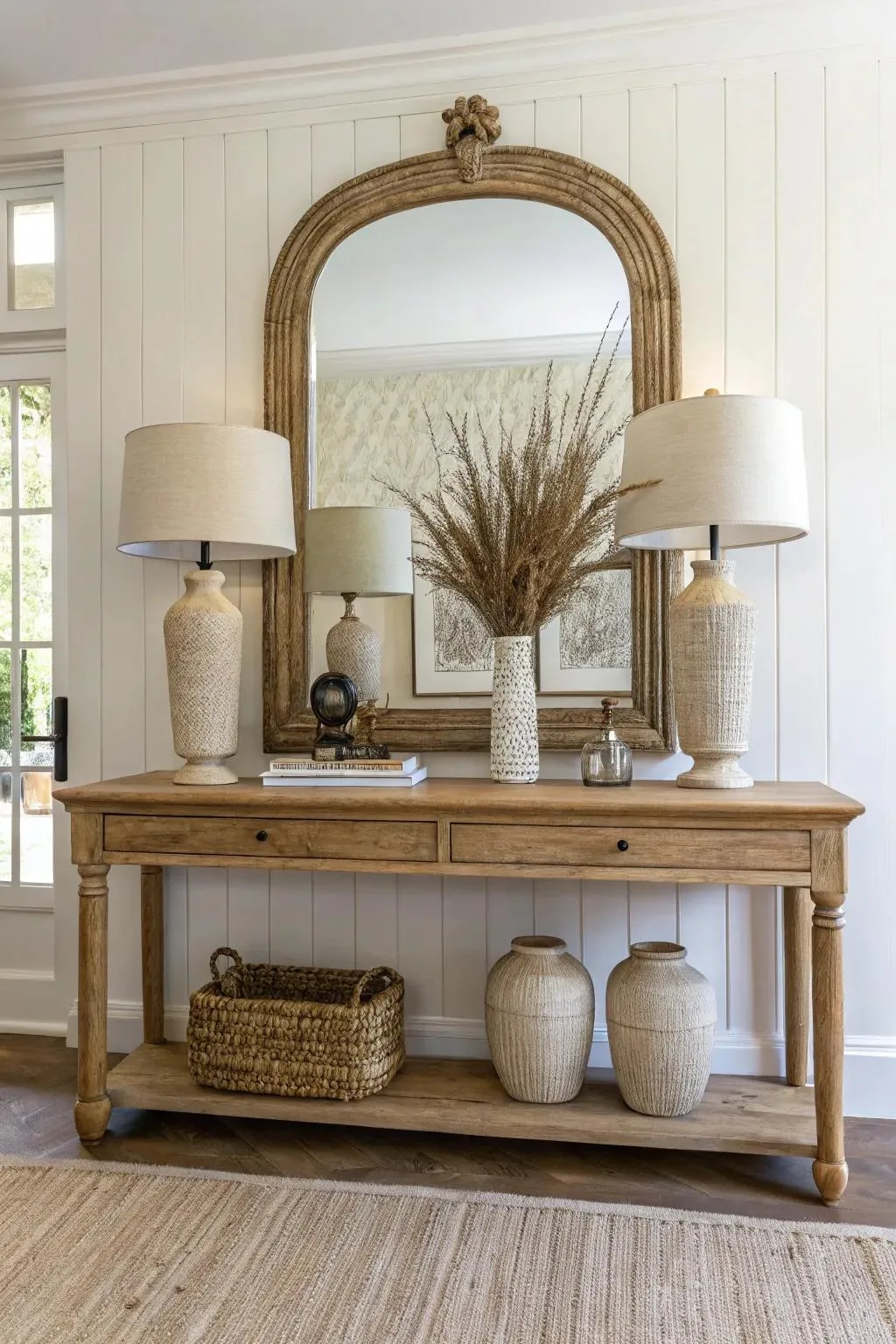
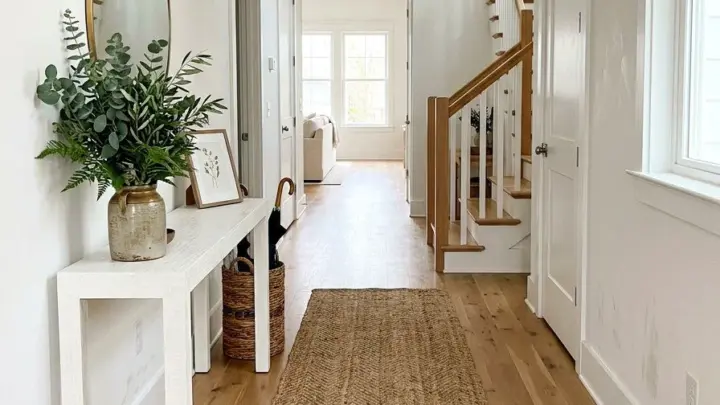
Image source: Bing (Web (fair-use with source credit))
Why does it work? Your eye reads the mirror and console as a single grouped shape. When the mirror takes up less than about 60% of the console width, it looks orphaned.
When it pushes past 75%, the pair starts to feel top-heavy.
Hanging height is the second piece. The mirror's bottom edge should float 6 to 10 inches above the console surface. That gap leaves room for a lamp, a stack of books, and a vase without the arch fighting the objects.
Third piece: ceiling clearance. Standard US ceiling height is 8 feet (2.44 m), and typical UK ceilings run 2.4 m. If your arch lands within 6 inches of the ceiling, the mirror crowds the room.
Either drop the mirror size or consider a leaning placement.
Get those three right and 80% of the visual work is done. Frame, finish, and styling are the last 20%.
Why This Pairing Is Really a Geometry Problem, Not a Decorating Problem
The arch is a curved shape sitting on a straight-lined console against a straight-lined wall. That's three competing geometries in one small area. When they're not resolved, the arch feels random.
When they are, the vignette snaps into place.
Designers resolve this with a simple principle: the arch should be the only curve in the frame. If you also have an arched doorway, a scalloped lamp shade, or a round mirror nearby, the eye has nowhere to land. Kill the competing curves, and the arch reads as intentional.
Manufacturer specs back up the size sensitivity here too. A 24-inch arched mirror weighs around 10 to 15 pounds. A 36-inch version can hit 30 pounds or more.
That's a big jump in visual weight, and it changes how the piece sits on the wall.
Think of the console as the "ground" of the composition. The mirror is the "sky." If the sky is too small, the ground dominates. If the sky swallows everything, the ground disappears.
The two-thirds rule keeps both in view.
The Four Measurements That Decide Everything
You only need a tape measure and five minutes. Write each number down before you buy anything.
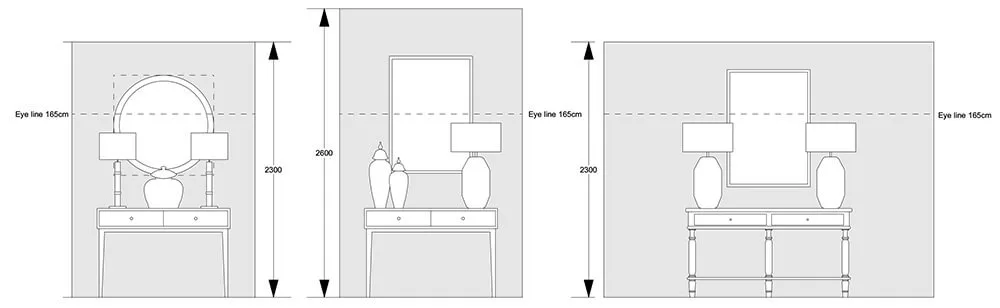
Image source: Bing (Web (fair-use with source credit))
Console Width and Mirror Width
Measure the console's full width, edge to edge. Then multiply by 0.66 and by 0.75. Those two numbers are your mirror width range.
Example: a 48-inch console gives you a target range of 32 to 36 inches. A 60-inch console gives you 40 to 45 inches. If a mirror sits outside that range, pass on it.
Console Height and Mirror Base
Standard console tables sit 30 to 34 inches high. Your mirror's bottom edge should land 6 to 10 inches above the console top, which puts the mirror base at roughly 36 to 44 inches off the floor.
That gap isn't arbitrary. It's where a lamp shade, a book stack, or a vase naturally sits without looking squeezed.
Ceiling Line and Arch Top Clearance
Measure from floor to ceiling. Subtract console height, the hanging gap, and the mirror's height. Whatever remains is your clearance.
You want 6 inches minimum. Twelve inches is comfortable. If your math gives you less than 6 inches, go smaller on the mirror or taller on nothing at all.
A crowded ceiling line makes the whole room feel lower.
Depth, Lamp Height, and What the Arch Is Actually Framing
Console depth is typically 14 to 18 inches. That matters less for the mirror than for what sits in front of it. A 20-inch lamp with a wide shade will block the arch's lower curve from most viewing angles.
Aim for lamp total height under 22 inches, or place the lamp off-center so the arch stays visible. And once the mirror is up, stand back and check what it reflects. Reflections of a cluttered wall, a TV, or an open doorway unsettle the whole vignette.
Move a plant, close the door, or angle the mirror a touch. It's the cheapest fix in the whole process.
What the Mirror Is Reflecting (And Why It Matters More Than the Frame)
Every mirror is a window you choose. What it reflects changes the room. What you see in it changes how the vignette feels.
Good reflections:
- A window with natural light bouncing back into the room
- A soft wall color or a piece of art
- A trailing plant that adds green and movement
- Warm light from a nearby lamp after dark
Bad reflections:
- The back of a TV or a blank wall
- A hallway that looks dark or cluttered
- Your own kitchen or laundry room through an opening
- A ceiling fan or overhead light directly opposite
If you can't change what's reflected, you can change the angle. Mirrors hung with a slight upward tilt catch the ceiling and skylight instead of the floor clutter. Just make sure the mounting hardware can handle a tilted hang, since the weight shifts forward.
Test this before you commit. Hold the mirror at the height you plan to hang it, at the angle you plan. Step back 6 to 8 feet.
Whatever you see is what you'll live with. That 30-second test saves a lot of drilling and patching.
Sizing and Style Pairings: Rectangular vs. Round vs. Arched, Wood vs. Metal vs. Frameless
An arched mirror earns its keep when the wall behind the console feels boxy. The curve softens the straight lines of the console, wall, and ceiling. A rectangular mirror keeps the boxiness intact, which reads cleaner in modern or minimalist rooms.
A round mirror works when the console is short and the wall above it is wide. But round mirrors top out fast. Once you cross 36 inches, round shapes start to feel like oversize plates.
Arches scale better.
Frame material changes the mood more than the shape does. Wood frames lean warm and organic. Metal frames feel crisp and contemporary.
Frameless (or thin-bezel) mirrors read as architectural, and they tend to work best over lighter, less busy consoles.
| Shape | Best For | Watch Out For |
|---|---|---|
| Arched | Boxy walls, traditional or organic styles | Competing arches elsewhere in the room |
| Rectangular | Modern and minimalist rooms | Reinforces straight lines, can feel flat |
| Round | Short consoles on wide walls | Gets awkward past 36 inches wide |
Who each option is best for: arched for transitional and traditional spaces. Rectangular for crisp modern interiors. Round for small entryways where a lighter shape suits the scale.
Hanging It Right: Studs, Toggle Bolts, and the Height Rule That Actually Works
Studs first. Drywall anchors second. Everything else is a risk.
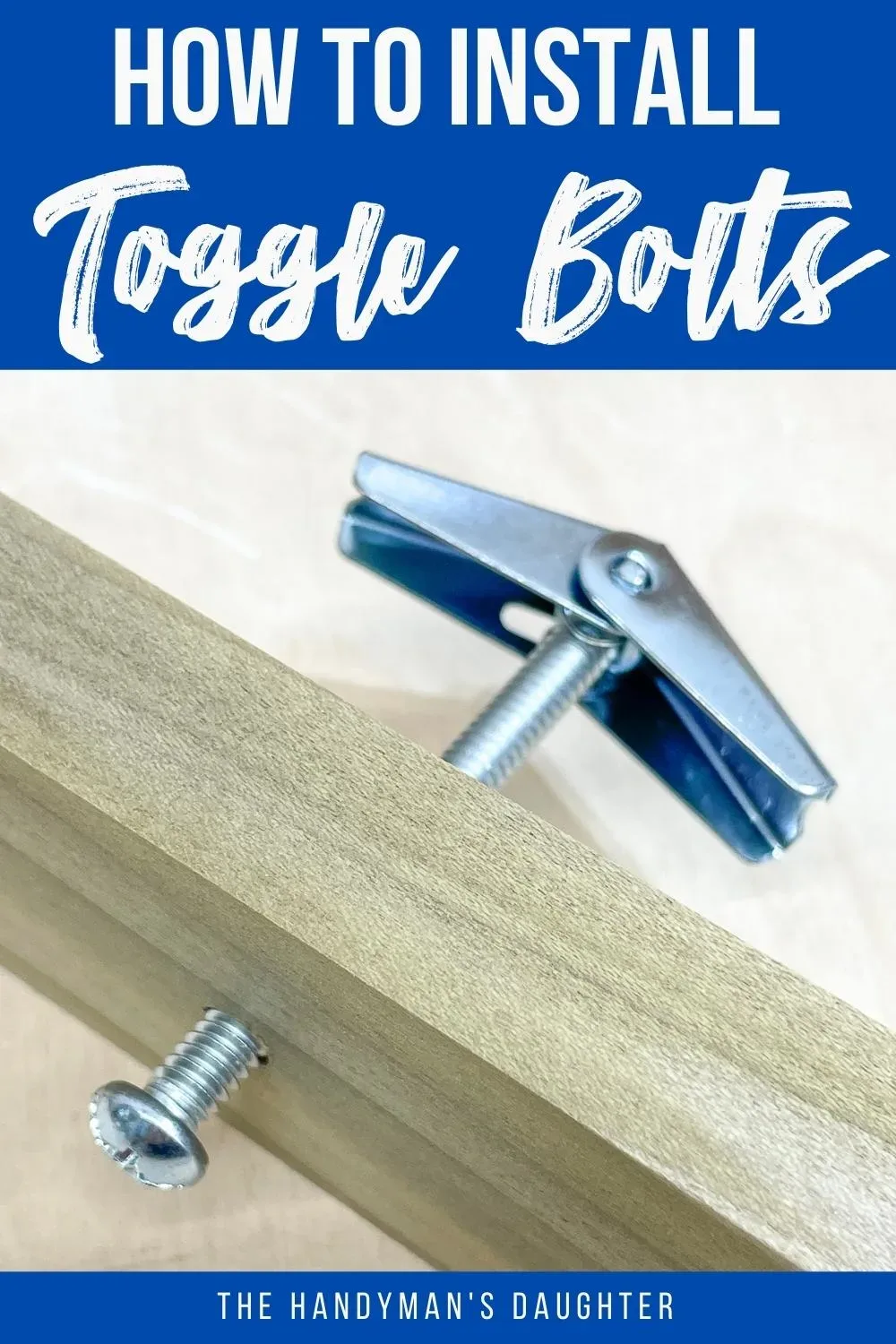
Image source: Bing (Web (fair-use with source credit))
Mirrors are heavier than they look. A 30-inch arched mirror typically weighs 20 to 30 pounds. Frameless glass versions can push 35 pounds or more.
Standard plastic drywall plugs won't hold that safely.
If you can hit two studs, use lag bolts rated for at least twice the mirror's weight. Toggle bolts are the next best option when studs aren't where you need them. Hillman and Simpson Strong-Tie rate 1/4-inch toggle bolts around 50 pounds in 1/2-inch drywall, which gives you margin for a mid-size mirror.
Heavy mirrors over 40 pounds should use a French cleat or Z-bar. Those spread the load across the wall instead of pulling on two points. The [U.S.
Consumer Product Safety Commission](https://www.cpsc.gov) publishes guidance on anchoring heavy wall décor to prevent tip-over and fall injuries, and it's worth a read before you drill.
For the height rule, aim for the mirror's center at 57 to 60 inches off the floor. That's standard eye level, and it matches how mirrors are hung in most professional installations. If your console top sits higher than 34 inches, drop the mirror a touch so the gap above the console stays in the 6-to-10-inch range.
Then check level twice. Unlevel hanging is the most obvious giveaway that a mirror was a weekend DIY job.
Styling the Console Without Blocking the Arch
The golden rule of styling under an arched mirror: vary heights, vary textures, keep the arch visible.
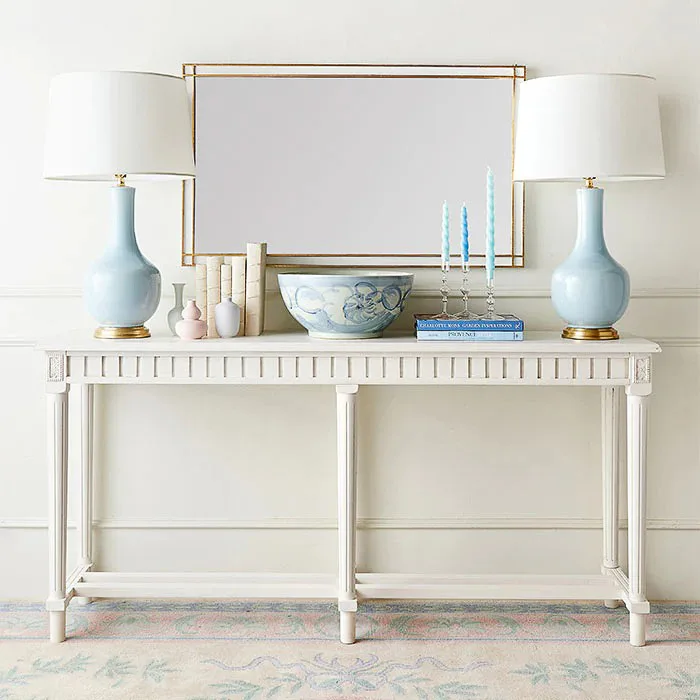
Image source: Bing (Web (fair-use with source credit))
A tried-and-true layout uses three zones. A tall item on one side (a table lamp or a tall vase). A mid-height object in the center or slightly offset (a stack of books, a bowl).
A low object on the other side (a small tray, a candle, a piece of greenery).
Odd numbers read better than even. Three or five objects feel styled. Two feels sparse.
Four feels accidental.
Lamps are the biggest arch-blocker. A standard table lamp with a wide drum shade will swallow the lower curve from most angles. Aim for shades no wider than 14 inches, or place the lamp off to one side rather than dead center.
Trays work harder than people give them credit for. A simple tray corrals small objects and keeps the surface from feeling scattered. Books under tall objects add height without weight.
A trailing plant (pothos, English ivy) softens the arch's edge and adds movement.
Skip anything taller than the mirror's base. If an object pokes above where the mirror starts, the mirror stops reading as an anchor. It starts reading as a background.
Mistakes That Make an Arched Mirror Look Wrong
Too small is the number one mistake. A 24-inch arch mirror over a 60-inch console is the classic error. The mirror looks like it's just visiting.
Too high is number two. Many people hang mirrors at door-frame height (around 80 inches). For an over-console setup, that's way too high.
Aim for the mirror's center near standard eye level, not the ceiling line.
Competing shapes kill the look. If you already have an arched doorway or an arched window in view, a third arch feels repetitive. Swap for rectangular, or reposition the console.
Ignoring the reflection is number four. If the mirror reflects a TV, a blank wall, or a dark hallway, no proportion rule will save it.
Mismatched consoles cause the fifth problem. An ornate gilded arch mirror over a sleek modern console looks like two rooms collided. Match formality levels.
If the console is simple, the mirror should be too.
For anyone who wants official guidance on anchoring safety, university extension programs and the CPSC both publish free checklists worth bookmarking.
FAQs
How high should an arched mirror hang over a console?
Center the mirror at 57 to 60 inches off the floor. That puts the base roughly 6 to 10 inches above the console top. If your ceiling is lower than 8 feet, drop the mirror slightly to keep 6 inches of clearance above the arch.
What size arched mirror goes over a 60-inch console?
You want a mirror 40 to 45 inches wide, roughly two-thirds to three-quarters of the console width. Height should leave at least 6 inches of space between the arch top and the ceiling. A 40-by-30-inch mirror is a common pairing.
Can I lean an arched mirror on a console instead of hanging it?
Yes, leaning works well in rentals or when you want flexibility. Anchor the mirror with a safety strap or museum putty so it can't slide. Leaning also lets you tweak the reflection angle without re-drilling.
What should I put on a console table under an arched mirror?
Three or five objects in varied heights. A lamp on one side, a stack of books or a bowl in the middle, and a low tray on the other side. Keep tall items under the mirror's base so the arch stays visible.
How much weight can drywall anchors hold for a mirror?
Standard plastic drywall plugs hold 10 to 20 pounds. Toggle bolts typically hold around 50 pounds in 1/2-inch drywall. For mirrors over 40 pounds, use a French cleat or hit studs with lag bolts for a safe margin.
Does an arched mirror over a console work in small entryways?
Yes, if you size it correctly. Go with a narrower arch (28 to 32 inches wide) over a slim console (36 inches wide). The arch adds vertical height without eating floor space, and it reflects light back into a tight hallway.
Final Decision Guide: Match the Mirror to Your Wall, Not the Trend
Match the mirror to your wall's constraints, not the shape trending on Pinterest this season. A weathered brass arch on a stark gallery wall only works if the proportions line up. If they don't, no frame finish saves the composition.
Here's the quick if/then logic. If your wall is boxy and the ceiling is 8 feet or higher, go arched. If the wall already has an arch, go rectangular.
If the console is under 40 inches wide, that's a small space posing as a console. Stick with a 28-inch arch, not a 36.
Check the reflection before you drill. What the mirror shows matters more than what the mirror is.
And check the hang. If you can hit two studs, use them. If not, toggle bolts or a cleat rated for double the mirror's weight.
That single step prevents the most common failure we see in verified buyer feedback.
Size off the console. Height off the ceiling and eye level. Frame off the room's formality.
Get those three right, and the mirror over console setup looks intentional from every angle in the room.
Skip the trend cycle. Arched mirrors have been a staple of interior design for centuries, and they've earned that staying power for one reason: proportion beats novelty every time.
Draw the numbers on paper first. Buy second. Hang third.
Style last.

Similar Posts