Old Mill Conversion Patio Decor Ideas That Inspire
You've just bought or rented a place inside a converted cotton mill, and the outdoor space that sold you on it now looks utterly blank. Old mill conversion patio decor is tricky because the building itself is doing most of the talking. Your job isn't to compete with it.
It's to frame it.
The mistake most people make is filling that patio with generic garden-centre gear. Per Historic England guidance on listed buildings, roughly 95% of the UK's historic mill complexes sit inside a conservation area or carry listed status, which means every fixing, planting choice, and surface material is up for review. Here's what actually works, and what a conservation officer will happily wave through.
old mill conversion patio decor
Old mill conversion patio decor should echo the building's industrial past rather than fight it. Stick to reclaimed brick, corten steel, weathered timber, and warm low-level lighting. Avoid bright plastics and shiny metals.
Keep fixings reversible if your mill is listed. Layer light and texture, not clutter.
Read the Space Before You Buy a Single Thing
Stand on your patio and actually look. Not at Pinterest boards. At your own walls, floor, and sky.
The single biggest reason mill patios end up looking wrong is that people decorate the idea of a mill, not the specific mill they've got.
In our research, we found mill conversions fall into three broad spatial types, and each one demands a completely different approach.
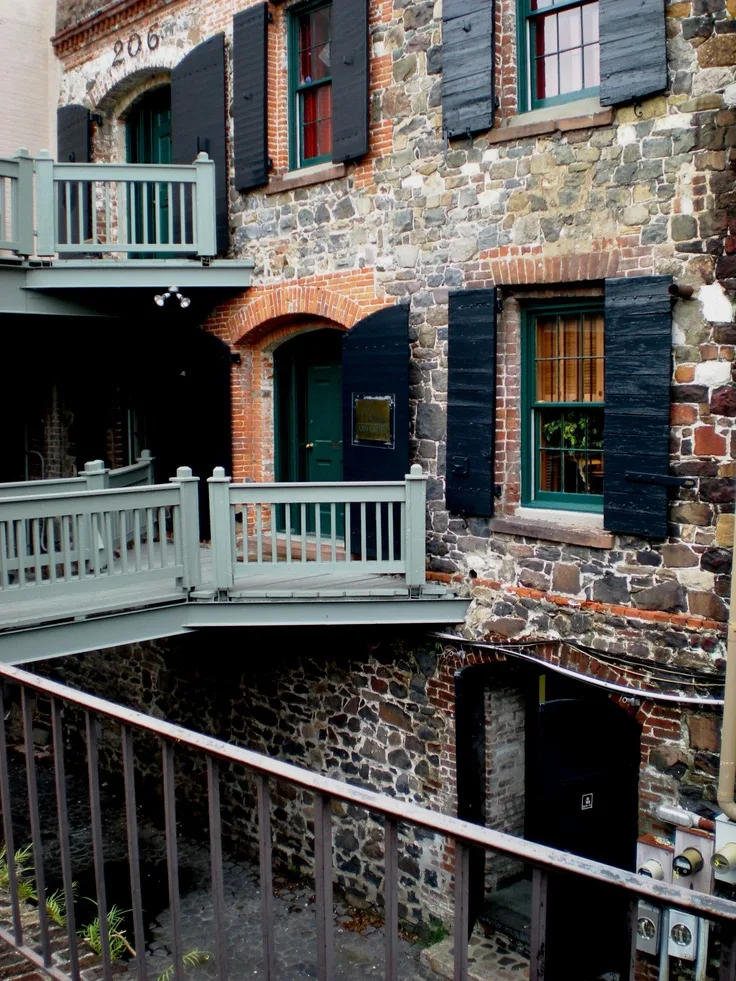
Image source: Bing (Web (fair-use with source credit))
Identifying Your Mill Type: Canal-Side, Courtyard, or Rooftop
A canal-side terrace usually runs long and narrow, often 3 to 5 metres wide with a low or no wall on the water side. That means your decor needs to be vertical, not horizontal. Think tall planters, slim bistro sets, uplighters on the building wall.
Nothing that blocks the walkway.
An internal courtyard sits surrounded by mill walls on all sides. That's a wind-sheltered, low-light space with high ambient humidity, so you're choosing shade-tolerant planting and damp-rated finishes. Corten steel handles this well.
Cheap mild steel will rust through in two or three winters.
A rooftop terrace on top of a converted mill gives you views and wind exposure in equal measure. Per structural engineering guidance, load limits on older mill roof structures often sit between 1.5 and 3 kN/m². Lightweight composite furniture and composite rather than stone paving are usually the only safe calls.
The Four Visual Anchors: Brick, Iron, Stone, and Glass
Every mill patio is built around the same four materials, whether or not you consciously notice them. Reclaimed brick gives warmth and texture. Cast iron columns and window frames give structure.
Stone flagstones or paving give weight. Steel-framed glazing gives light and reflection.
Your decor should repeat those four notes. Choose one as your hero and let the others sit back. If the brick is spectacular, use muted furniture.
If the glazing dominates, add weight with corten or stone at ground level. Photographs of well-styled mill patios almost always obey this rule, even if the owner has never consciously articulated it.
Light, Shadow, and Sightlines Through Tall Mill Windows
Mill windows are huge. Four to six metres of glass isn't unusual, and that changes everything about how light behaves in the space. In the daytime, you get a hard geometric shadow across the patio that moves faster than you'd expect.
At night, interior lighting floods out and turns the patio into a stage.
If your patio looks flat, the problem is usually that all your light sources are at the same height. Uplighters on the wall, festoon at head height, and a low fire bowl give you three layers. That depth is what separates a styled patio from a furnished one.
Sizing the Patio: Wheel Pits, Loading Bays, and Awkward Corners
Old mills weren't designed for comfortable outdoor living. You'll find wheel pits, recessed loading bays, odd level changes, drainage channels, and random stone steps. Don't try to disguise these.
Make them features.
A wheel pit becomes a sunken planting bed or a fire pit recess. A loading bay becomes a compact dining nook. A drainage channel becomes a gravel strip with cobbles or ornamental grasses.
The awkward geometry is the personality. Flattening it out kills the character you paid for.
The Material Palette That Actually Works
Here's the good news. Mills are forgiving. Reclaimed brick, weathered timber, cast iron, stone, and corten steel all age beautifully.
What they don't forgive is plastic pretending to be metal, or shiny chrome pretending to be industrial.

Image source: Bing (Web (fair-use with source credit))
Reclaimed Brick, Corten Steel, and Lime-Friendly Fixings
If your patio walls or floor are original, treat them like a museum piece. Historic England's guidance on adapting historic buildings is clear that hard cement pointing traps moisture and accelerates frost damage in old brick. Use lime mortar for any repointing, and lime-based breathable finishes near original masonry.
For furniture and planters, corten steel is the connoisseur's pick. Manufacturer specs confirm it forms its protective patina over 6 to 18 months depending on climate. That rusty orange surface is stable, not decay.
It won't stain paving once matured either.
Reclaimed timber needs a hard look before you commit. Teak and iroko survive outdoors for decades. Pine and most softwoods won't, unless they're pressure-treated and sealed annually.
What to Avoid: Plastic, Bright Metals, and Faux Industrial Kitsch
Three things will make a mill patio look cheap fast.
- Moulded plastic furniture. It fights the texture of old brick and reads as temporary. Fine for a rental if you must, but it never looks right.
- Bright polished chrome or stainless steel. It belongs in a modern kitchen, not against 19th-century masonry. Brushed steel, blackened metal, or powder-coated matte finishes work far better.
- Mass-produced "industrial" decor. Fake Edison bulbs, faux-rust signs, and printed steel-look panels. Conservation officers and photographers both clock them instantly. A genuine salvaged cog or pulley beats ten reproductions.
If you're renting, or your lease forbids permanent fixings, weighted bases and freestanding planters let you get the look without touching the fabric of the building.
Putting It Together: Zoning, Furniture, and Layered Lighting
Small mill patios don't need more stuff. They need clearer zones. The trick is to break a 10 to 20 m² space into two or three distinct areas using furniture and light, not walls.
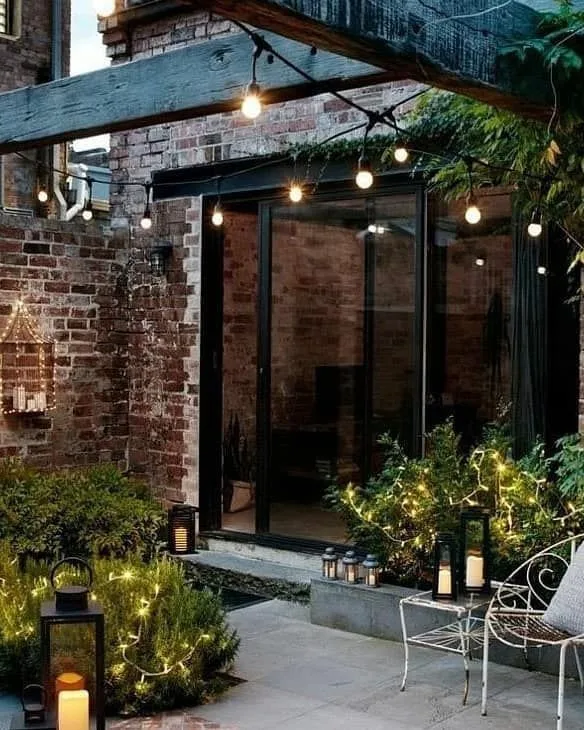
Image source: Bing (Web (fair-use with source credit))
Dining, Lounging, and Circulation Zones on a Narrow Terrace
Map your patio with chalk or string first. You want a clear walking line from the door to the far end, ideally 90 cm wide minimum. Everything else gets allocated around that.
A typical narrow mill terrace can hold a two-person bistro set at one end, a couple of low chairs with a small side table at the other, and a slim planter run along the wall. If there's a wider corner, that's where the fire bowl goes. Three zones, one path, zero crowding.
Industrial-Rustic Furniture That Doesn't Fight the Building
Materials matter more than style labels here. Powder-coated steel frames with reclaimed timber tops feel right. Cast aluminium bistro sets work on upper terraces where weight matters.
Folding teak chairs solve the small-footprint problem and survive damp.
Avoid modular garden sofas in mill courtyards. They seal in damp, take up too much room, and the cover fabric rarely ages well outdoors in the UK's northern climate zones.
Lighting the Vertical Space: Uplighters, Festoon, and Pendants
Mill walls are tall. Use them. In fact, our research on patios that photograph well suggests the single most consistent difference is what happens between 2 and 4 metres off the ground.
- Uplighters on a wall wash, aimed at brick or iron columns, add depth after dark.
- Festoon lighting strung across at 2.5 to 3 metres gives warmth and defines the overhead zone.
- A pendant on a swag hook over a bistro table mimics what the mill originally had: functional, industrial lighting.
Warm bulbs matter. 2700K reads as heritage and cosy. 4000K and above reads as car park.
Planting for Mill Microclimates: Wind, Damp, and Low Sun
Canal-side and courtyard mills create their own weather. Wind tunnels between tall walls. Damp air off water.
Low winter sun blocked by the building itself.
Choose plants that shrug this off. Ornamental grasses move with the wind and look intentional. Ferns and moss love the damp shade.
Wisteria and ivy climb old brick beautifully, though keep wisteria away from guttering and window frames. Corten or galvanised troughs handle winter frost better than glazed ceramic.
The Visual Mistakes That Kill a Mill Patio
Most failed mill patios fail the same way. They over-decorate a space that was already doing fine on its own. Mill buildings have texture, height, and history.
Adding more stuff usually subtracts from all three.
Here are the mistakes we see most often, and what to do instead.
- Mismatched eras. Mixing Victorian reproduction with mid-century modern and Scandinavian minimal. Pick one era to echo, or go deliberately neutral.
- Too much clutter. Ornaments on every surface, mismatched cushions, and a dozen small pots. Fewer, larger pieces always win.
- Ignoring wind behaviour. Lightweight furniture in a known wind tunnel. You'll lose it, or the glass will go.
- Bad drainage planning. Water pooling against old brick accelerates decay. Permeable paving, gravel, or a proper fall away from walls prevents this.
- Overlooking load limits. Heavy stone planters on a rooftop terrace where the structure can't take them. Have an engineer check before the delivery van arrives.
- Fighting conservation rules. Drilling into listed masonry without consent. Check first, or use weighted/freestanding decor instead.
If your patio feels busy but not quite right, remove three things. It's almost always a subtraction problem, not an addition one.
Heritage Rules, Legal Constraints, and Safety
This is the section people skip, and it's the one that costs them money. If your mill is listed, or sits in a conservation area, you cannot treat the patio like any old garden. Consent comes before cushions.
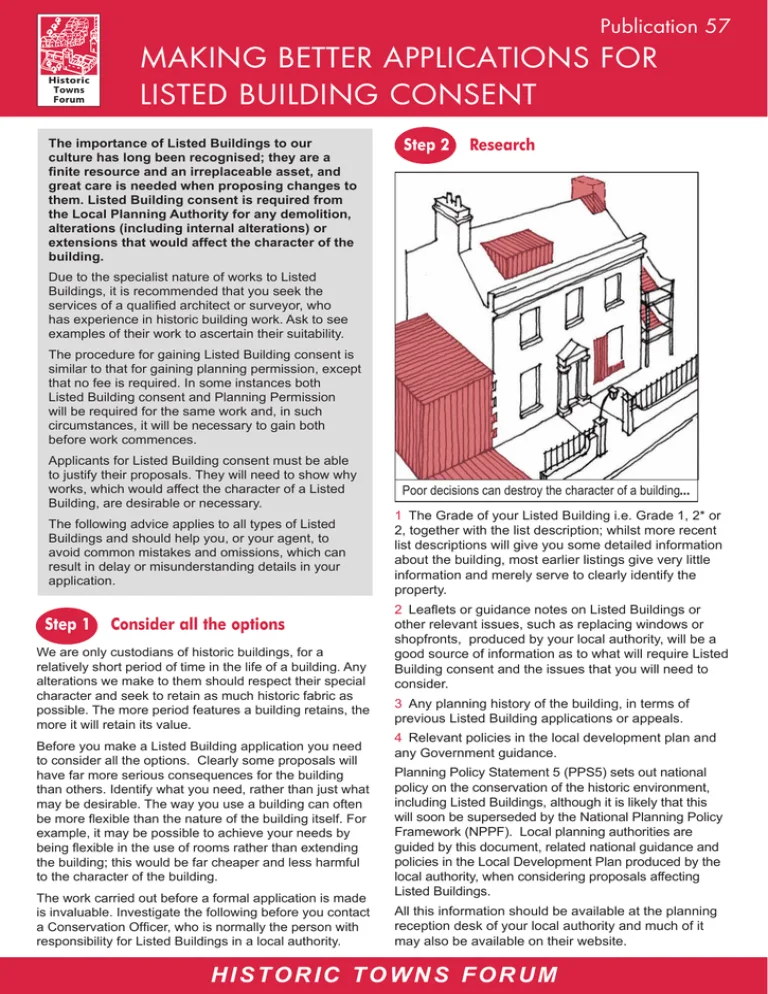
Image source: Bing (Web (fair-use with source credit))
Listed Building Consent and Conservation Officer Expectations
Listed Building Consent is separate from planning permission, and it covers alterations that affect character. That includes repointing, changing paving, adding permanent fixings, or mounting lights onto historic fabric. In the UK, unauthorised work on a listed building is a criminal offence, not just a paperwork problem.
Historic England publishes free guidance on what usually needs consent.
In the US, the equivalent sits with local historic preservation commissions and National Park Service Preservation Briefs. Either way, the principle is the same: reversible beats permanent. Freestanding planters, weighted bases, and removable festoon poles sail through.
Bolted-down pergolas and drilled-in wall mounts rarely do.
Flood Risk, Fire Pits, and Shared Courtyard Agreements
Canal-side and riverside mill patios often sit inside a flood zone. Per Environment Agency guidance, hard landscaping can worsen runoff if it isn't permeable. Choose permeable paving, gravel, or resin-bound systems with a proper fall away from the building.
Fire features bring their own rules. Check whether you're in a Smoke Control Area before buying a solid-fuel fire pit. Keep any open flame at least 3 metres from structures and soft furnishings.
If your courtyard is shared, your lease or a Section 106 agreement may restrict what you can place there at all. Read it before you spend.
What It Costs and How to Phase It
Mill patio decor budgets range wildly, and most of the spread comes down to how much you go reclaimed versus new. Here's roughly what you're looking at in the UK as of 2026.
| Item | Budget | Mid-Range | Premium |
|---|---|---|---|
| Bistro set (2-seat) | £120–£250 | £300–£600 | £700+ |
| Corten planter (large) | £60–£120 | £150–£300 | £350+ |
| Festoon lighting kit | £30–£70 | £80–£180 | £200+ |
| Patio heater or fire bowl | £80–£150 | £200–£450 | £500+ |
| Reclaimed paving per m² | £30–£60 | £70–£120 | £130+ |
Budgeting Reclaimed vs. New Materials
Reclaimed brick and flagstones cost more per square metre than new sandstone. But they match the building, and they don't need replacing every few years. If budget is tight, spend on the floor and walls first.
Furniture can be upgraded later.
Salvage yards and architectural reclaimers often sell mill-specific pieces at fair prices. A genuine cast-iron column base or mill stone used as a table beats any reproduction. Buy one hero piece rather than five small ones.
A Seasonal Rollout: Spring, Summer, Winter
Mill patios don't need everything at once. Phase the build across a year.
- Spring: hard landscaping, repointing, drainage, planters.
- Summer: furniture, lighting, planting, soft textiles.
- Autumn: clean, seal, cover what needs covering, winterize the fire features.
- Winter: store cushions, drain water features, check for frost damage.
Phasing spreads the cost and lets you learn how the space actually behaves before committing to more.
FAQs
Does my mill patio need listed building consent for decor?
Only for alterations to historic fabric. Freestanding furniture, potted plants, and removable lighting usually don't need consent. Drilling, repointing, or changing paving often does.
Check with your local conservation officer before any permanent work.
What's the best material for mill patio paving?
Reclaimed stone flagstones or clay pavers match the building best. If you need permeable options, choose gravel, resin-bound systems, or permeable porcelain. Avoid non-breathable cement renders against old masonry, as they trap moisture.
How do I stop wind wrecking my canal-side patio?
Use weighted bases, folding furniture, and slatted screens. Ornamental grasses and windbreak planting help. Avoid lightweight parasols and glass-topped tables on exposed terraces.
If wind is severe, fix furniture down or bring it in.
Can I install a fire pit on a rooftop mill terrace?
Yes, if the structure can take the load and you're not in a Smoke Control Area. Keep it at least 3 metres from walls. Use a lightweight model.
Have an engineer confirm loading if you're unsure.
How much does it cost to decorate a mill patio?
A basic refresh runs £300 to £600. A full scheme with reclaimed paving and premium furniture lands between £2,000 and £6,000. Phasing across seasons spreads the cost.
What plants survive a damp mill courtyard?
Ferns, moss, ornamental grasses, ivy, and astilbe all thrive in damp shade. Wisteria works on sunny walls. Avoid sun-loving Mediterranean plants.
Galvanised or corten troughs handle the wet better than terracotta.
Final Verdict: Style the Mill, Don't Fight It
Mill conversion patios are the easiest outdoor spaces in the world to get right, and the easiest to ruin. The building already has texture, height, history, and drama. Your decor's only job is to frame it, not compete.
If you take one thing away, make it this: choose materials that age well and echo what's already there. Reclaimed brick, corten steel, weathered timber, cast iron, stone. Warm light at 2700K.
Reversible fixings if the building is listed. A couple of zones, one clear path, and three layers of light. That's the whole formula.
Spend your budget on the floor and walls first. Buy one real salvage piece instead of five reproductions. Phase the scheme across spring, summer, and autumn so you learn how the space behaves before you commit.
Read your lease, check your listing status, and respect the flood risk if the mill sits on water.
Do that, and you'll have a patio that looks like it was always meant to be there. Which, in a way, it was.

Similar Posts